AI Image
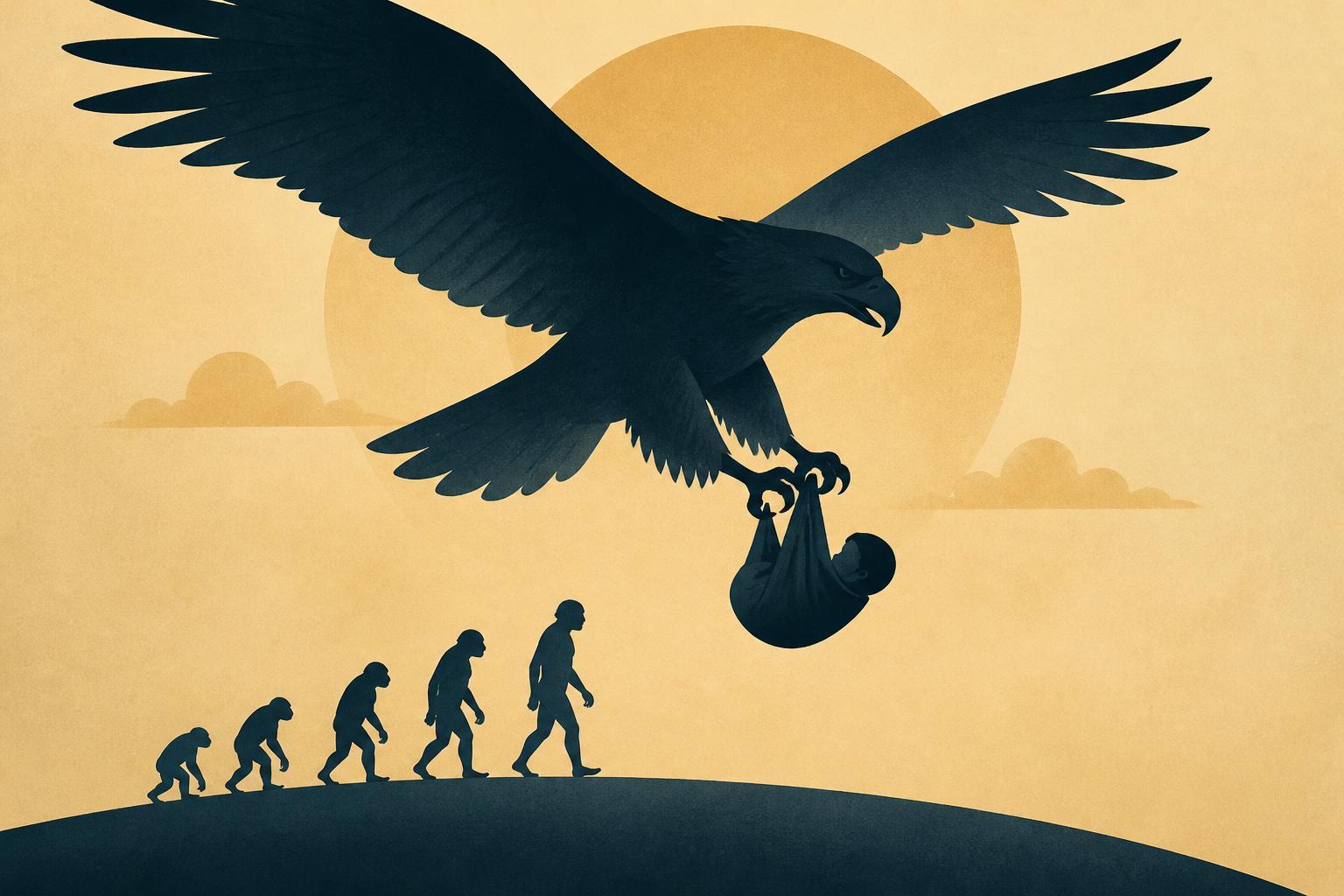
Giant eagles once ruled the skies. They snatched human children, and shaped our evolution
BBC • • technology
Key Points:
- The Taung child, a 2.8-million-year-old Australopithecus africanus infant, shows puncture marks consistent with eagle talons, suggesting predation by large birds of prey shaped early human evolution.
- Giant predatory birds, including massive raptors and teratorns with wingspans up to 7 meters, ruled the skies for tens of millions of years and likely preyed on primates, influencing their behavior and social structures.
- Predation pressure from stealthy ambush birds may have driven early humans to develop bipedalism, larger social groups for vigilance, and possibly even the emergence of language for coordinated defense.
- Some extinct giant birds, such as the Haast's eagle and teratorns, inspired myths like the Thunderbird in Native American cultures, reflecting their cultural impact alongside their ecological role.
- The disappearance of giant predatory birds and megafauna by the end of the Pleistocene coincided with human expansion and environmental changes, marking a transition to the human-dominated era and ongoing complex relations with raptors.


