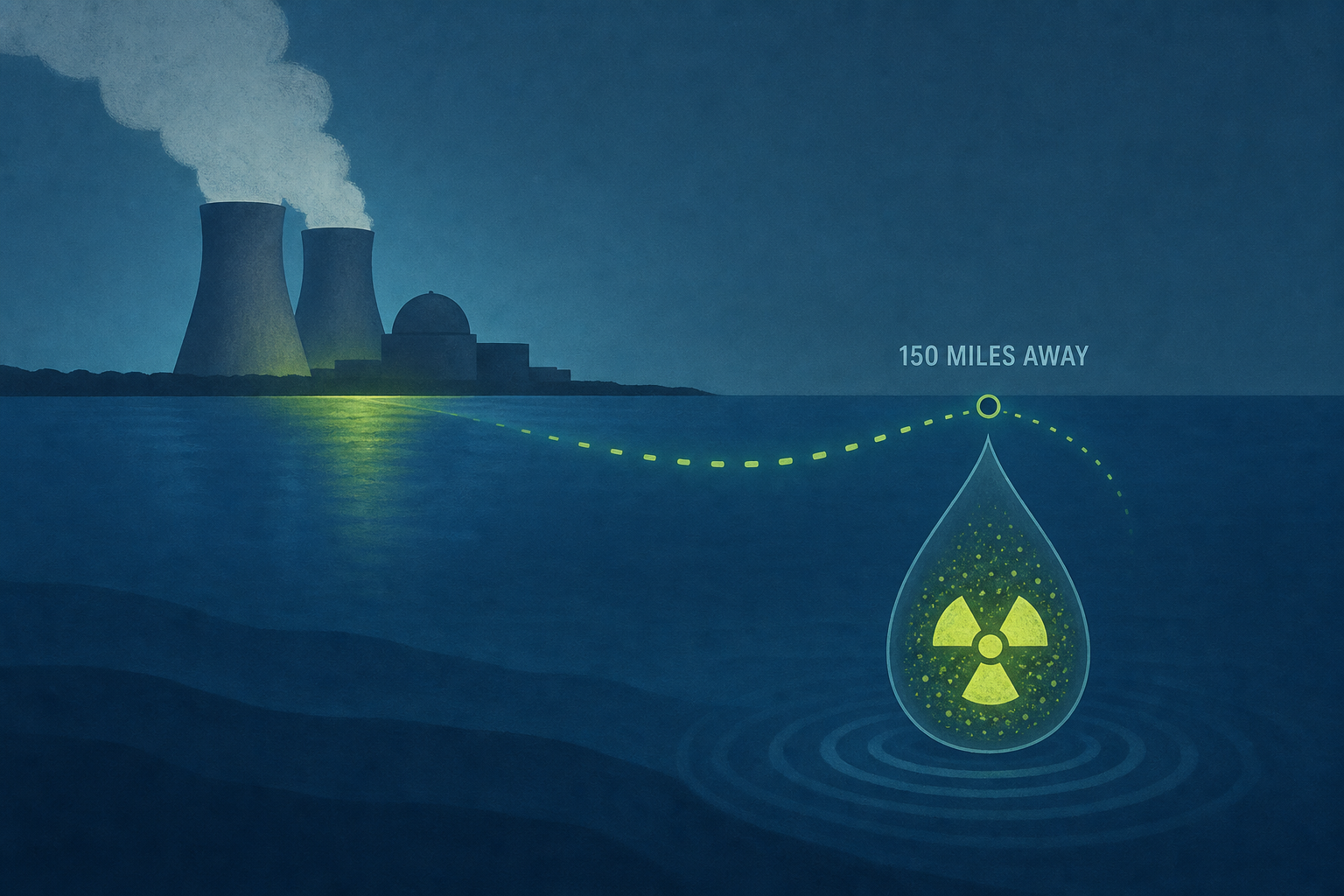
AI Generated Image
Haunting Glow of Nuclear Power Station Was Detected in Water 150 Miles Away
Yahoo • • science
Key Points:
- The SNO+ detector in Ontario, Canada, successfully used ultrapure water to detect antineutrinos emitted from a nuclear reactor over 240 kilometers away, marking the first time water alone has been used for such detection.
- This breakthrough, reported in Physical Review Letters in 2023, demonstrates that plain water can monitor nuclear reactor output remotely, offering a cheaper and safer alternative to traditional detection methods using liquid scintillators.
- The detection was made possible by observing inverse beta decay events and the faint Cherenkov radiation produced, with the water-filled SNO+ achieving sensitivity to energy levels as low as 1.4 megaelectronvolts.
- SNO+ is also advancing neutrino research by measuring low-energy neutrino interactions, such as solar neutrinos converting carbon-13 to nitrogen-13, and continues to search for rare decays that could reveal whether neutrinos and antineutrinos are the same particle.
- The deep underground location of SNO+ provides shielding from cosmic rays, enabling highly precise neutrino measurements that contribute to understanding these elusive "ghost particles" and their role in the Universe.


