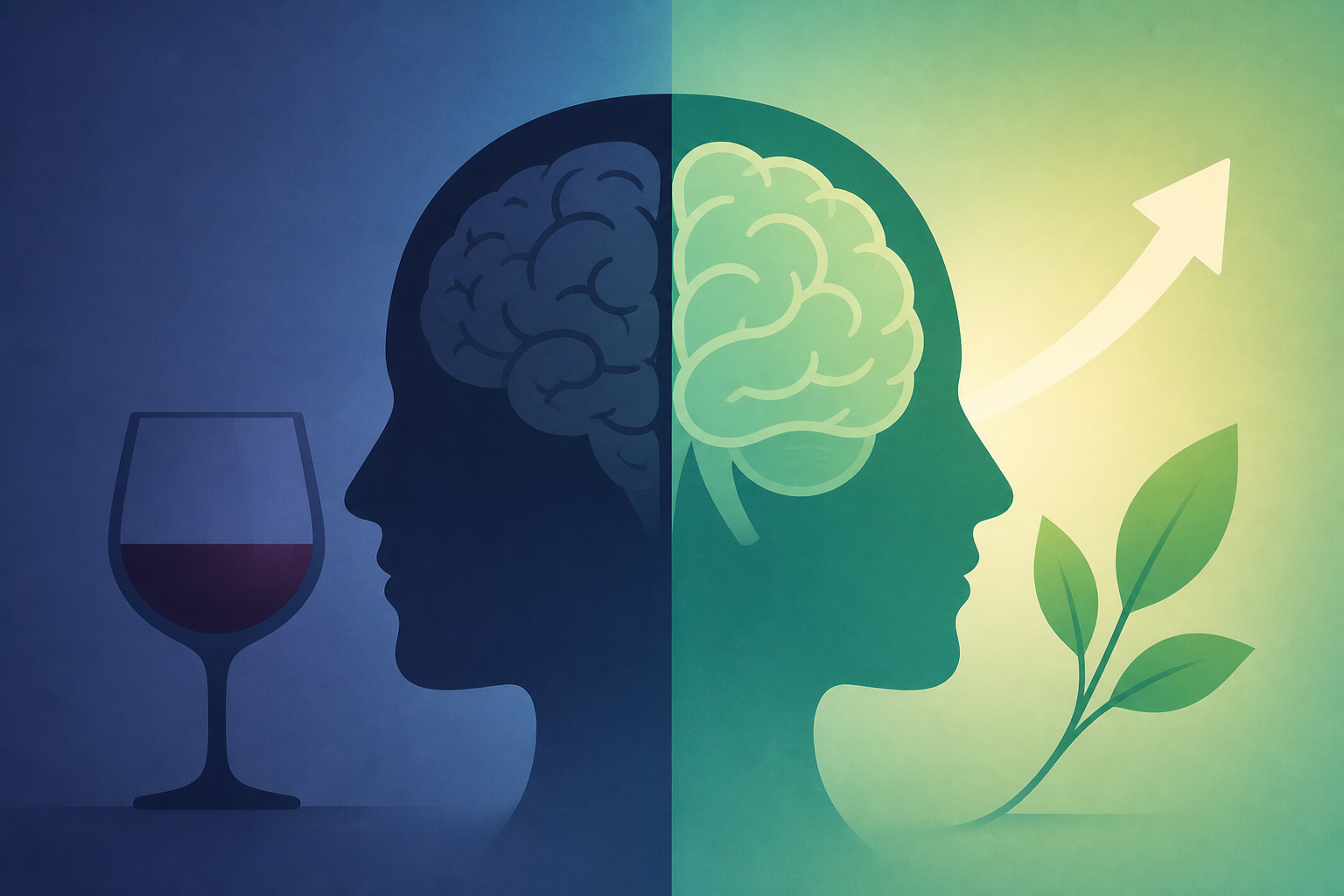
AI Generated Image
Here’s what happens to your brain when you stop drinking alcohol
Yahoo • • health
Key Points:
- Nearly 80% of Americans aged 12 and older have consumed alcohol at some point, but research shows alcohol causes long-term changes in brain chemistry and structure, including reduced gray matter volume and increased risk of anxiety, depression, sleep disruption, dementia, and certain cancers.
- Alcohol initially stimulates the brain's reward system by releasing endorphins and dopamine, but chronic use leads to decreased sensitivity to pleasure and increased activation of stress systems, causing people to drink more to alleviate negative feelings rather than to feel good.
- Studies indicate that reducing or abstaining from alcohol can lead to significant recovery of brain function, including improvements in cognitive abilities and increases in gray matter, with many changes occurring within the first month to a year of abstinence.
- Experts emphasize self-assessment of alcohol's impact on personal life and values, recommending evidence-based strategies such as psychological therapies, medications, and participation in alcohol reduction challenges like Dry January or Sober October to manage consumption.
- Resources such as the National Institute on Alcohol Abuse and Alcoholism’s Rethinking Drinking website and treatment navigators are available for those seeking help, and experts encourage listening to one’s body as a guide to understanding the effects of alcohol use.


