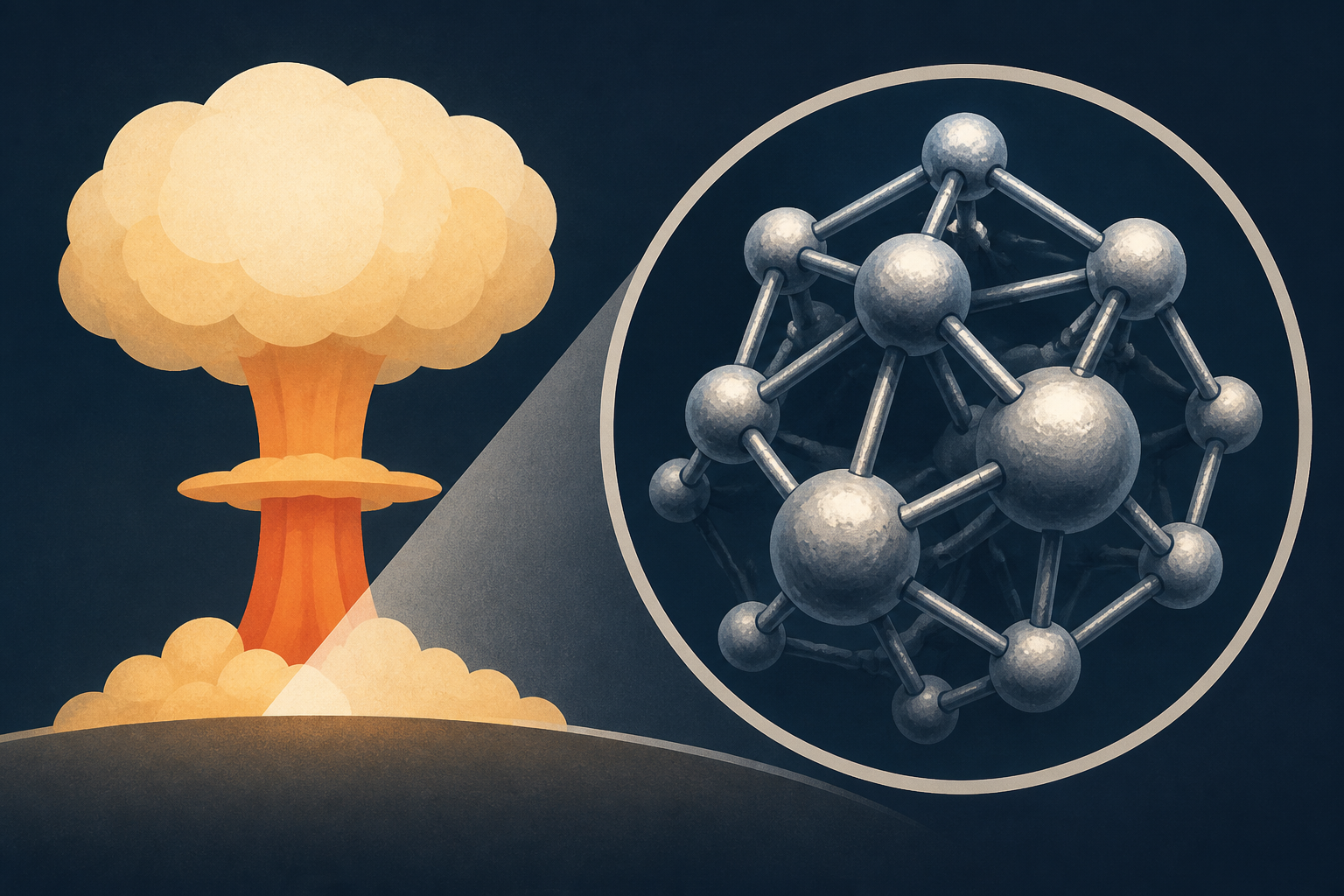
AI Generated Image
Hiroshima bomb created previously unknown metal: study
New York Post • • science
Key Points:
- Researchers discovered a previously unknown multicomponent alloy formed from rare metallic particles found in Hiroshima Bay fallout samples, created by the atomic bomb blast in 1945.
- The unique alloy consists of iron, chromium, nickel, manganese, molybdenum, silicon, and aluminum arranged in an atomic structure never before observed in conventional alloys.
- This new metal formed when the metallic vapor from the blast cooled instantaneously, locking atoms in place, demonstrating that extreme man-made conditions can create previously unknown materials.
- The discovery could lead to the development of lighter, more heat-resistant materials and improve understanding of the chemical and physical fallout from nuclear explosions.
- The Hiroshima bomb, codenamed "Little Boy," was the first nuclear weapon used in war, causing massive destruction and long-term radiation effects on survivors.


