AI Image
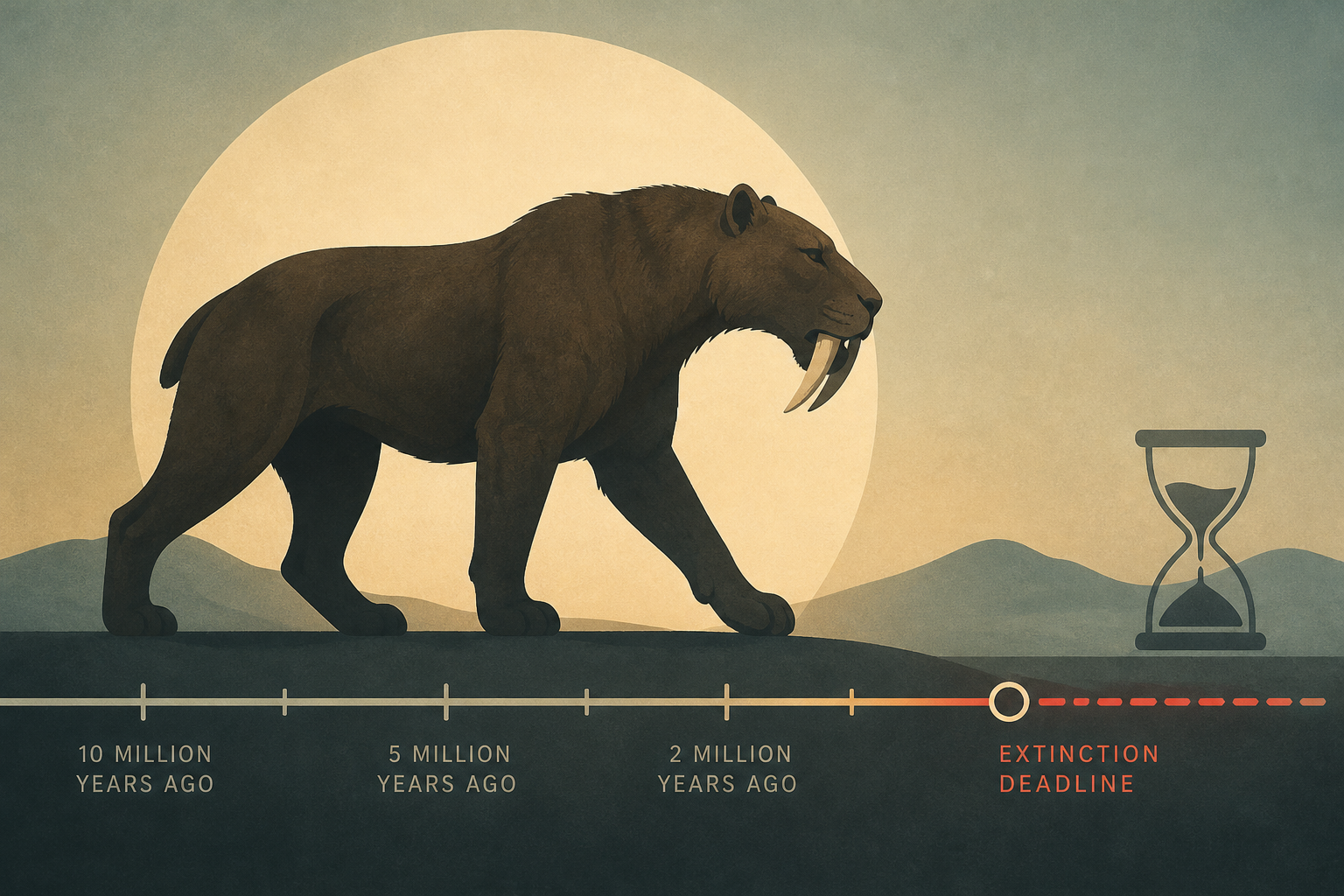
Horse-Sized Saber-Tooth Lived Millions of Years Past Its Deadline
Yahoo • • science
Key Points:
- A new saber-toothed predator species, Pampaluctor calibar, was discovered in Argentina, challenging previous beliefs about the extinction timeline of sparassodonts in South America.
- The fossils, found in 2014 and identified years later by paleontologist Eric del Campo, indicate that this species lived into the late Pliocene or early Pleistocene, much later than the previously assumed mid- to late Pliocene extinction period.
- Pampaluctor was about the size of a small horse, weighing around 220 pounds, with strong front legs and a thick neck, suggesting it was a powerful ambush predator rather than a pursuit hunter.
- This discovery implies that native South American saber-toothed mammals coexisted and interacted with migrating northern species longer than previously thought, altering the understanding of prehistoric ecological dynamics on the continent.
- Pampaluctor adds to a diverse group of sparassodonts, carnivorous metatherian mammals related to marsupials but distinct, highlighting the varied forms and survival strategies of these prehistoric predators.


