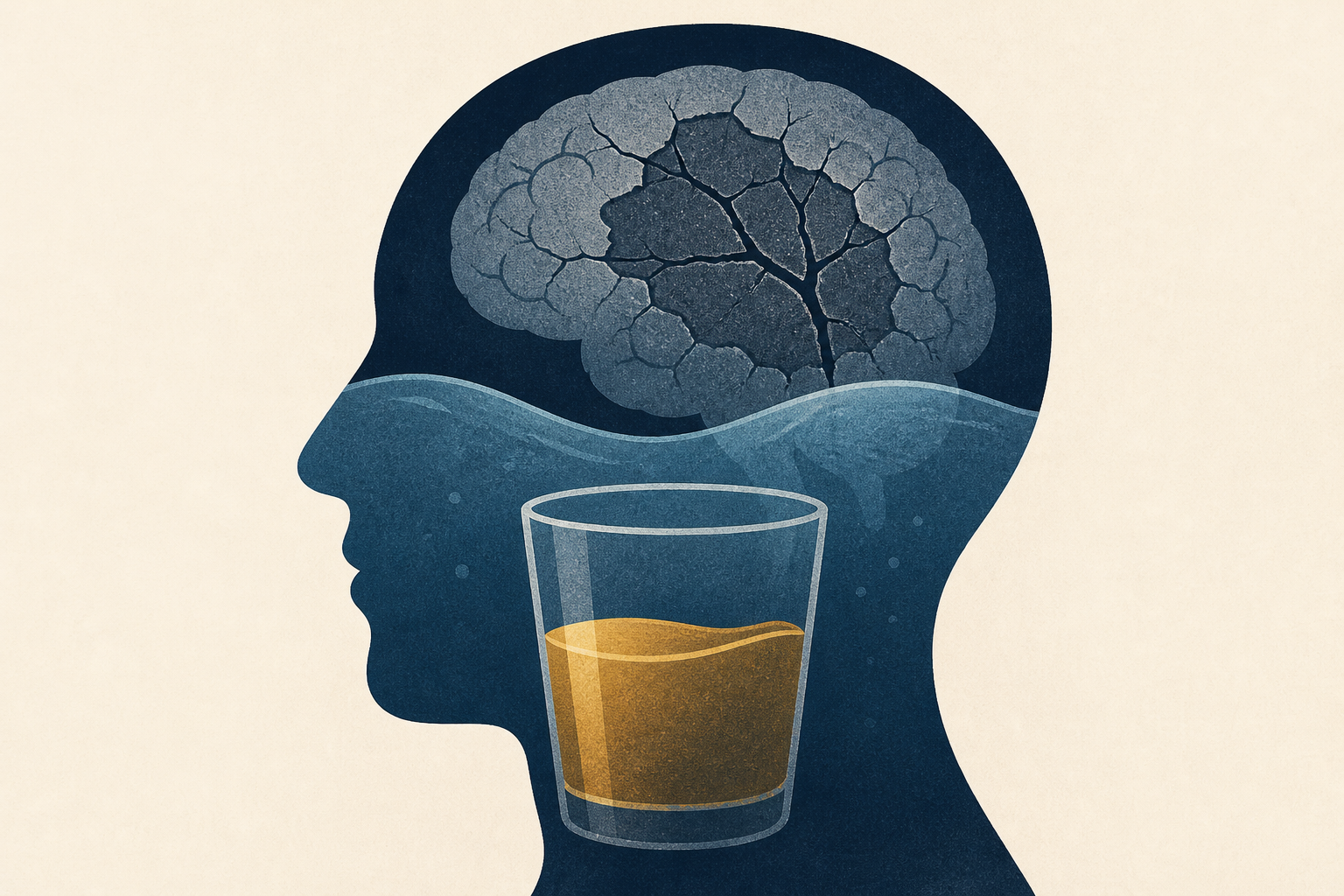
AI Image
How chronic drinking masks the brain's hidden scars from childhood trauma
PsyPost • • health
Key Points:
- A new study in Addiction Neuroscience finds that childhood maltreatment leaves distinct structural changes in the brain's gray matter and folding patterns in healthy adults, but these markers are largely absent in individuals with alcohol use disorder (AUD).
- Researchers observed that adults with AUD have reduced gray matter volume across key brain regions involved in emotion and impulse control, consistent with the neurotoxic effects of chronic heavy drinking.
- In healthy adults, childhood trauma correlated with reduced gray matter and increased cortical folding in the inferior frontal gyrus, potentially reflecting a compensatory adaptation; these trauma-related patterns were not seen in the AUD group.
- When adjusting for current alcohol consumption severity in the AUD group, trauma-related cortical thinning in the inferior frontal gyrus emerged, suggesting that alcohol-related brain damage may mask earlier neurodevelopmental effects of childhood adversity.
- The study’s cross-sectional design and reliance on retrospective trauma reports limit causal conclusions, highlighting the need for longitudinal research tracking brain changes from childhood through adulthood to better understand the interplay between early trauma and addiction.


