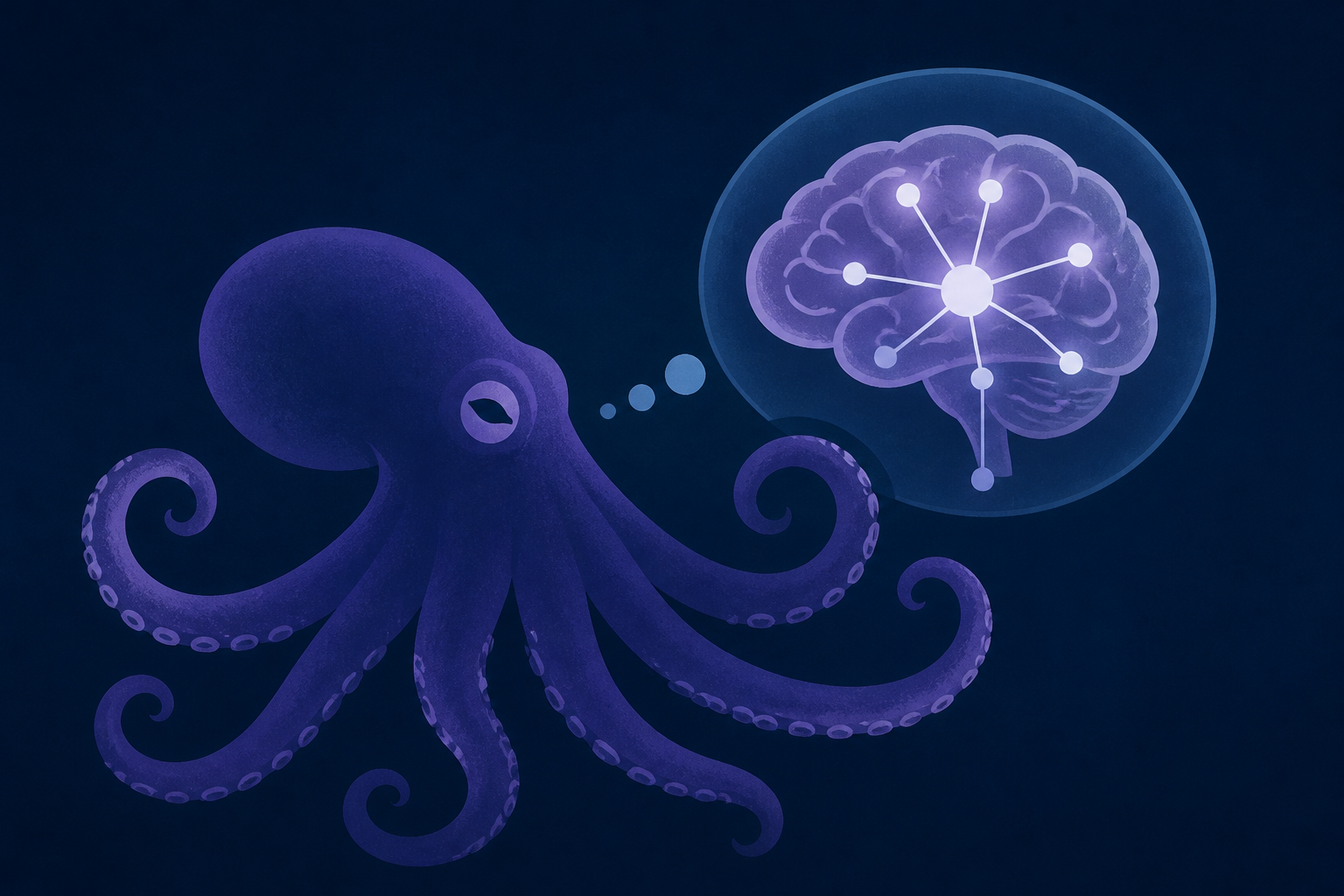
AI Image
How do octopuses remember? Scientists uncover a surprising secret
Phys.org • • health
Key Points:
- Researchers from the Hebrew University of Jerusalem and Ruppin Academic Center discovered a unique molecular mechanism in octopuses that helps maintain long-term memories by strengthening nerve cell connections.
- The study, published in the Journal of Neuroscience, identified a self-sustaining "molecular switch" involving nitric oxide (NO) in the octopus vertical lobe, which plays a key role in learning and memory similar to the vertebrate hippocampus.
- Nitric oxide facilitates neurotransmitter release and persistently activates nitric oxide synthase (NOS), creating a positive feedback loop that sustains synaptic strengthening without the need for new protein synthesis.
- This mechanism differs fundamentally from those found in vertebrates, demonstrating that octopuses have evolved an independent molecular solution to maintain long-lasting neural changes, highlighting convergent principles of learning across species.
- The findings provide new insights into the evolution of cognitive abilities and underscore the value of studying diverse nervous systems to better understand the biological basis of learning and memory.


