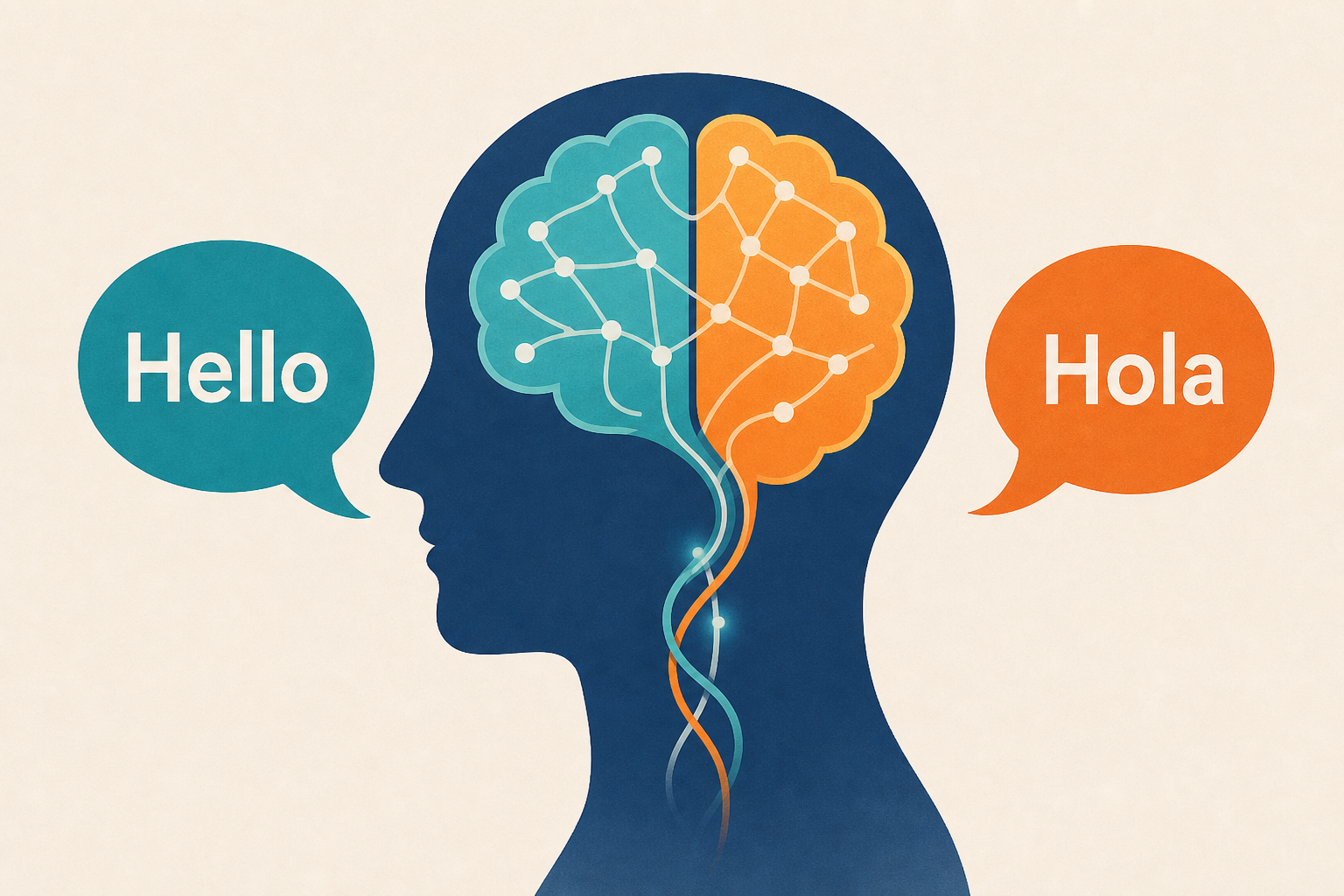
AI Generated Image
How Does One Brain Speak Two Languages?
The New York Times • • health
Key Points:
- A new study reveals that bilingual speakers exhibit remarkably similar brain activity patterns when processing grammatical rules, such as forming singular or plural words, regardless of whether they are using their first or second language.
- This finding challenges the long-held belief that bilingual brains process each language with distinct neural patterns, suggesting a more integrated language system in the brain.
- Researchers, including Esti Blanco-Elorrieta from New York University, describe this as one of the first detailed demonstrations of how closely intertwined two languages are within the brain.
- Previous research viewed bilingualism as an additional or disruptive factor to native language processing, but more recent studies show bilingual brains have physical adaptations and cognitive benefits, including improved memory and concentration.


![Apple releases iOS 26.6 beta 2 for iPhone, here’s what to expect [U]](https://media-cdn.cashwalklabs.io/https%3A%2F%2Fs3.us-west-2.amazonaws.com%2Fimages.cashwalklabs.io%2F0_admin%2Fnews-ai-images%2F019ed1d3-3248-75fa-8981-d1d7b9ca82b6.webp?format=webp&w=120&h=80)


