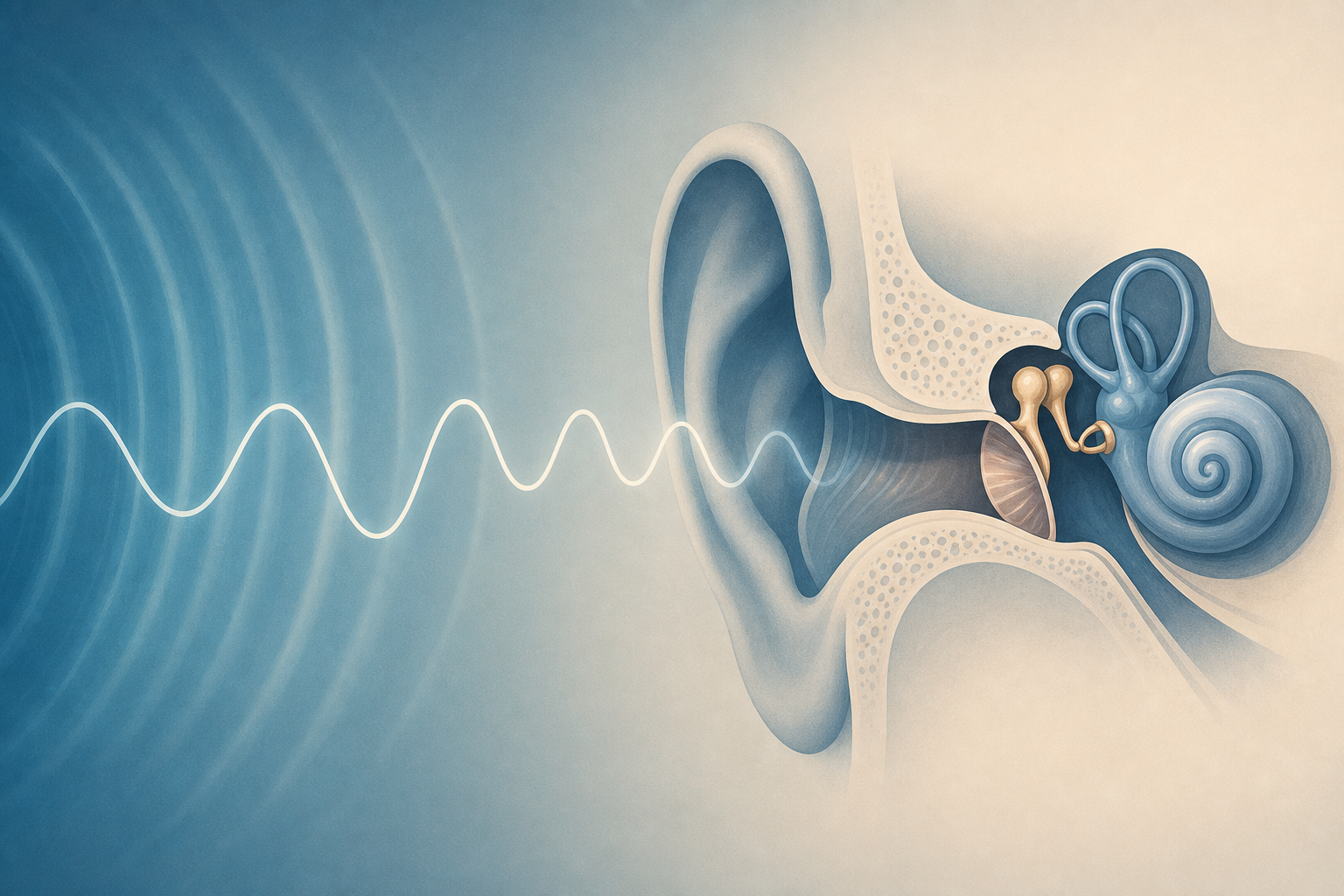
AI Generated Image
How Infrasound Rewires Ear Mechanics
Neuroscience News • • science
Key Points:
- Researchers at NTNU and University College London discovered that the human brain processes infrasound (below 16 Hz) via a unique biological mechanism involving cochlear support cells rather than standard auditory hair cells.
- When infrasound frequencies are too low for inner hair cells to detect, structural support cells in the inner ear generate alternative electric fields that stimulate nerve pathways, explaining why infrasound is perceived more as a physical sensation or hum than a traditional sound.
- This mechanism accounts for the rapid, non-linear increase in perceived loudness with small rises in infrasound pressure and explains why sensitivity to low-frequency noise varies among individuals.
- The findings provide a biological basis for why certain people are disturbed by low-frequency noises from sources like heat pumps and wind turbines, while others remain unaffected.
- Published in Scientific Reports, this research challenges the long-held belief that humans cannot hear sounds below 20 Hz and offers new insights into environmental noise sensitivity worldwide.


