AI Image
How octopuses squeeze through holes that seem impossibly tiny
NBC News • • general
Key Points:
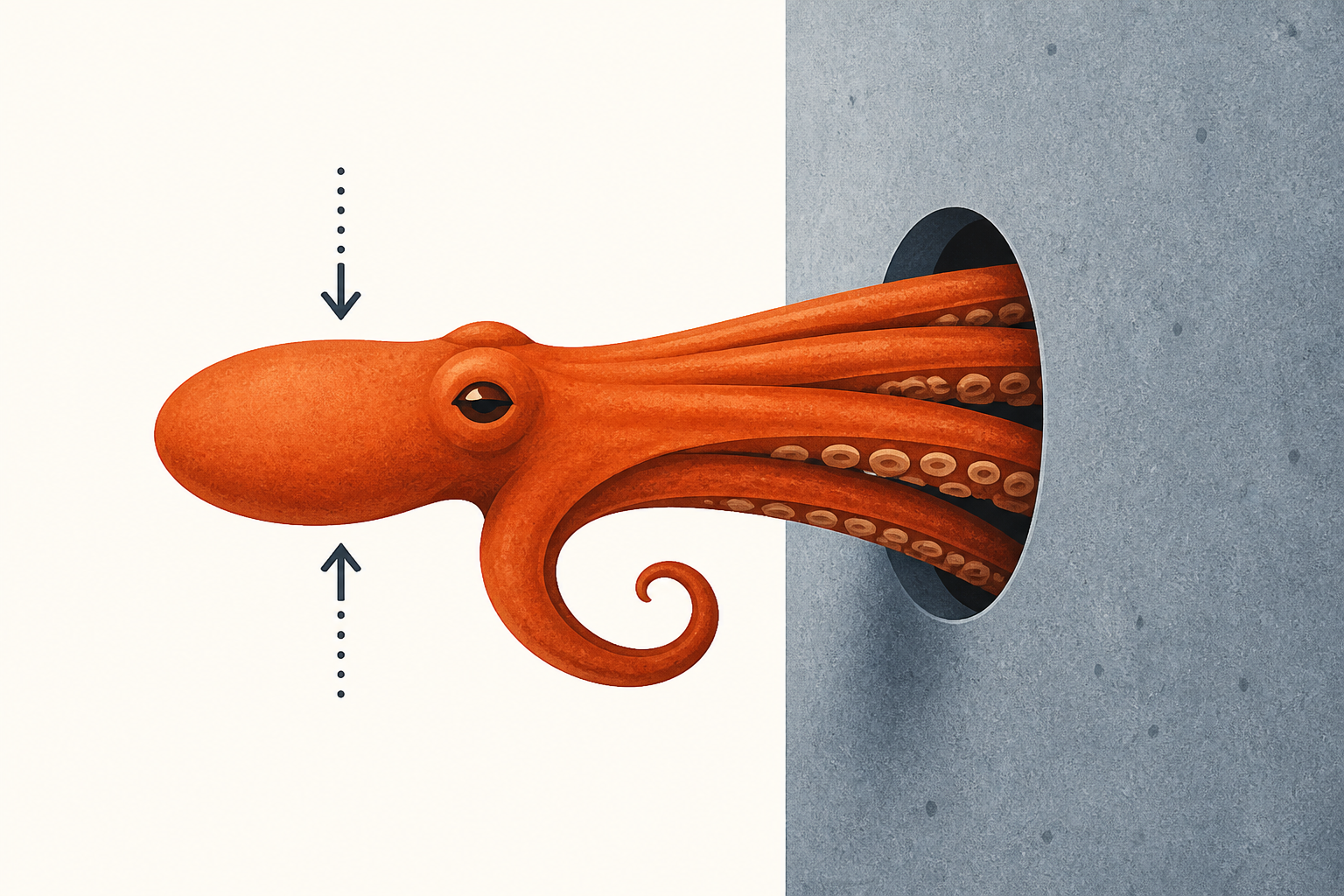
- Scientists have mapped how octopuses squeeze through tight spaces, revealing that they use different arm and body movement sequences depending on the size of the opening, with a three-step process for wider gaps and a four-step process for narrower ones.
- Octopuses rely on their flexible muscular hydrostat bodies and dexterous arms to maneuver through confined spaces, with their circulatory system adapted to maintain blood flow even when parts are constricted.
- The limiting factor for the narrowest gap an octopus can pass through may be the size of the arms near the body rather than the beak, previously thought to be the main constraint.
- Understanding octopus squeezing behavior could inspire the design of more versatile, soft-bodied robots capable of navigating confined spaces, useful for search-and-rescue operations.
- The study also emphasizes the complexity of octopus behavior and physiology, highlighting how much remains to be discovered about these intelligent marine animals.


