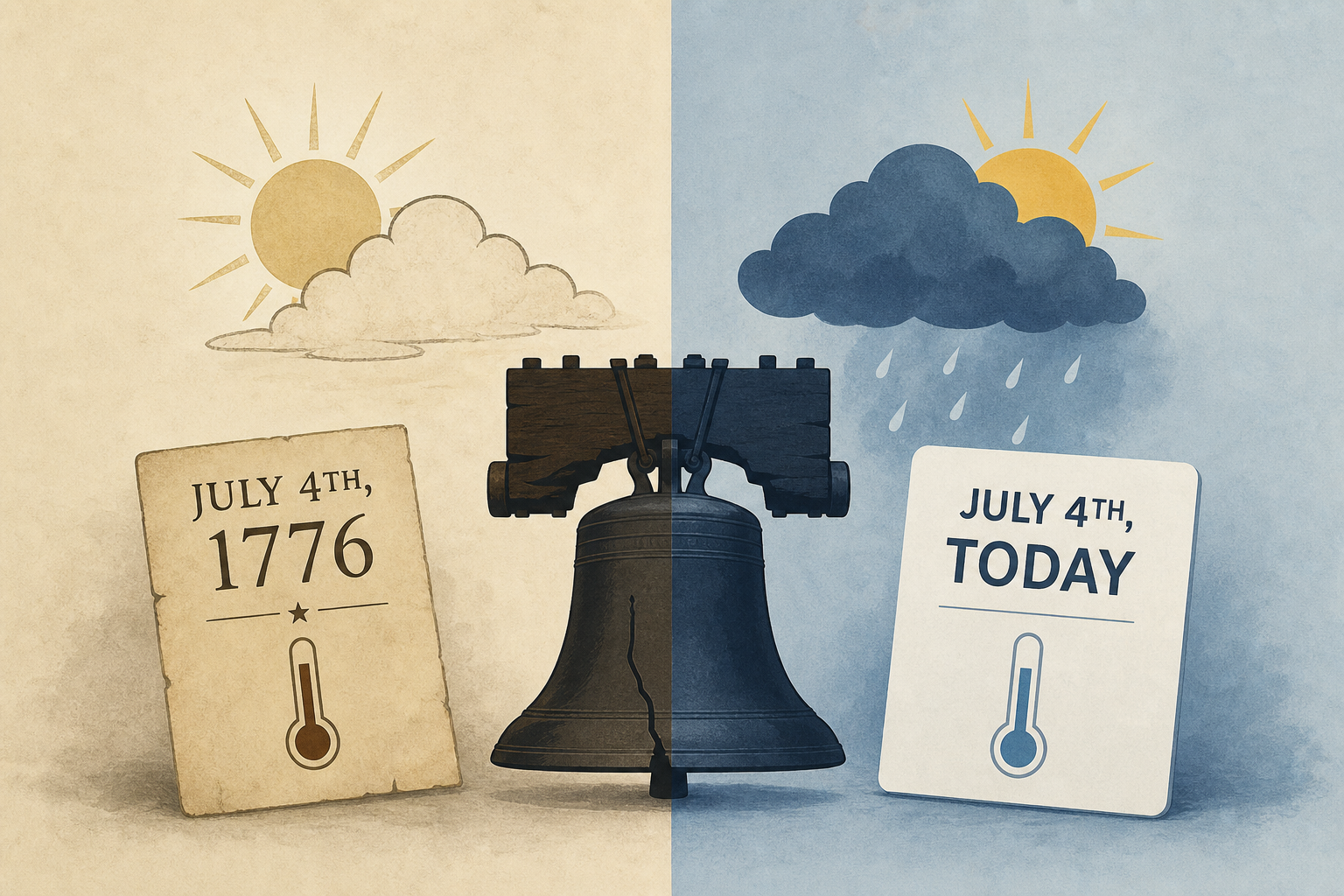
AI Generated Image
How Philadelphia Weather On July 4th, 1776 Compared To Today
Forbes • • nation
Key Points:
- Philadelphia and much of the eastern U.S. are experiencing an intense heatwave, with temperatures exceeding 100°F, leading to event cancellations including Philadelphia’s Salute to Independence Parade and Washington D.C.’s Independence Day parade.
- The National Weather Service has issued extreme heat warnings for Philadelphia, predicting heat index values between 105 and 110 degrees and highlighting the heightened risk of heat-related illnesses, especially for vulnerable groups such as the elderly, children, and communities of color.
- Nighttime temperatures remain dangerously high in the mid-70s to low 80s, offering little relief from the heat, and multiple days of near-record temperatures are expected to worsen the impact of the heatwave; a 30% chance of thunderstorms may provide temporary respite.
- Historical weather data from Thomas Jefferson’s records show that July 4, 1776, was much cooler, with temperatures in the mid-70s by early afternoon, illustrating the significant warming trend observed over the past 250 years.
- Climate studies confirm a steady rise in July temperatures across the U.S. since 1970, averaging an increase of 2.6°F, driven by both natural variability and human-induced factors, underscoring the complex interplay between natural climate cycles and anthropogenic warming.


