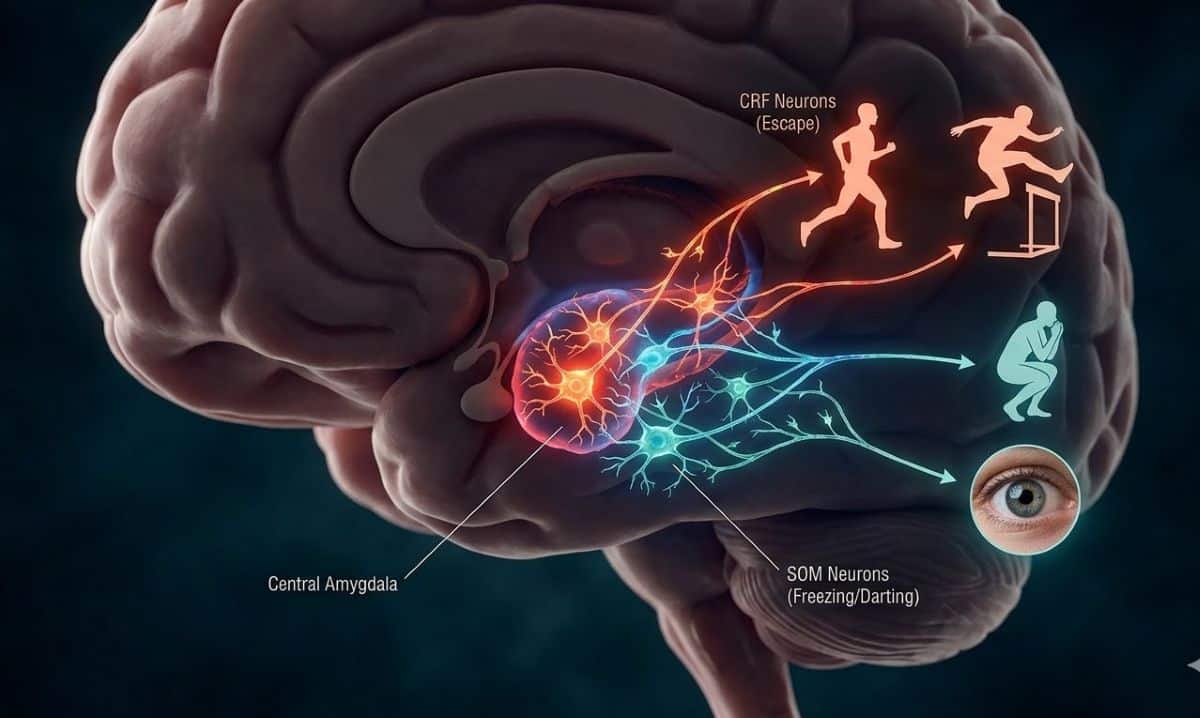
How the Amygdala Decides Between Freezing and Fleeing
Neuroscience News • • health
Key Points:
- Researchers at Tulane University identified specific brain circuits in the central amygdala that regulate a range of fear responses, from passive freezing to active escape behaviors like darting and jumping, revealing fear as a behavioral continuum rather than a simple on/off state.
- Two distinct neuron types play key roles: corticotropin-releasing factor (CRF) neurons drive high-intensity panic-like escape responses, while somatostatin (SOM) neurons promote lower-intensity behaviors such as freezing and darting.
- The process of fear extinction involves shifting neural activity from CRF-driven high-intensity responses to SOM-regulated lower-intensity behaviors, indicating that extinction reshapes rather than erases fear memories.
- These findings offer a biological explanation for the variability in PTSD symptoms, where disruptions in these circuits may cause individuals to remain stuck in either hypervigilant freezing or panic-like flight modes.
- The study provides new targets for potential therapies aimed at improving fear regulation by modulating specific amygdala circuits, although clinical applications will require further research.


