AI Image
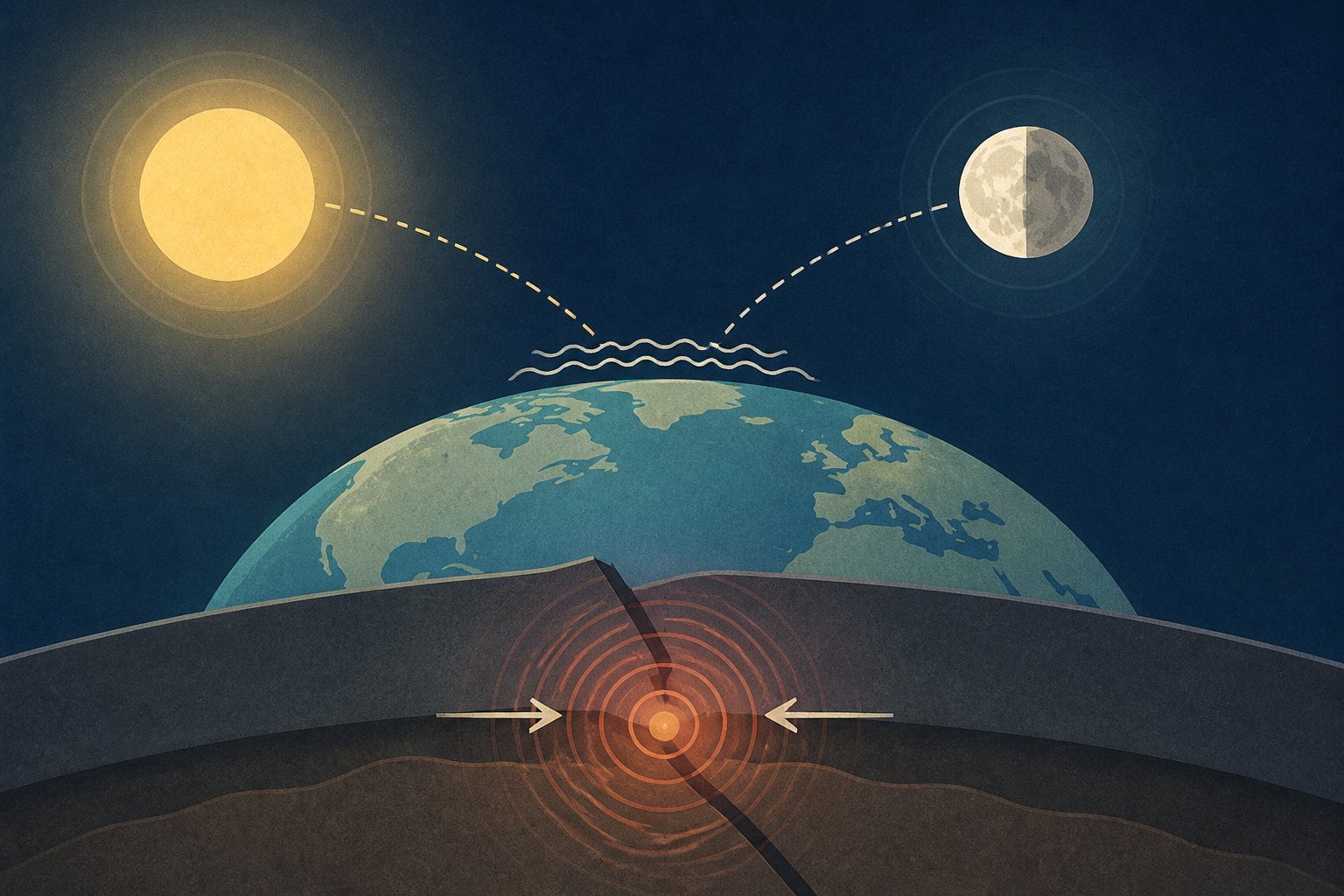
How the moon and sun may trigger slow earthquakes on Earth
Phys.org • • science
Key Points:
- Geoscientists led by Yishuo Zhou used computer models to study how the moon and sun’s gravitational pull triggers slow earthquakes, which release energy gradually along fault lines.
- The team created a digital spring-block model simulating a fault, incorporating friction rules and applying tidal-like stress forces to mimic celestial gravitational effects.
- Their simulations showed that slow earthquakes occur when the timing of tidal forces matches the fault's natural stress response rate, with internal friction playing a key role.
- Even weak tidal stresses can induce fault slips through a resonance effect, similar to pushing a swing at the right rhythm, though real-world fault behavior is likely more complex.
- This research aids geologists in understanding fault sensitivity to tidal forces and offers methods to infer fault properties from slow earthquake observations.


