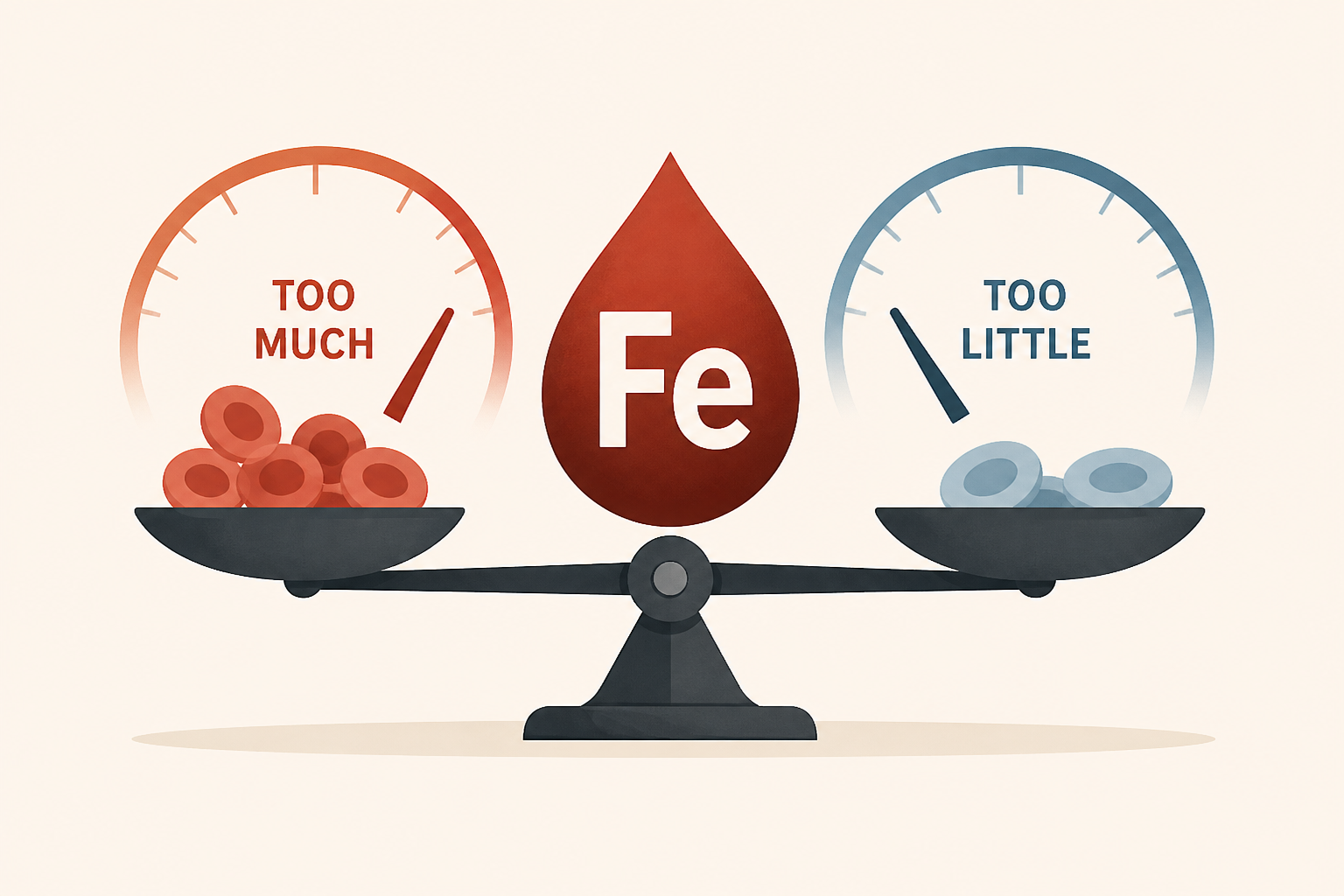
AI Generated Image
How To Tell If You’re Getting Too Much Or Too Little Iron
HuffPost • • health
Key Points:
- Iron deficiency affects about 14% of Americans and can cause symptoms like fatigue, brain fog, and easy bruising; it is commonly diagnosed through blood tests measuring ferritin, hemoglobin, hematocrit, serum iron, and transferrin levels.
- Causes of low iron include inadequate dietary intake, poor absorption (e.g., post-bariatric surgery), and chronic blood loss such as heavy menstrual periods, with symptoms including tiredness, weakness, dizziness, and restless legs.
- The typical iron supplement dose for deficiency is around 65 mg of elemental iron daily, with pregnant individuals advised to take about 27 mg daily; however, supplementation should only begin after confirming iron deficiency via testing.
- Taking more than 120 mg of elemental iron at once is generally excessive, and current guidelines recommend once-daily dosing for most cases, as higher or more frequent doses offer no additional benefit and may cause side effects like constipation, nausea, and stomach upset.
- Excessive iron intake can lead to iron overload (hemochromatosis), causing serious health issues such as heart failure and liver cirrhosis, and managing iron overload is complex since the body cannot naturally eliminate excess iron.


