AI Image
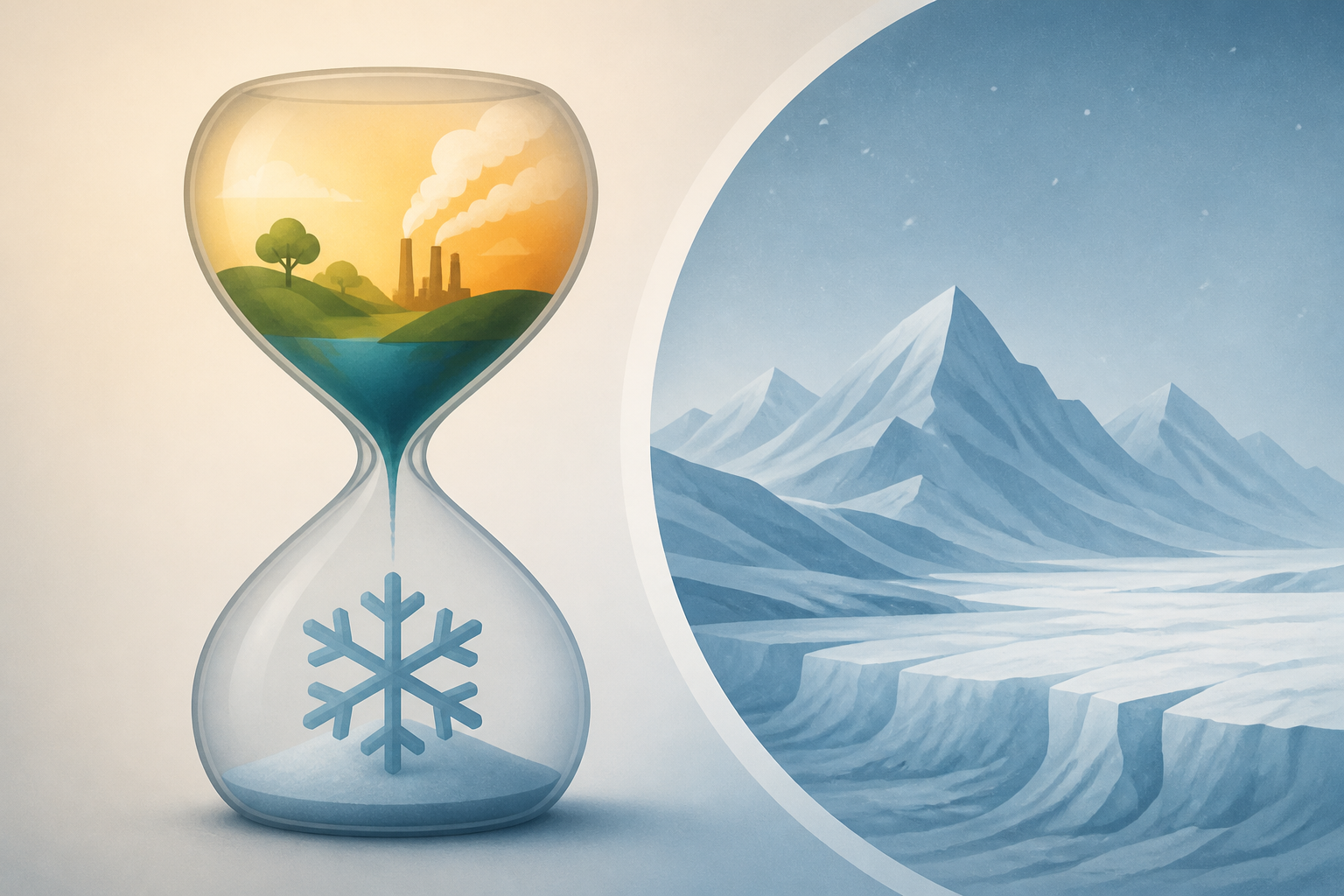
Humans accidentally canceled the next ice age, scientists say
CNN • • science
Key Points:
- New research on the shrinking Barnes Ice Cap in Arctic Canada suggests humans may have halted the planet’s next ice age by burning fossil fuels, as the ice cap began to regrow about 2,000 years ago but started shrinking again around 1960 due to climate change.
- Scientists used radiocarbon dating of preserved mosses and radioactive isotope analysis of rocks to reconstruct the ice cap’s history, finding that its regrowth marked the start of a new glaciation period that was interrupted by modern warming.
- The study argues that human-driven greenhouse gas emissions have overpowered natural cooling mechanisms that would have otherwise allowed the ice age to progress, effectively delaying future glaciation for a very long time.
- Some experts caution that the evidence for a new ice age starting is not definitive and note that other models predict the next ice age would not occur for tens of thousands of years even without global warming.
- The findings shed light on past scientific debates about global cooling in the 1970s and highlight the profound impact humans have had on Earth’s climate system, emphasizing that global warming has disrupted natural ice age cycles rather than “saving” humanity from an ice age.


