AI Image
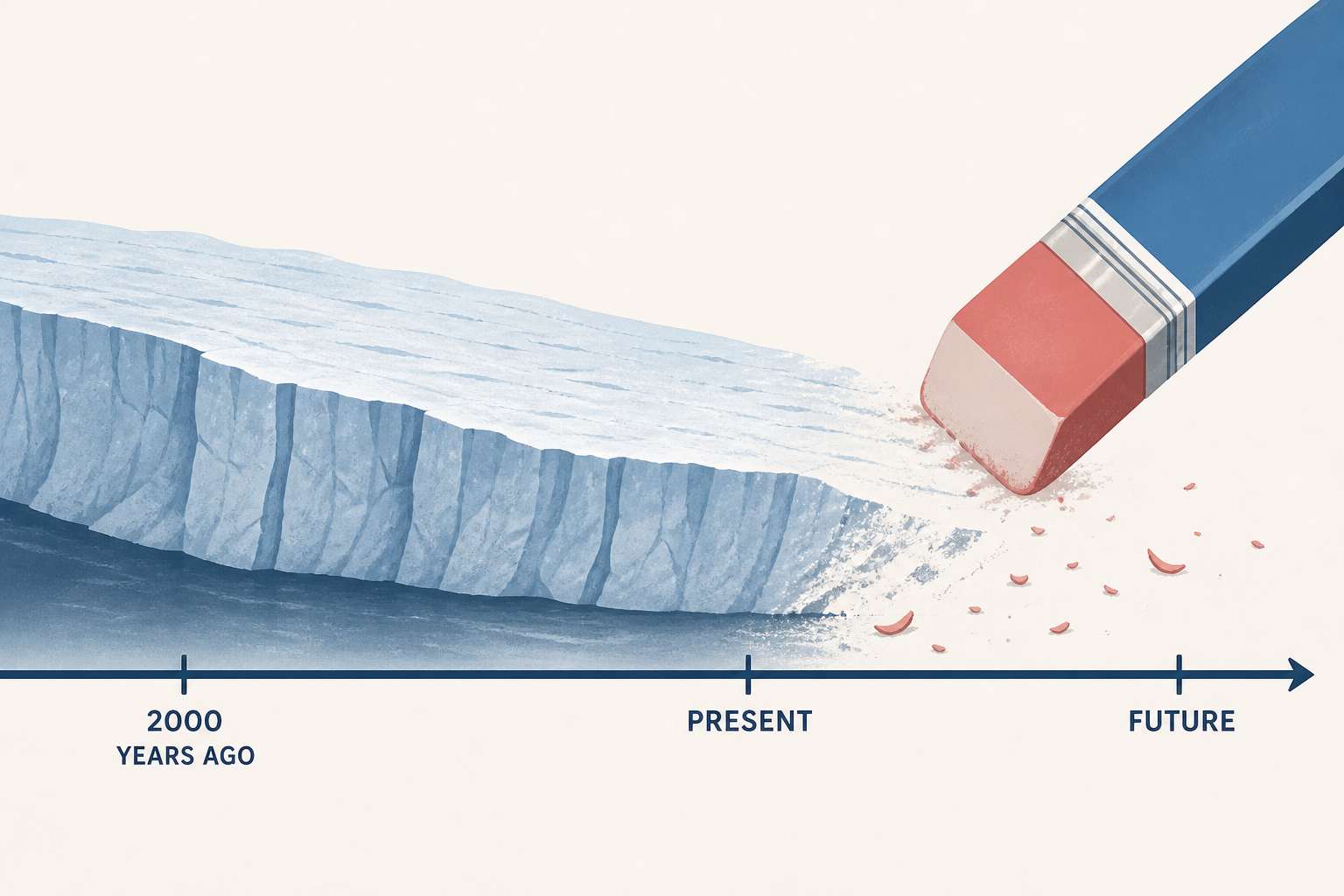
Ice sheet expansion may have started 2,000 years ago, but we canceled that
Ars Technica • • general
Key Points:
- The Barnes Ice Cap on Baffin Island is the last remnant of the Laurentide Ice Sheet and has provided physical evidence that the ice sheet began re-expanding about 2,000 years ago after reaching its smallest size 3,600 years ago, indicating the start of a new glaciation cycle.
- Researchers used beryllium-10 dating of rocks and radiocarbon dating of mosses frozen beneath the ice to determine the timing of the ice sheet’s retreat and subsequent advance, with most evidence pointing to ice growth culminating around 1800 CE during the Little Ice Age.
- The ice sheet’s re-expansion was driven by decreasing solar radiation at high northern latitudes overpowering a modest rise in atmospheric CO2 until about 1960, when human-caused greenhouse gas emissions reversed the trend and caused the ice to retreat again.
- Since the 1960s, the Barnes Ice Cap has lost its accumulation zone and is melting entirely during summers, with projections indicating it will disappear within a few centuries under any realistic emissions scenario.
- The study concludes that human-induced climate warming has interrupted a long-standing and consistent cycle of ice ages, effectively canceling the onset of a new glacial period that would have taken tens of thousands of years to develop naturally.


