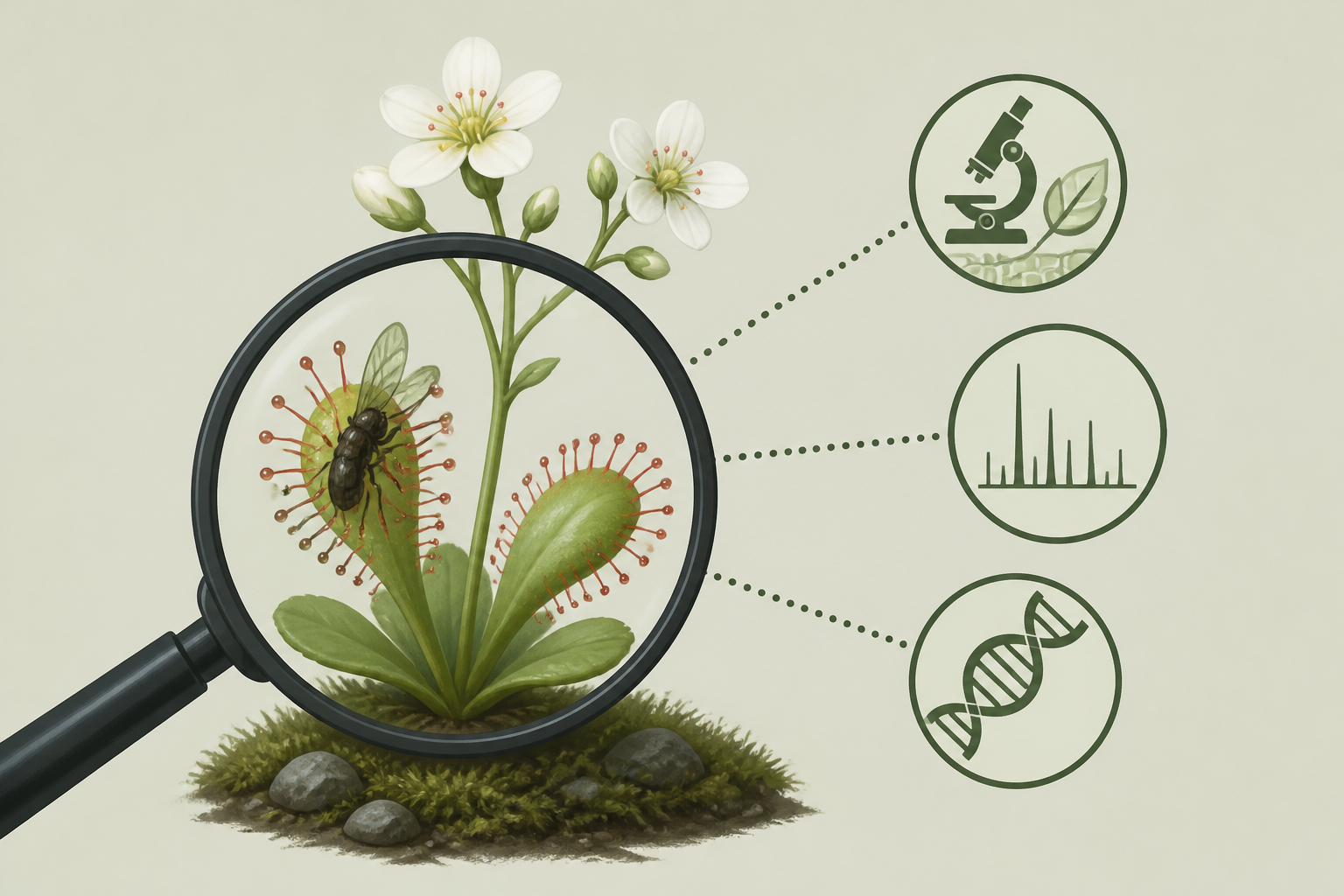
AI Generated Image
Identification of carnivory in the flowering plant Saxifraga via multidisciplinary evidence
Nature • • world
Key Points:
- Saxifraga candelabrum actively attracts and captures mainly small gnats (family Chironomidae) using glandular hairs on its inflorescence branches, with insect trapping positively correlated to branch number and length; larger pollinator insects are mostly not trapped, indicating selective prey capture to balance carnivory and pollination.
- The plant exhibits phosphatase enzyme activity in glandular hairs, confirming its ability to digest trapped insects directly; isotopic labeling experiments with 15N-labeled fruit flies demonstrated significant nitrogen uptake from prey, especially allocated to reproductive organs, confirming nutritional benefits of carnivory.
- Genomic analysis of S. candelabrum revealed gene family expansions and convergent molecular evolution shared with other sticky flypaper trap carnivorous plants, involving genes related to prey attraction, digestion, nutrient absorption, and mucilage production, highlighting convergent evolutionary pathways underlying carnivory.
- Comparative genomics across diverse carnivorous plants identified genes under positive selection and convergent amino acid substitutions associated with digestion, nutrient processing, and trap function, while some gene family contractions related to cellular plasticity and hormone signaling suggest adaptive genomic changes linked to carnivory.
- Extensive field, herbarium, biochemical, isotopic, and genomic studies collectively demonstrate that S. candelabrum is a carnivorous plant employing olfactory cues to attract prey, enzymatic digestion for nutrient acquisition, and evolved genomic adaptations convergent with other carnivorous lineages, providing new insights into the evolution of plant carnivory.


