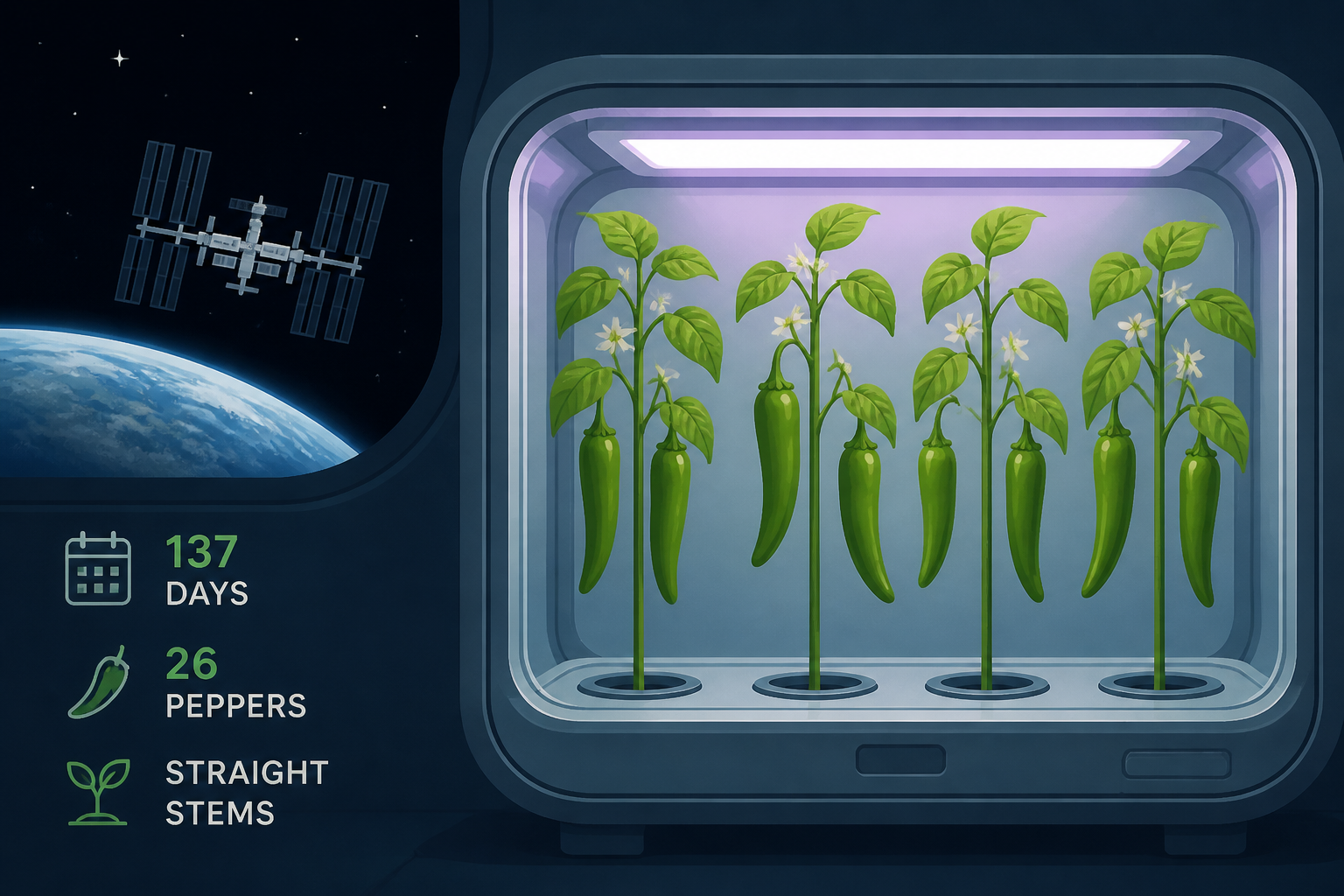
AI Generated Image
In 2021, NASA grew Hatch chile peppers aboard the ISS for 137 days; four plants in the Advanced Plant Habitat yielded 26 peppers, and the stems holding flower to fruit grew straight instead of curved
Space Daily • • science
Key Points:
- In 2021, NASA's Plant Habitat-04 experiment on the ISS grew Hatch chile plants that produced 26 peppers over 137 days, marking the longest plant experiment in ISS history and the first successful fruiting crop in space.
- A unique microgravity effect was observed: the pedicels (stems connecting flower to fruit) grew completely straight, unlike their curved form on Earth, demonstrating how plant structure adapts to the absence of gravity.
- The peppers matured and ripened normally, with some crew members noting increased spiciness, though no formal capsaicin analysis was conducted; about half the harvest was eaten on orbit while the rest was frozen and returned to Earth for microbial analysis.
- The microbial study found low bacterial and fungal counts with no foodborne pathogens, supporting the safety of growing and consuming fresh produce in space habitats.
- This experiment supports NASA's goal of cultivating reliable, nutritious crops like fruiting plants for long-duration space missions, addressing challenges like vitamin degradation in stored food and taste fatigue among astronauts.


