AI Generated Image
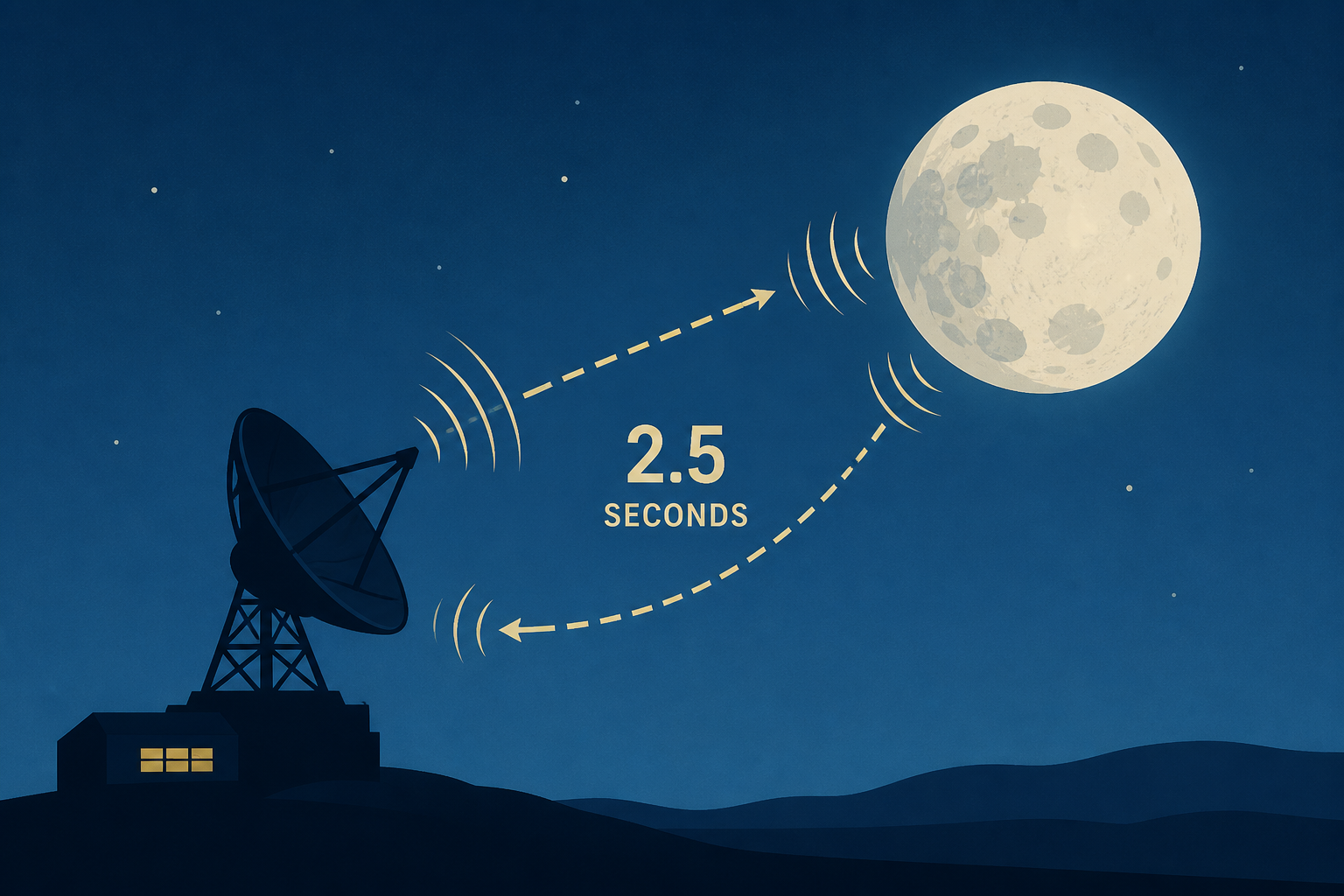
In January 1946, eleven years before Sputnik, a US Army radio crew in New Jersey bounced a signal off the Moon and heard it come back 2.5 seconds later, and that echo was the first time anything human
Space Daily • • health
Key Points:
- On 10 January 1946, engineers at Camp Evans in New Jersey successfully bounced a radar signal off the Moon, marking the first known contact between human-made technology and another celestial body.
- The project, named Project Diana and led by Lieutenant Colonel John DeWitt, aimed to determine if radio signals could penetrate the ionosphere, a key question for future missile tracking and space communication.
- Using modified wartime radar equipment, the team overcame significant technical challenges, including signal weakening over vast distances and Doppler shifts, to receive clear echoes from the lunar surface.
- The success proved that radio waves could pass through the ionosphere, laying the foundation for satellite communication, deep-space telemetry, radar astronomy, and ongoing Earth-Moon-Earth amateur radio communications.
- Project Diana's achievement preceded the launch of Sputnik by over a decade, representing the true beginning of the space age through a signal rather than a physical satellite.


