AI Generated Image
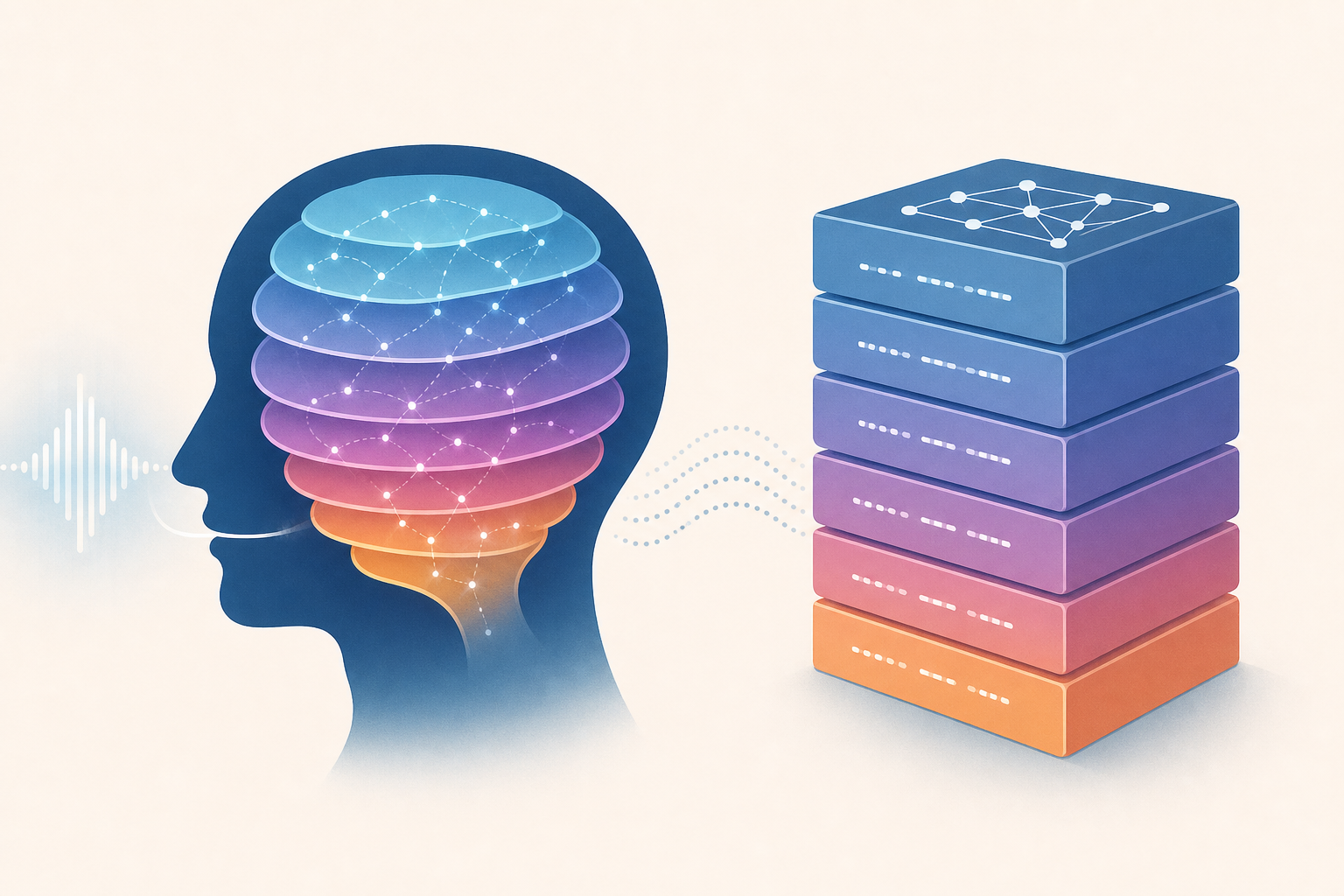
In January 2026, scientists reported that the human brain processes spoken language in a sequence that closely mirrors the layered architecture of advanced AI language models — suggesting that biologi
Space Daily • • health
Key Points:
- A January 2026 study led by Ariel Goldstein found that the human brain processes spoken language in a layer-by-layer sequence closely matching how large language models analyze text, moving from sound to meaning in a similar progression.
- The research involved recording neural activity from nine epilepsy patients listening to a podcast, allowing precise comparison between brain regions and the internal layers of a language model processing the same words.
- While the alignment suggests the brain and AI models share a similar solution shape for language comprehension, it does not prove they operate via the same computations or mechanisms, as they arise from fundamentally different processes.
- The findings offer neuroscientists a testable framework for understanding language processing as a gradual, statistical buildup of meaning rather than strict grammatical rule application, and enhance the utility of AI models as tools for brain study.
- Limitations include the small sample size, single language, and specific stimulus used; further research is needed to determine if the correspondence generalizes and what it reveals about the nature of meaning assembly in brain and machine.


