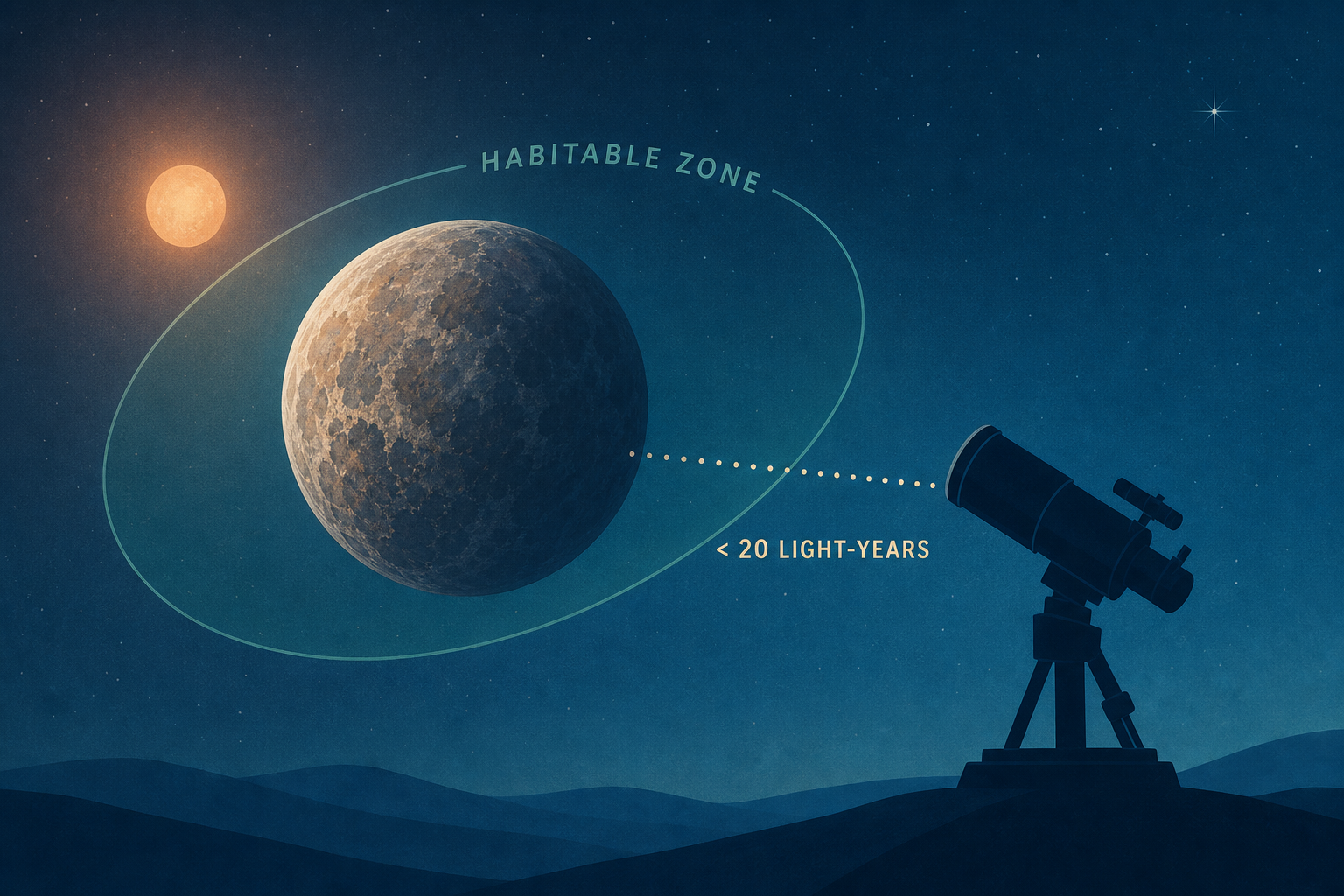
AI Generated Image
In November 2025, UC Irvine astronomers announced a rocky super-Earth called GJ 251 c orbiting in a habitable zone less than 20 light-years away — close enough that the next generation of ground-based
Space Daily • • science
Key Points:
- Astronomers have identified GJ 251 c, a nearby super-Earth orbiting the red dwarf star GJ 251 about 18 light-years from Earth, located in the star’s habitable zone where liquid water could potentially exist.
- Discovered through radial velocity measurements, GJ 251 c has an orbital period of approximately 53.6 days and a minimum mass of 3.84 Earth masses, placing it in the "plausibly terrestrial" category, though its exact size and atmospheric conditions remain unknown.
- The planet is notable for being a prime candidate for direct imaging by next-generation extremely large telescopes, which could allow astronomers to study its orbit, brightness, color, and atmospheric properties rather than relying solely on indirect detection methods.
- Despite its location in the habitable zone, uncertainties remain regarding GJ 251 c’s actual habitability due to factors such as potential tidal locking, stellar flares from its red dwarf host, and unknown atmospheric composition.
- The discovery represents a shift in exoplanet research toward identifying nearby worlds where detailed characterization is possible, marking a significant step beyond simply cataloging distant planets.


