AI Image
In Pompeii, a woman's wardrobe resurfaces with beauty items and jewels
Euronews.com • • world
Key Points:
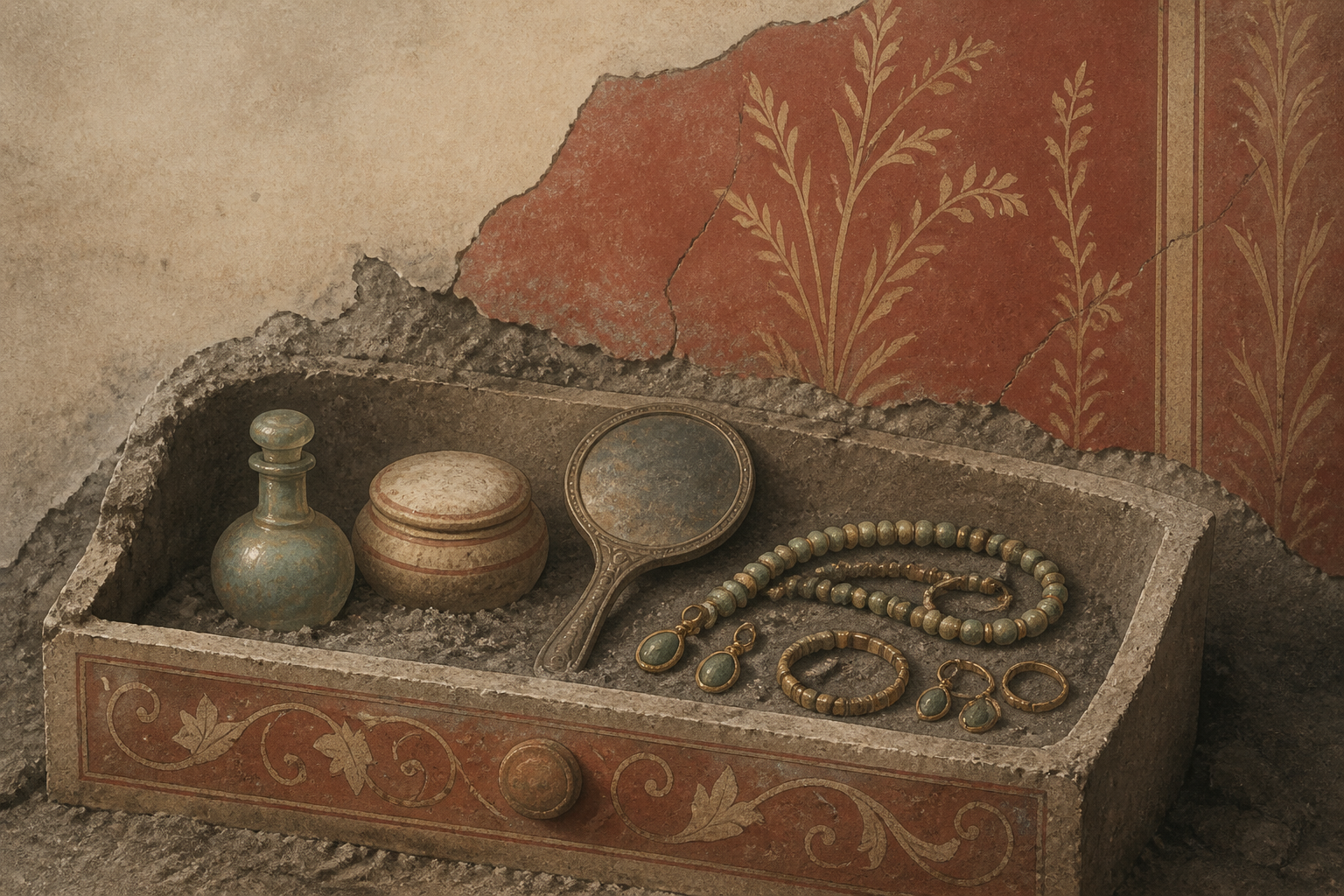
- Archaeologists have uncovered the contents of a wardrobe in the house of Cornelius Maximus in Pompeii, revealing everyday items such as make-up tools, a perfume burner, a bronze lamp, and lead weights, offering insight into the life of a Pompeian woman before the AD 79 eruption of Vesuvius.
- Among the finds is a necklace with 24 miniature amulets called crepundia, traditionally given to children for protection and often kept by adults as sentimental keepsakes, highlighting aspects of Roman cultural practices and mobility.
- A small hoard of 38 bronze coins was found in a plant-fiber container within the wardrobe, suggesting that the owner likely fled during the eruption and never returned to retrieve valuables, possibly perishing in the disaster.
- The house features refined Fourth Style wall paintings indicating a certain affluence, but ongoing construction at the time of the eruption likely affected living conditions; additionally, remains of two immature wood mice were found, illustrating the presence of rodents in Pompeian urban life.
- The discovery enriches understanding of Pompeii’s human dimension by connecting personal habits, work, and memories, though the exact identity of the wardrobe’s owner remains unknown, underscoring the everyday realities behind the ancient city's tragic history.


