AI Generated Image
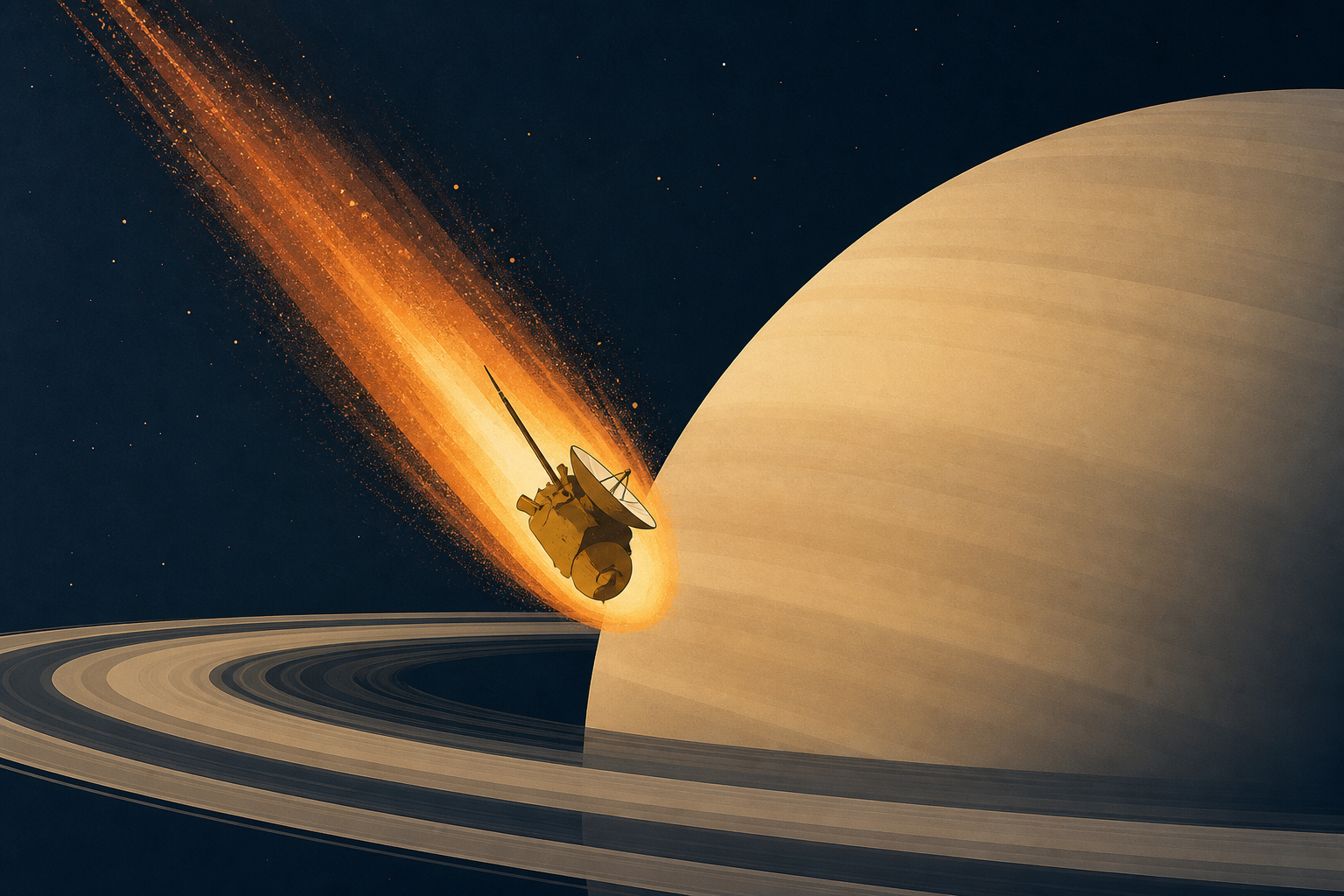
In September 2017, after 20 years in space, NASA deliberately flew the Cassini spacecraft into Saturn and let it burn up like a meteor — not because it had failed, but because it had found a possibly
19FortyFive • • science
Key Points:
- NASA's Cassini spacecraft, after 20 years in space and 13 years orbiting Saturn, was deliberately directed into Saturn in September 2017 to avoid contaminating Enceladus, a moon with a potentially habitable subsurface ocean discovered by Cassini.
- Cassini's mission, a collaboration between NASA, ESA, and the Italian Space Agency, launched in 1997 and extended well beyond its initial four-year plan, providing over 450,000 images and significant scientific insights, including the historic landing of the Huygens probe on Titan in 2005.
- The discovery of molecular hydrogen and evidence of hydrothermal activity on Enceladus indicated a chemically active ocean that could support life, making planetary protection paramount to prevent Earth microbes from contaminating this environment.
- Cassini's final phase involved 22 dives between Saturn and its rings, gathering unprecedented data on the planet’s interior and ring system, before its controlled descent into Saturn’s atmosphere, where it transmitted valuable atmospheric data until its destruction.
- The mission set a precedent for planetary protection protocols, influencing future missions like NASA's Juno and the upcoming Dragonfly mission to Titan, ensuring that exploration does not compromise the search for extraterrestrial life.


