AI Generated Image
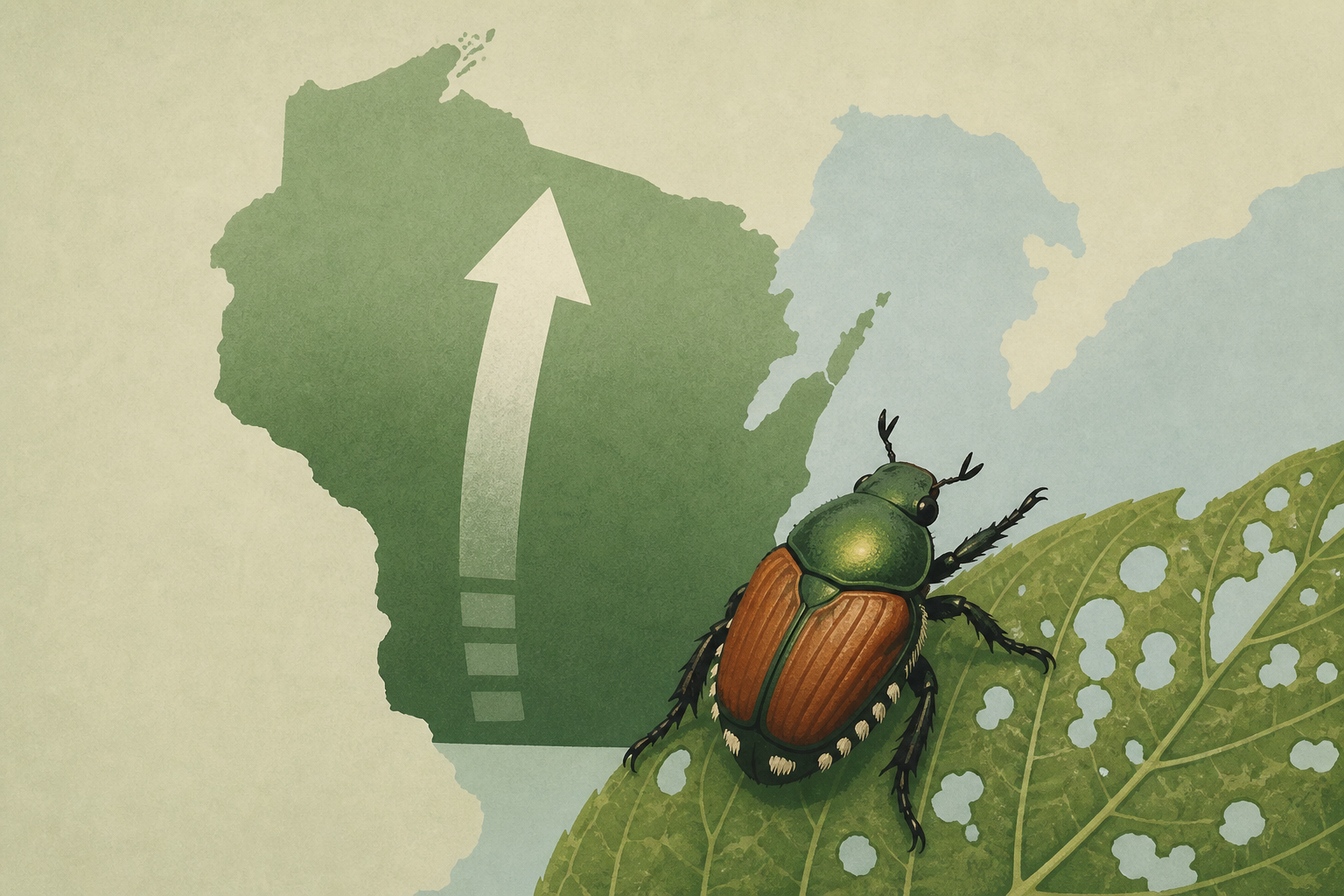
In Wisconsin, Japanese beetle populations are moving northward
Green Bay Press-Gazette • • science
Key Points:
- Japanese beetles in Wisconsin typically emerge around the Fourth of July and feed on about 350 plant species, causing noticeable damage primarily in northern regions of the state in recent years, while southern Wisconsin has seen reduced activity.
- The beetles have shifted northward, with increased sightings along the Highway 29 corridor and areas like Spooner, Minocqua, Eagle River, and Woodruff, a trend expected to continue due to milder winters and natural expansion.
- Japanese beetles survive Wisconsin winters by burrowing underground as larvae, where soil and snow cover buffer extreme cold, allowing them to emerge as adults in mid-summer to feed and reproduce.
- Natural predators and diseases, including a parasitic Winsome fly that lays eggs on beetles, are emerging in Wisconsin and may help control beetle populations; citizen scientists are encouraged to report sightings of these beneficial parasites.
- Originally introduced from Asia over 100 years ago, Japanese beetles remain a significant pest in the eastern U.S., with concerns about their potential impact on fruit industries like California’s if they spread further west.


