AI Image
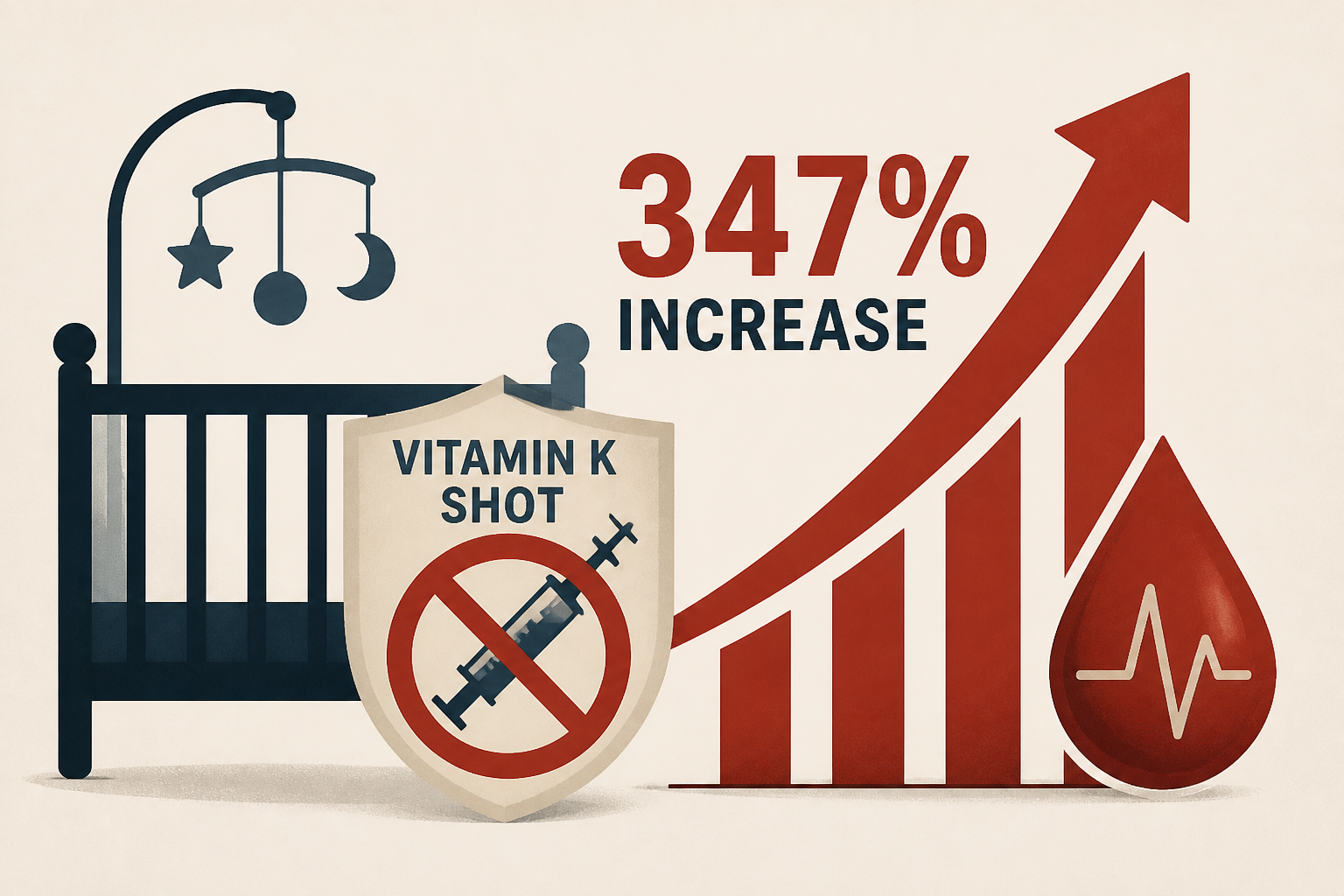
Infant Bleeding Episodes Skyrocket 347% as More Parents Refuse Vitamin K Shot
AOL.com • • health
Key Points:
- A study of 11 million infants from 2017 to 2025 found that vitamin K shot administration declined from 97.7% to 95%, while vitamin K deficiency bleeding (VKDB) increased by 347%.
- Newborns naturally have low vitamin K levels, which are critical for blood clotting, making the vitamin K shot essential to prevent dangerous bleeding.
- Researchers from Virginia Commonwealth University linked the rise in VKDB to increasing parental refusal of vitamin K shots, driven by growing mistrust in medical practices.
- Vitamin K deficiency can cause severe complications, including intracranial hemorrhage, seizures, brain damage, or death, with 7% of deficient infants developing brain bleeding.
- Experts emphasize the need for improved public health messaging to counter vaccine hesitancy and ensure newborns receive this vital preventive treatment.


