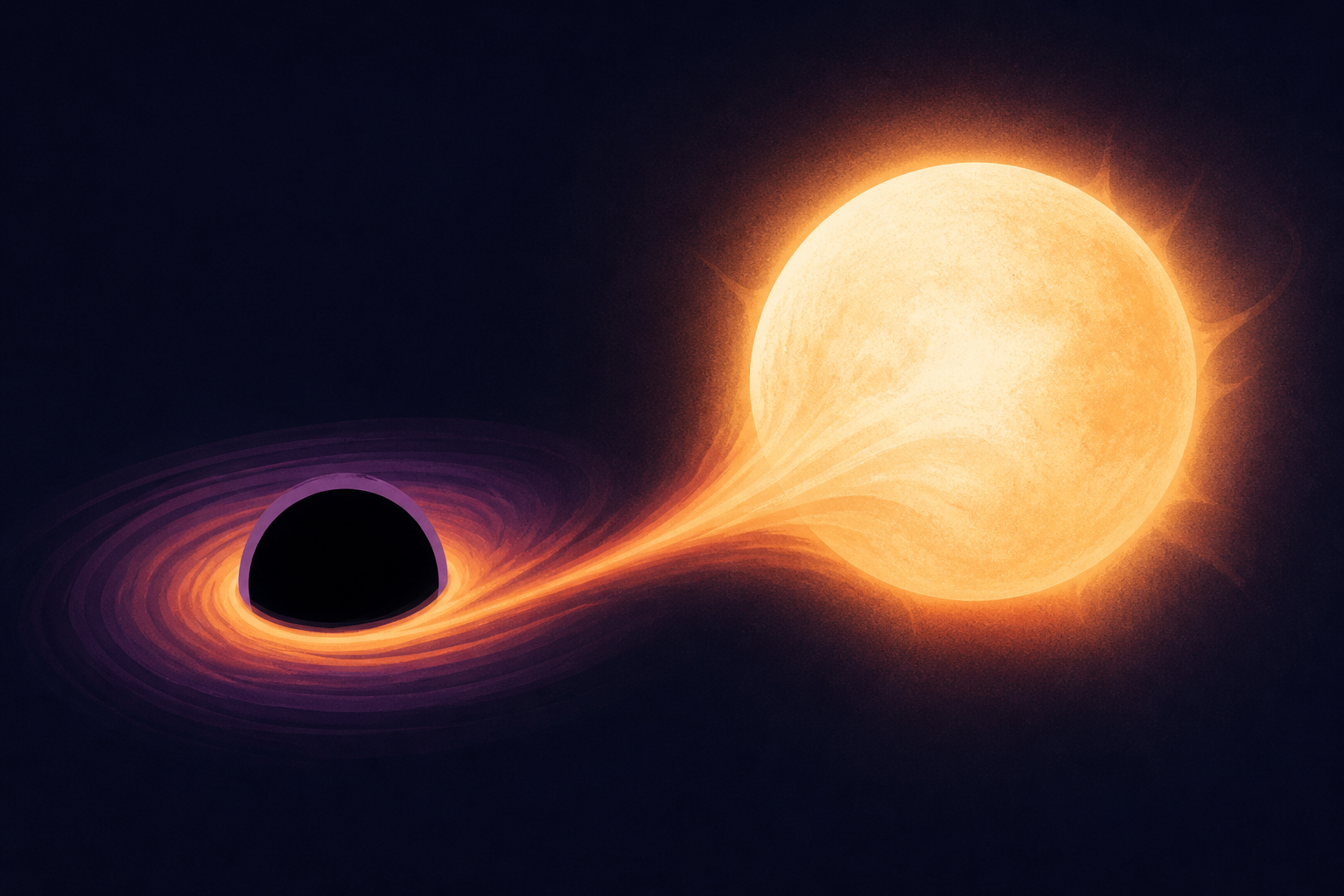
AI Generated Image
James Webb Space Telescope Discovers New Type Of Star Powered By Black Holes Instead Of Fusion
Jalopnik • • general
Key Points:
- Scientists have discovered a new type of celestial object called a "black hole star," which is a dense gas cloud surrounding a black hole, powered by the black hole's emitted energy rather than nuclear fusion.
- This newly identified object is extraordinarily bright—about 100 billion times brighter than an ordinary star—and is believed to be very ancient, likely existing only in the early universe.
- The discovery was made using NASA's James Webb Space Telescope, which detected unusually bright red dots in deep space images; simulations showed these dots could be explained by black holes enveloped in gas clouds, distinct from traditional accretion disks.
- Black hole stars appear to be phenomena from the universe's infancy, with no observations of such objects in the modern cosmos, suggesting they may represent an early growth phase of supermassive black holes.
- This breakthrough opens a new frontier in astronomy, challenging existing knowledge and prompting further research into the formation and evolution of black holes and their surrounding environments.


