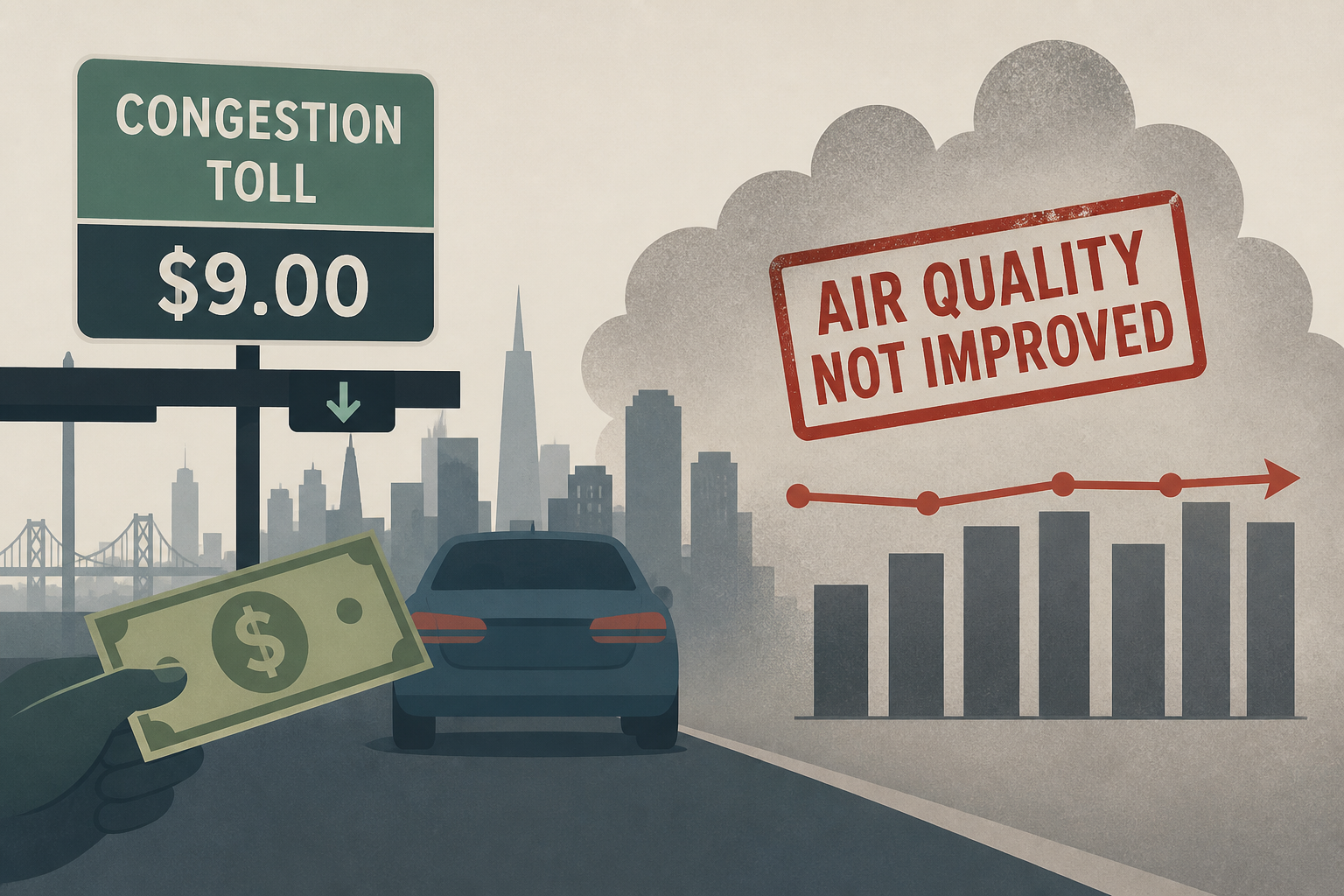
AI Generated Image
NYC drivers shell out $9 congestion toll. City admits it failed to improve air quality
nypost.com • • business
Key Points:
- New York City's $9 congestion toll, implemented in January 2025 to reduce traffic and improve air quality, showed no statistically significant improvement in pollution levels after its first year, according to a Health Department report.
- Despite an 11% reduction in traffic within Manhattan’s Congestion Relief Zone, vehicles contribute only about 10% of the city's pollution, with major sources being building emissions, restaurants, and power plants.
- City officials highlighted benefits such as reduced traffic, improved public transit, and less noise, while critics argue the toll is an expensive burden with limited environmental impact.
- The congestion pricing program faces opposition from figures like former President Trump and Transportation Secretary Sean Duffy, who criticize it as harmful to working-class Americans and small businesses.
- Governor Kathy Hochul continues to defend the program, calling it a success for reducing gridlock and funding transit upgrades, despite the report’s findings and public criticism.


