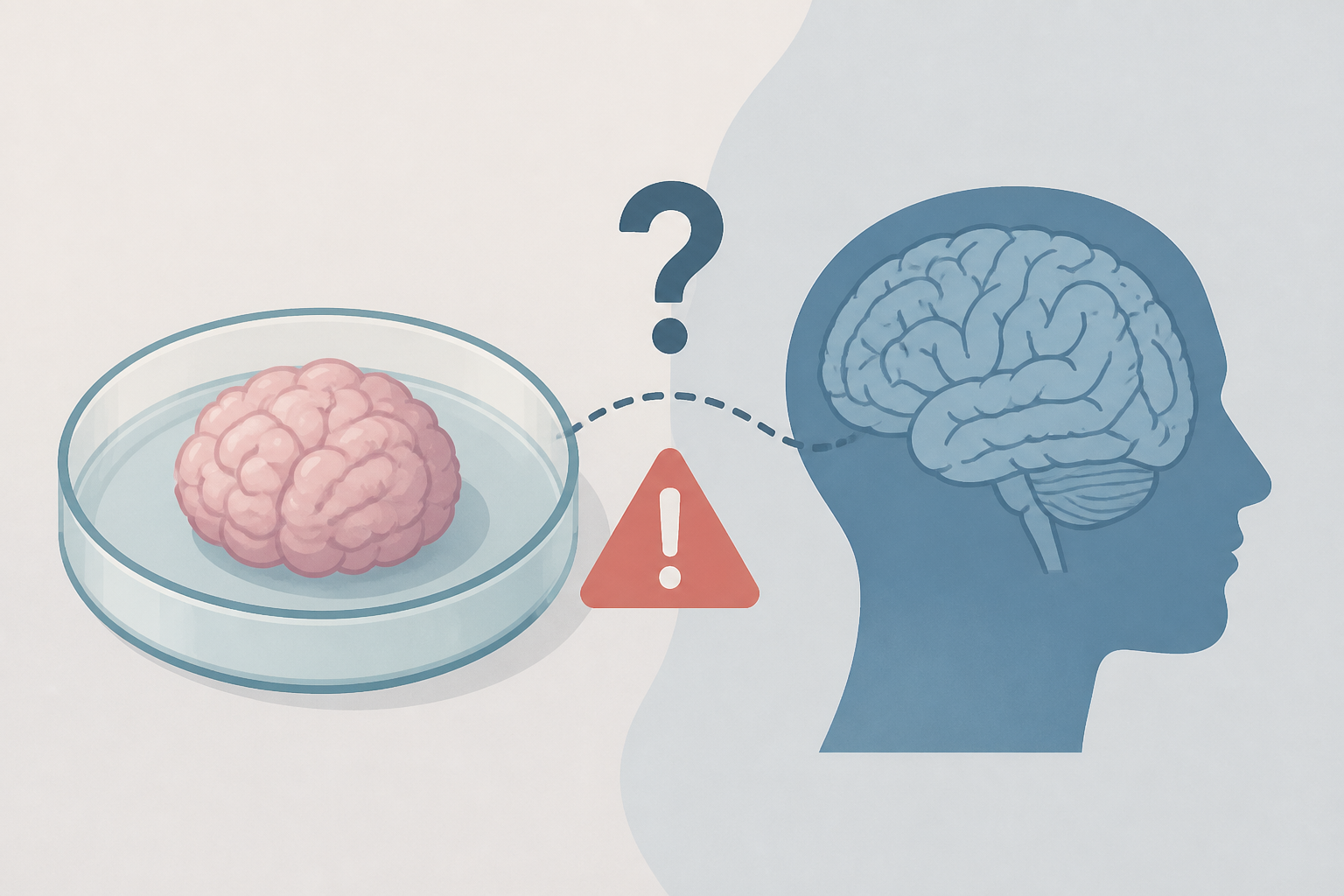
AI Generated Image
Lab-grown minibrains may not develop like real brains do, posing potential problems for research
Live Science • • health
Key Points:
- A new study published in Nature reveals that brain organoids, lab-grown mini-brains used to study fetal brain development, do not follow the same precise timing of cell development as real brains, potentially limiting their accuracy for research.
- Researchers found that while organoids produce the major cell types found in the cerebral cortex, the sequence of development is disrupted, with some stem cells forming neurons prematurely and others continuing to proliferate longer than normal.
- Unlike in real brains, where radial glial progenitors (RGPs) produce both deep and upper-layer neurons sequentially, about one-third of RGPs in organoids become restricted to producing only one neuron type, indicating a loss of developmental flexibility.
- The absence of blood vessels, extracellular structures, and metabolic signals in organoids likely contributes to the disrupted timing, as these external factors in real brains help coordinate neuronal development and circuit formation.
- Scientists aim to identify and reintroduce these missing environmental signals into organoids to better mimic real brain development, with plans underway to study human cell-based organoids to further understand human brain development.


