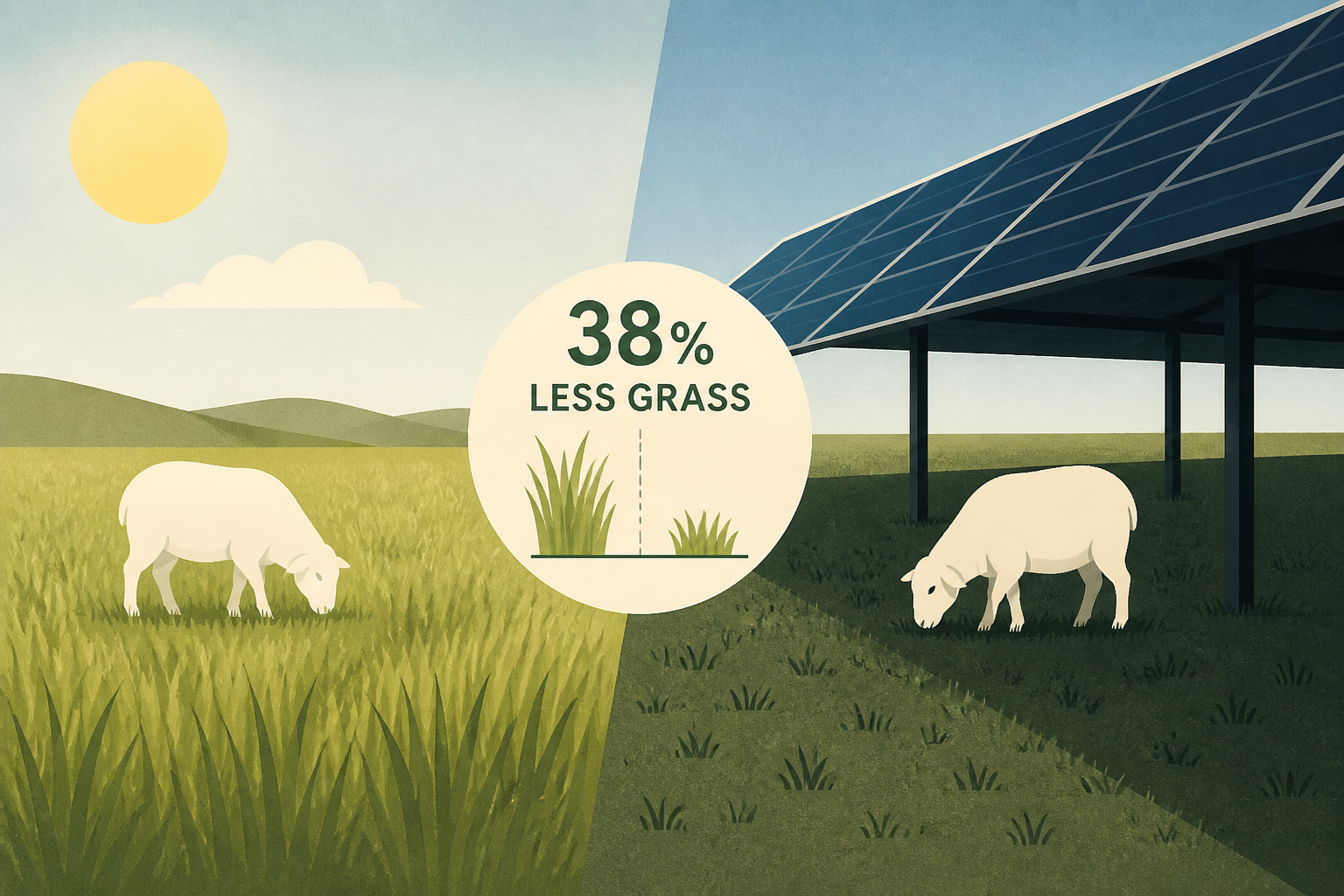
AI Generated Image
Lambs grazing under an Oregon solar farm had 38 percent less grass in front of them than lambs in the open field alongside, and they put on the same weight to the gram, because shade makes a pasture g
Space Daily • • health
Key Points:
- A two-year experiment at Oregon State University tested lamb growth on two adjacent pastures: one fully open and one shaded under a solar panel array, despite the shaded pasture producing 38% less forage.
- Lambs grazing under the solar panels gained weight at nearly identical rates to those in the open field, due to higher forage quality in the shaded pasture, which contained more protein and was more digestible despite lower biomass.
- The solar panels provided additional benefits by offering shade that reduced heat stress for the lambs, leading to lower water consumption and energy expenditure on cooling, allowing more energy for growth.
- Economic analysis showed grazing returns were nearly equal between the two pastures, with the shaded pasture also producing renewable energy, demonstrating effective dual land use (agrivoltaics) for food and power.
- The study challenges the assumption that solar panels reduce agricultural productivity by showing that while shade reduces forage quantity, it improves quality, enabling livestock to maintain growth and profitability under solar arrays.


