AI Image
Laser-made muons produce first images of dense objects
Phys.org • • science
Key Points:
- Researchers at the Horia Hulubei National Institute in Romania have created the first images using an artificial muon beam, overcoming the slow flow of natural cosmic muons in muography.
- Muography uses muons, particles similar to electrons but much heavier, to penetrate dense materials and map internal structures, but natural muon flux is too low for fast imaging.
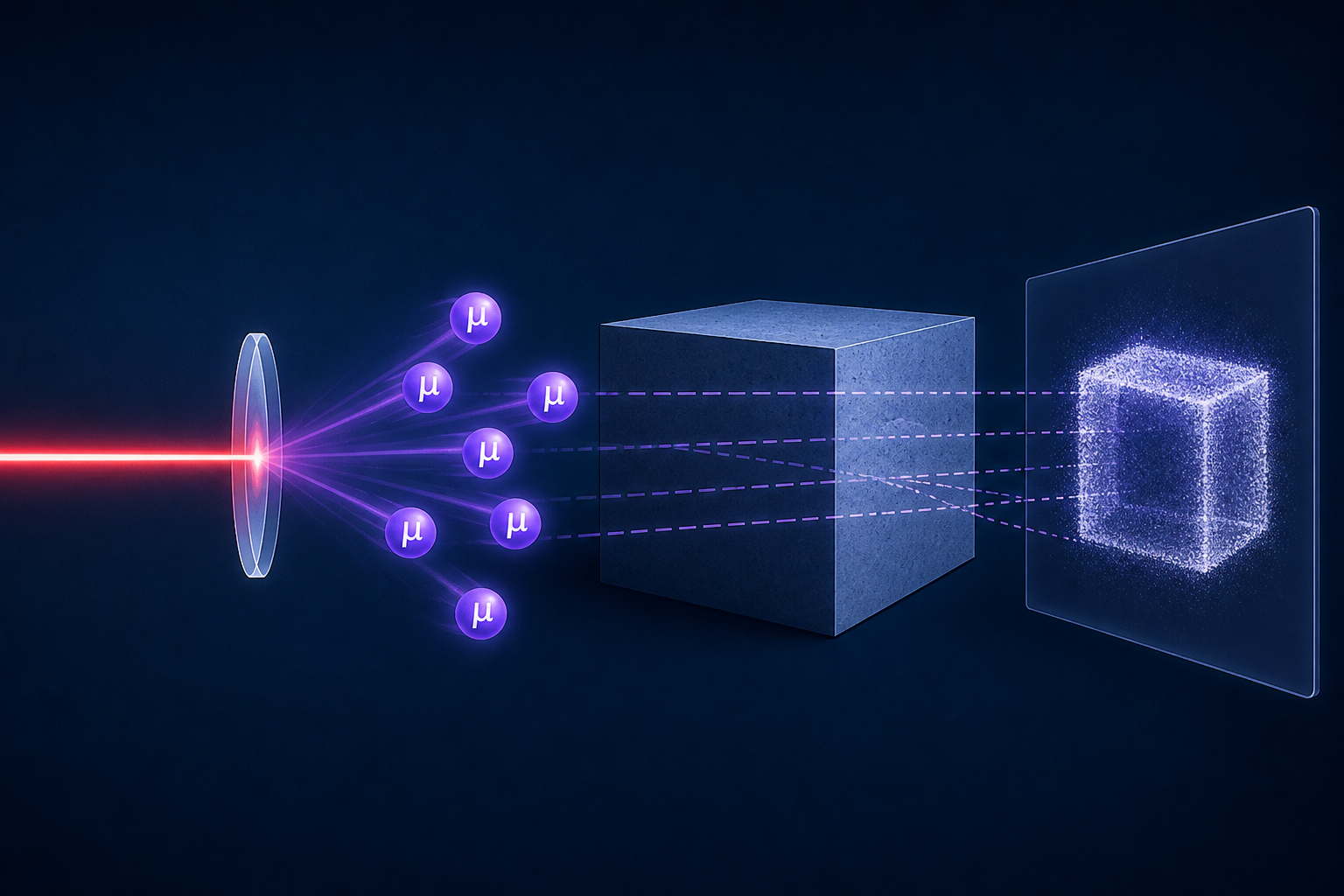
- The team generated muons by firing an ultra-powerful laser into gas to accelerate electrons, which then produced muons after hitting a solid target; unwanted particles were filtered out using plastic, paraffin, and concrete.
- The artificial muon beam successfully imaged the shadow of lead bricks, with about 90% of detected particles confirmed as muons, marking the first laser-driven muon-dominated image.
- Although current image resolution is low, improvements in detectors and lasers could enable practical applications such as inspecting aging infrastructure or detecting concealed nuclear materials.


