AI Image
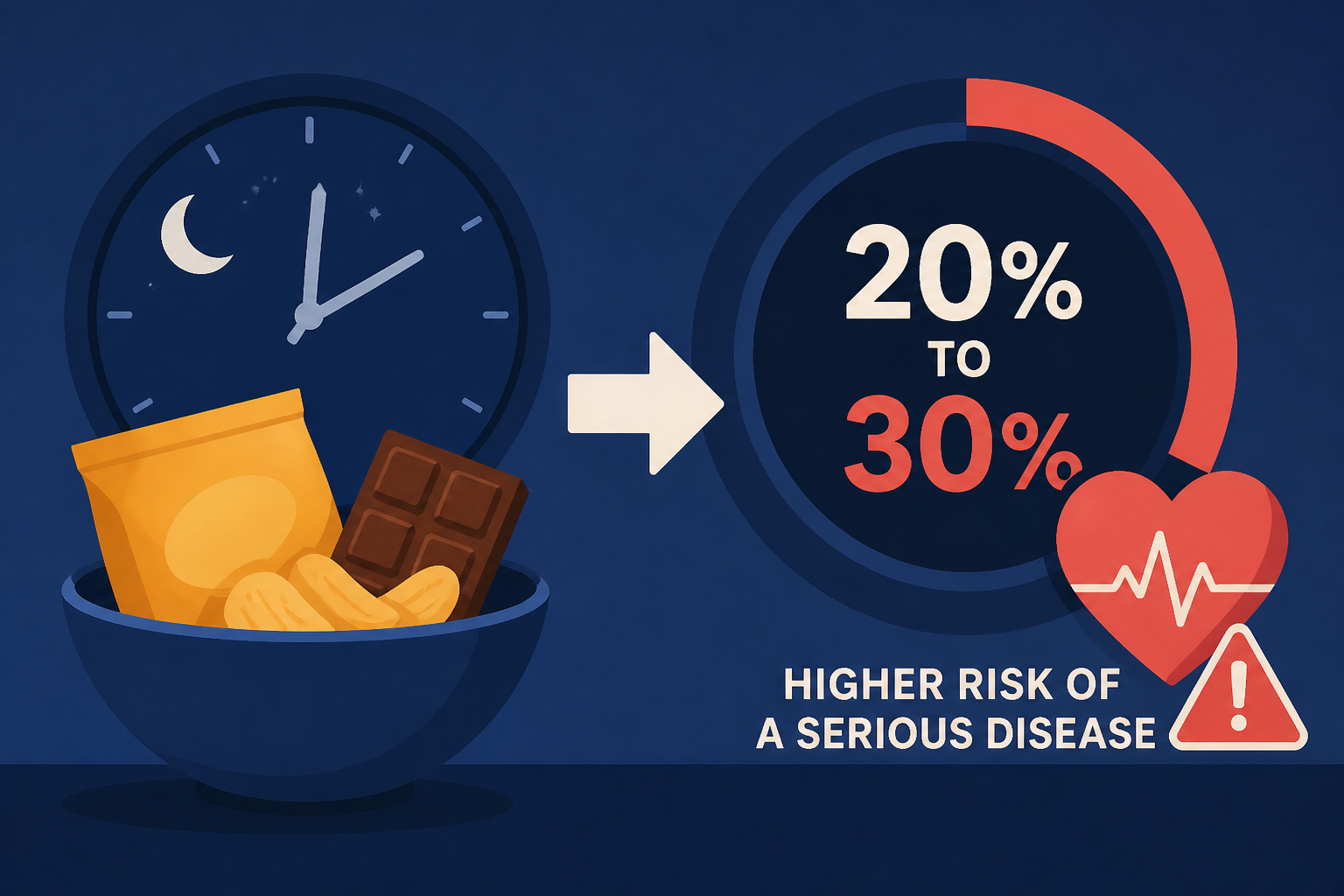
Late-night snacking raises risk of a serious disease by 20% to 30%
New York Post • • health
Key Points:
- A new study published in Clinical Gastroenterology and Hepatology found that late-night snacking significantly increases the risk of metabolic dysfunction-associated steatotic liver disease (MASLD) and cirrhosis over an average follow-up of 16 years.
- Late-night eaters, defined as those who consume food after dinner or bedtime, showed a 20% to 30% higher risk of developing various forms of liver disease compared to those who avoid late-night snacks.
- The liver's intrinsic circadian clocks play a crucial role in metabolism, and eating during late hours disrupts this timing, reducing the body's ability to metabolize food efficiently and increasing the risk of liver damage.
- MASLD involves fat accumulation in the liver that can lead to inflammation and severe conditions like cirrhosis, which causes permanent liver damage and impairs vital functions such as protein production and infection control.
- Researchers emphasize that not only the composition of food but also the timing of eating habits affects health, suggesting that avoiding late-night snacking could lower the risk of liver disease and other metabolic disorders.


