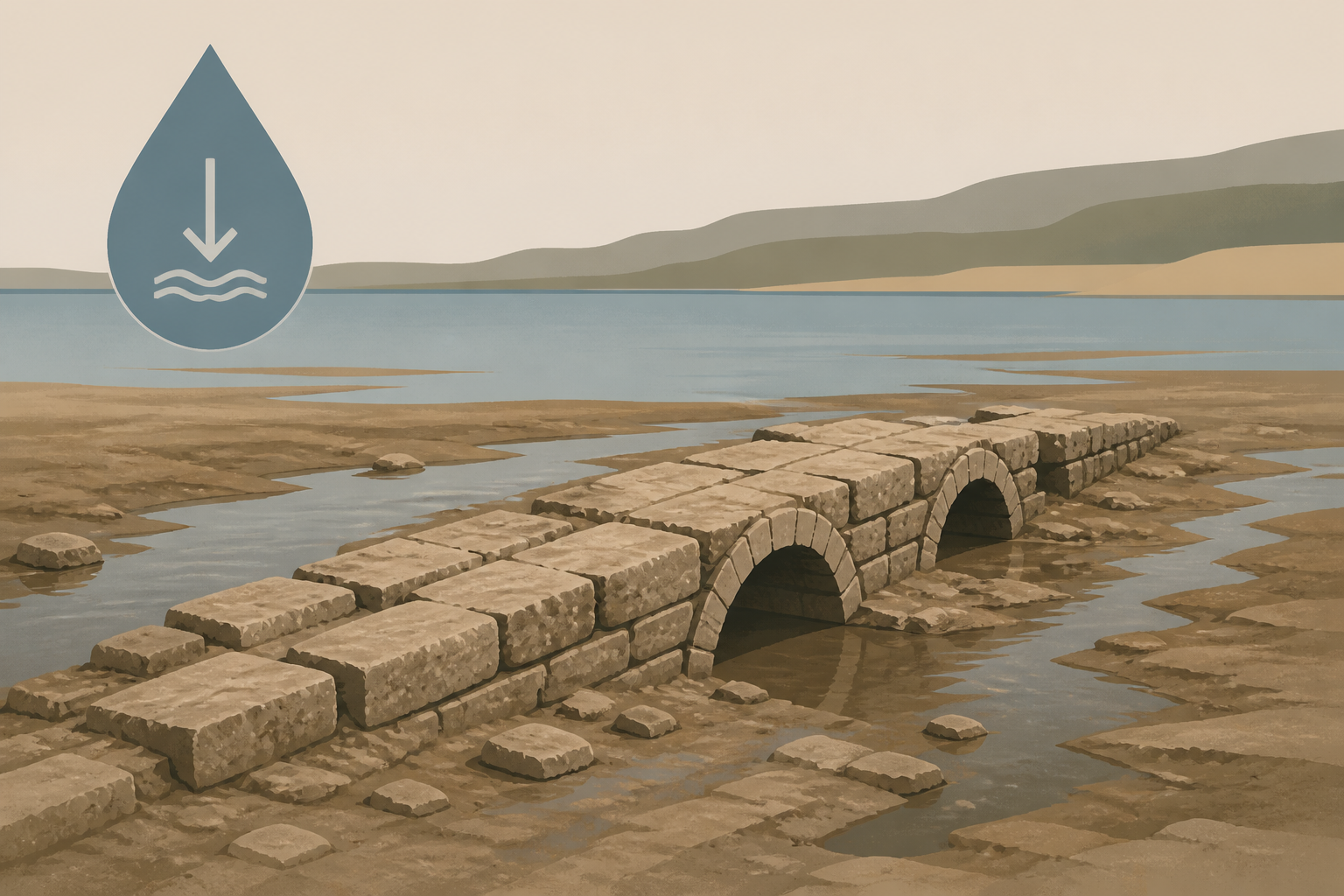
AI Generated Image
Low Danube water levels in Bulgaria expose Roman-era bridge
The Jerusalem Post • • world
Key Points:
- Exceptionally low water levels on the Danube, caused by record-breaking heatwaves and drought in Europe, have exposed parts of the ancient Constantine Bridge's foundations, allowing Bulgarian archaeologists to document this significant Roman engineering feat.
- The Constantine Bridge, commissioned by Emperor Constantine I and inaugurated in 328 CE, was one of antiquity's longest bridges, linking Ulpia Oescus and Sucidava; it was largely destroyed around 367 CE.
- Researchers from the Pleven museum used drones to map and photograph the exposed bridge remains near Gigen, northern Bulgaria, taking advantage of the rare opportunity to study the structure in situ.
- The Danube's receding water levels have also revealed dozens of German World War II battleships near Prahovo, believed to be part of Nazi Germany’s Black Sea fleet scuttled during their retreat.
- Additional finds include the skeletal remains of two Nazi soldiers discovered near Budapest and Ice Age mammoth remains unearthed in northern Bulgaria’s Ryahovo village, highlighting the historical and archaeological significance of the drought-exposed riverbeds.


