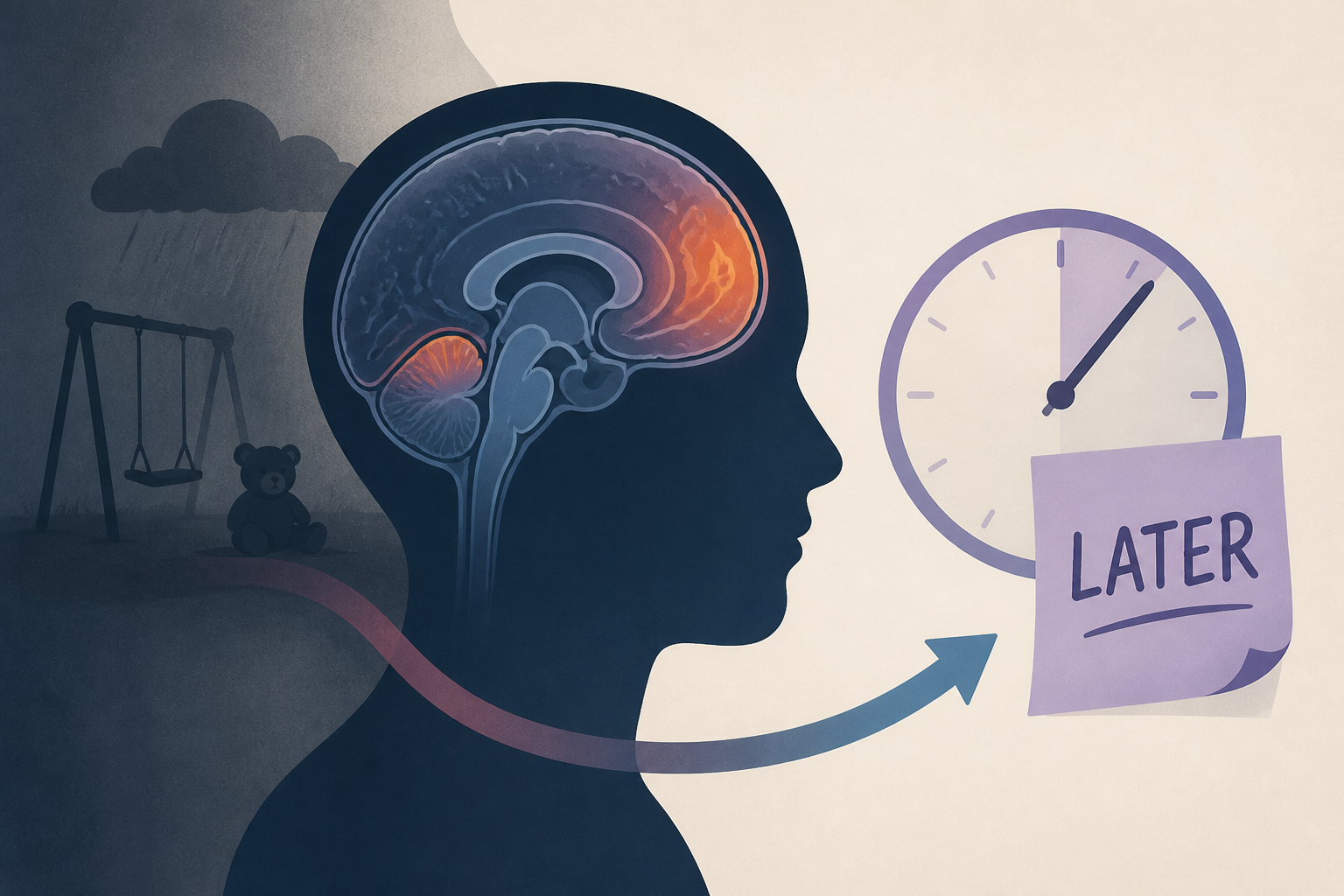
AI Generated Image
Brain imaging study links childhood trauma to chronic procrastination in adulthood
PsyPost • • health
Key Points:
- A new study published in NeuroImage links childhood trauma to higher rates of procrastination in young adults, suggesting trauma-related changes in brain networks increase anxiety and reduce self-control, which contribute to chronic delay.
- Researchers at Southwest University in China used brain scans and behavioral surveys of over 1,000 undergraduate students to find that childhood abuse or neglect disrupts brain systems involved in emotion regulation and cognitive control, leading to heightened trait anxiety and lower self-control.
- Functional MRI data revealed altered connectivity in key brain networks, including weaker prefrontal cortex connections responsible for goal-directed behavior and stronger connections in areas related to threat detection, supporting a triple-network model explaining procrastination as an imbalance between self-control, emotion regulation, and future planning.
- The study’s cross-sectional design limits causal conclusions, and effects observed were modest; researchers recommend longitudinal studies and more diverse populations to better understand how early trauma impacts brain function and procrastination tendencies.
- Findings emphasize the importance of considering childhood trauma’s neurobiological impact on procrastination, challenging views that procrastination is merely laziness or poor time management.


