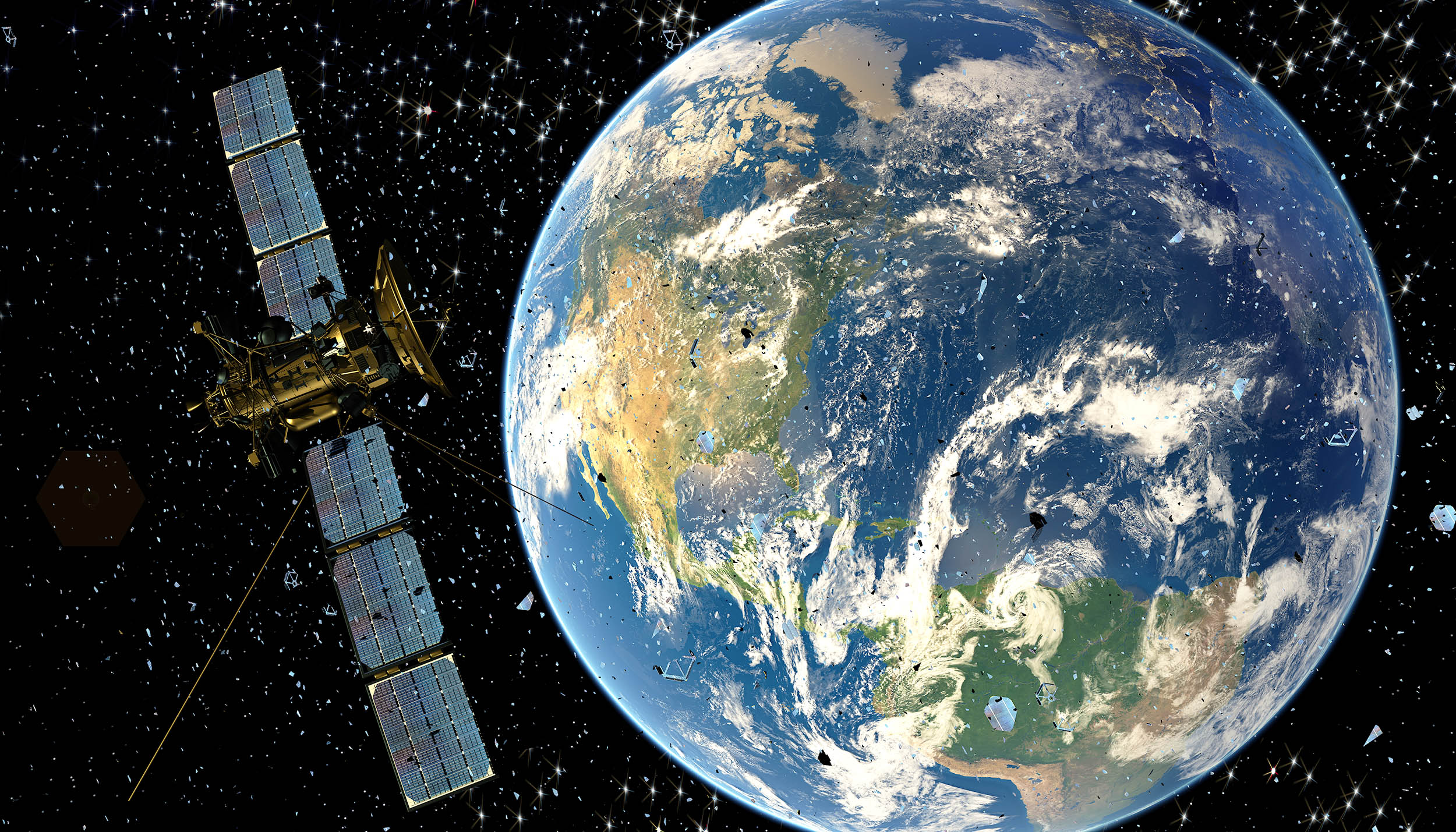
Low-Earth orbit is a "house of cards" just 2.8 days from disaster
Earth.com • • science
Key Points:
- Researchers led by Sarah Thiele warn that the rapidly growing mega-constellations of satellites in low Earth orbit resemble a "house of cards," relying on constant maneuvering to avoid collisions and vulnerable to rare disruptions like solar storms.
- Low Earth orbit has become extremely crowded, with satellites frequently performing avoidance maneuvers; for example, Starlink satellites average 41 course corrections annually, highlighting the system’s dependence on continuous control.
- Solar storms pose a significant risk by increasing atmospheric drag and disrupting satellite navigation and communications, which can lead to rapid fuel depletion and loss of command, raising the likelihood of collisions.
- The study introduces the Collision Realization and Significant Harm (CRASH) Clock metric, estimating that a total loss of collision avoidance control could trigger a catastrophic satellite collision within about 2.8 days as of mid-2025, a drastic reduction from 121 days in 2018.
- While mega-constellations offer important benefits like global connectivity, the research emphasizes the need to address the fragility of this space infrastructure, as severe space weather events could cause cascading failures with long-term consequences for space access.


