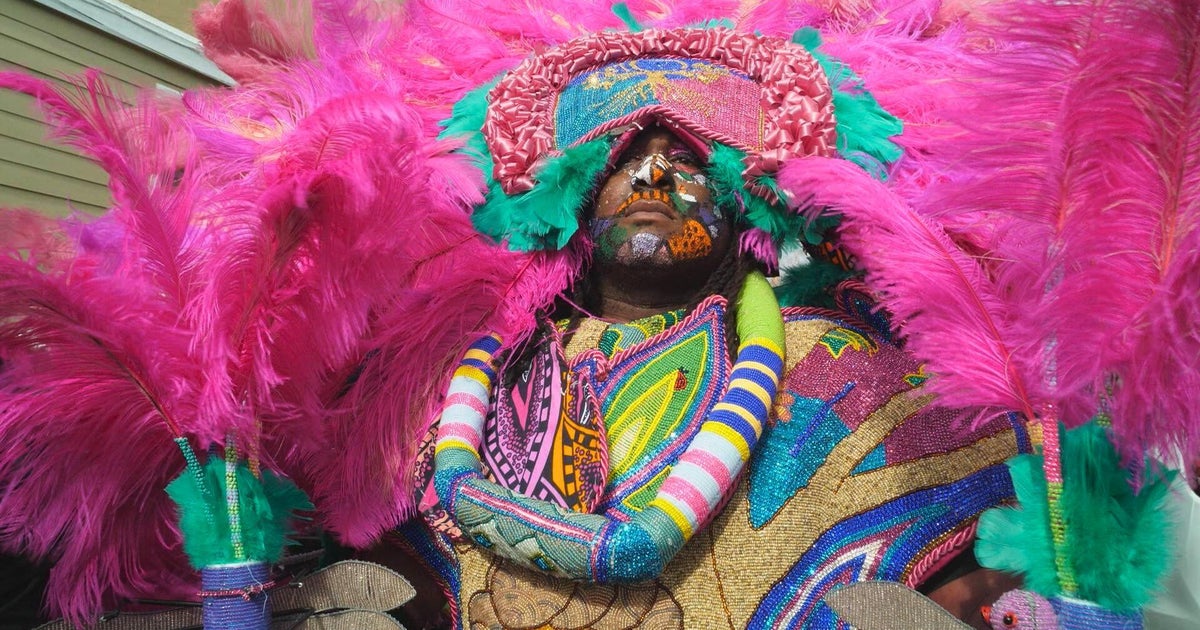
Mardi Gras Indians, or Black Masking Indians, spend months, thousands of dollars preparing hand-sewn suits
CBS News • • entertainment
Key Points:
- Mardi Gras Indians are Black revelers in New Orleans who wear elaborate, hand-sewn suits on Mardi Gras day, honoring ancestors and Native Americans who sheltered escaped enslaved Africans; this tradition dates back to the 1800s.
- The suits, costing up to $25,000 and requiring thousands of hours to create, are a vibrant cultural expression combining African, Caribbean, and Native American influences, with each tribe led by a "big chief" who competes in friendly "mock battles" showcasing their suits.
- Big Chief Demond Melancon and Big Chief Monk Boudreaux are prominent figures preserving this culture, with Demond also gaining recognition in the fine art world and Monk being a legendary musician who helped popularize Mardi Gras Indian chants.
- The tradition is deeply rooted in resistance to oppression and community pride, and despite challenges like Hurricane Katrina and gentrification, the Mardi Gras Indian culture remains a vital and secretive part of New Orleans' heritage.
- Preservation of the culture for future generations is a central focus, with leaders like Demond and Monk emphasizing mentorship and the passing down of skills and stories, even as Monk faces health challenges and prepares to pass on his role.


.png?format=webp&w=120&h=80)


