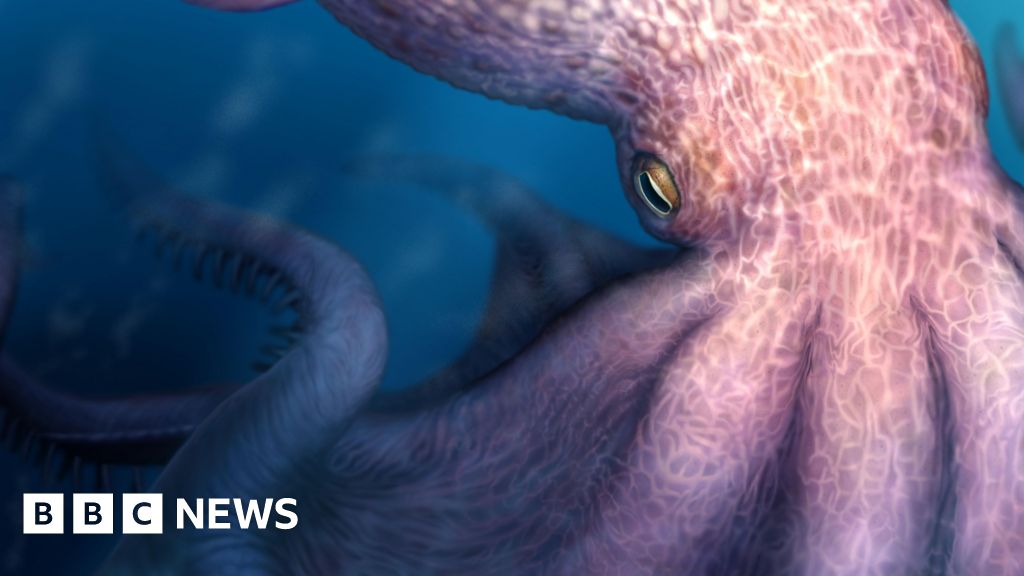
Meet the 19 metre octopus that may have prowled ancient seas
BBC • • general
Key Points:
- New research suggests that giant octopuses, potentially reaching up to 19 metres in length, may have been dominant ocean predators around 100 million years ago, challenging the belief that large ancient ocean predators were mainly vertebrates.
- Fossilized jaws studied by scientists from Hokkaido University indicate these octopuses had strong beak-like jaws capable of chewing hard shells and skeletons, with body lengths estimated between 1.5 to 4.5 metres excluding arms.
- Uneven wear on the fossil jaws suggests these ancient octopuses may have favored one side while feeding, a behavior linked to advanced brain function in modern animals.
- Despite these findings, many details about their exact shape, swimming speed, and diet remain unknown, with some experts speculating they mainly preyed on ammonites but were likely opportunistic hunters.
- The study challenges previous views of ancient marine ecosystems and highlights the need for further research to fully understand the biology and ecology of these giant ancient octopuses.


