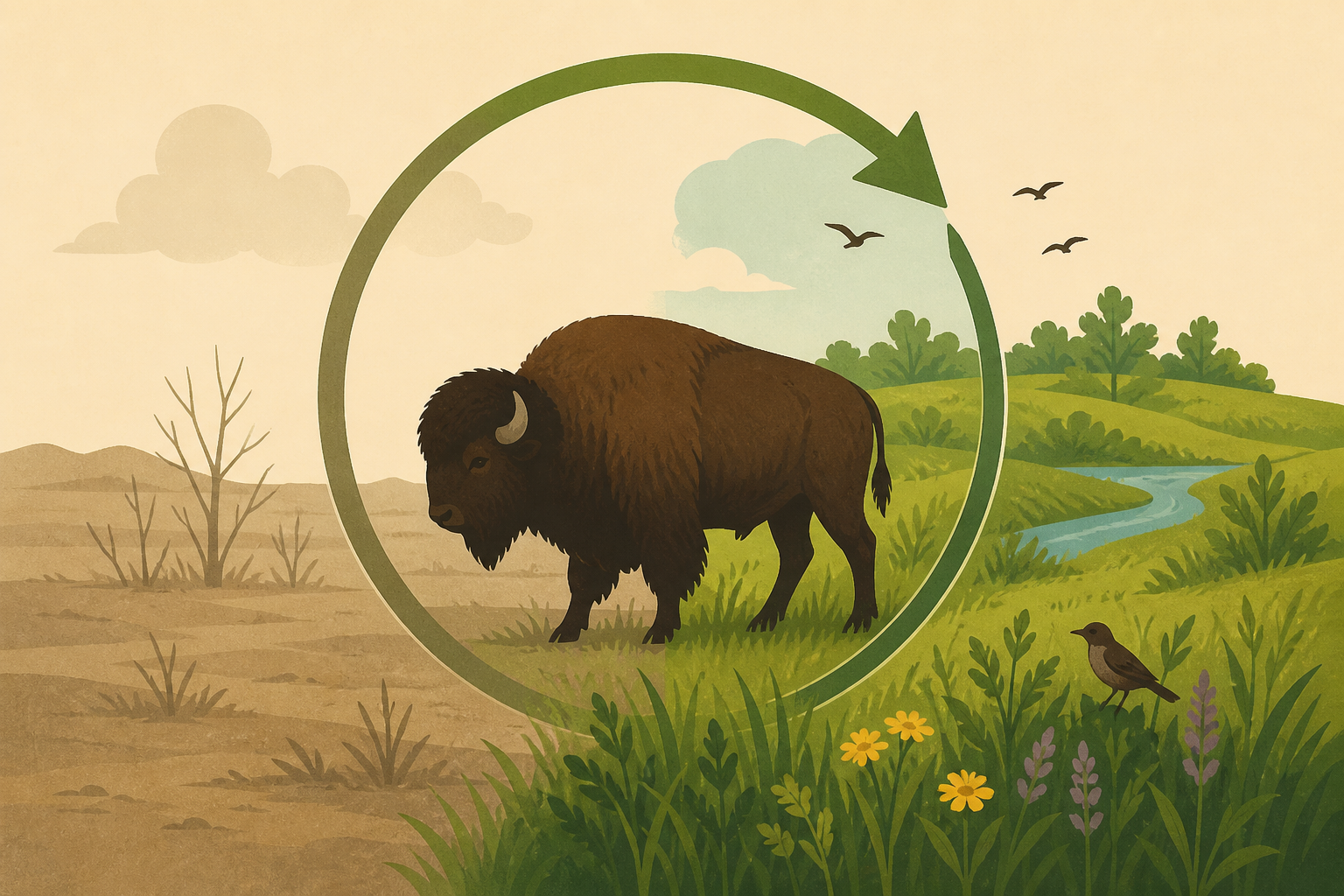
AI Generated Image
Mexico reintroduced 47 bison in 2025 after more than 100 years: Just months later, the ecosystem is restoring itself
Diario AS • • world
Key Points:
- Nearly 50 bison were reintroduced last year into Cuatrociénegas, a UNESCO-recognized nature reserve in Mexico’s Chihuahuan Desert, aiming to restore the local ecosystem.
- The bison, extirpated from the area in the 19th century, act as ecosystem engineers by regenerating soil, improving water infiltration, reducing wildfire risk, and enhancing biodiversity.
- Their grazing reduces dry vegetation, lowering wildfire risk, while their hooves till the soil, promoting plant growth and seed dispersal through fur entanglement.
- Bison manure attracts dung beetles that improve soil fertility and aeration, contributing further to ecosystem health.
- The presence of bison has encouraged the return of previously absent animals such as pumas, lynxes, and collared peccaries, while local birds use bison fur for nesting, demonstrating broader ecological benefits.


