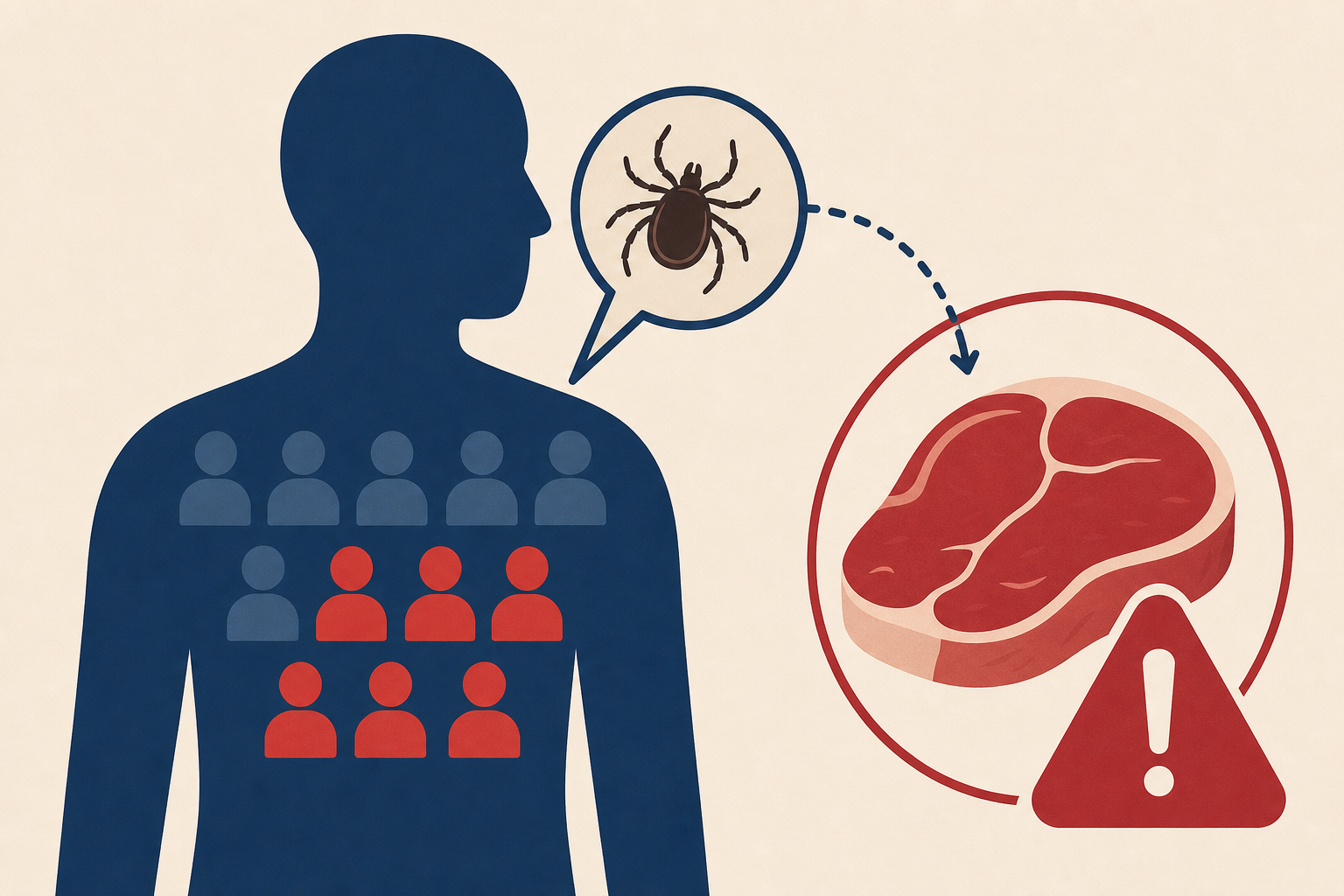
AI Generated Image
More people than thought may be at risk for red meat allergy caused by ticks
Yahoo • • health
Key Points:
- New CDC research estimates that nearly 24% of adults in five states with prevalent lone star ticks show antibodies indicating tick bites and exposure to alpha-gal, the sugar molecule causing alpha-gal syndrome, an allergy to red meat.
- Alpha-gal syndrome is triggered when lone star ticks, having fed on mammals carrying alpha-gal, bite humans and transmit the molecule, potentially causing allergic reactions to red meat and related products.
- The presence of alpha-gal antibodies does not confirm alpha-gal syndrome or necessitate testing but may indicate increased future risk; further studies are needed to clarify this relationship.
- The CDC previously estimated 450,000 U.S. cases of alpha-gal syndrome, but the true prevalence is unknown due to limited reporting requirements and the condition not being nationally notifiable.
- The syndrome is spreading beyond the East and Midwest as lone star ticks expand their range, with other tick species also capable of transmitting alpha-gal; symptoms often appear hours after eating meat and the condition is lifelong once developed.


