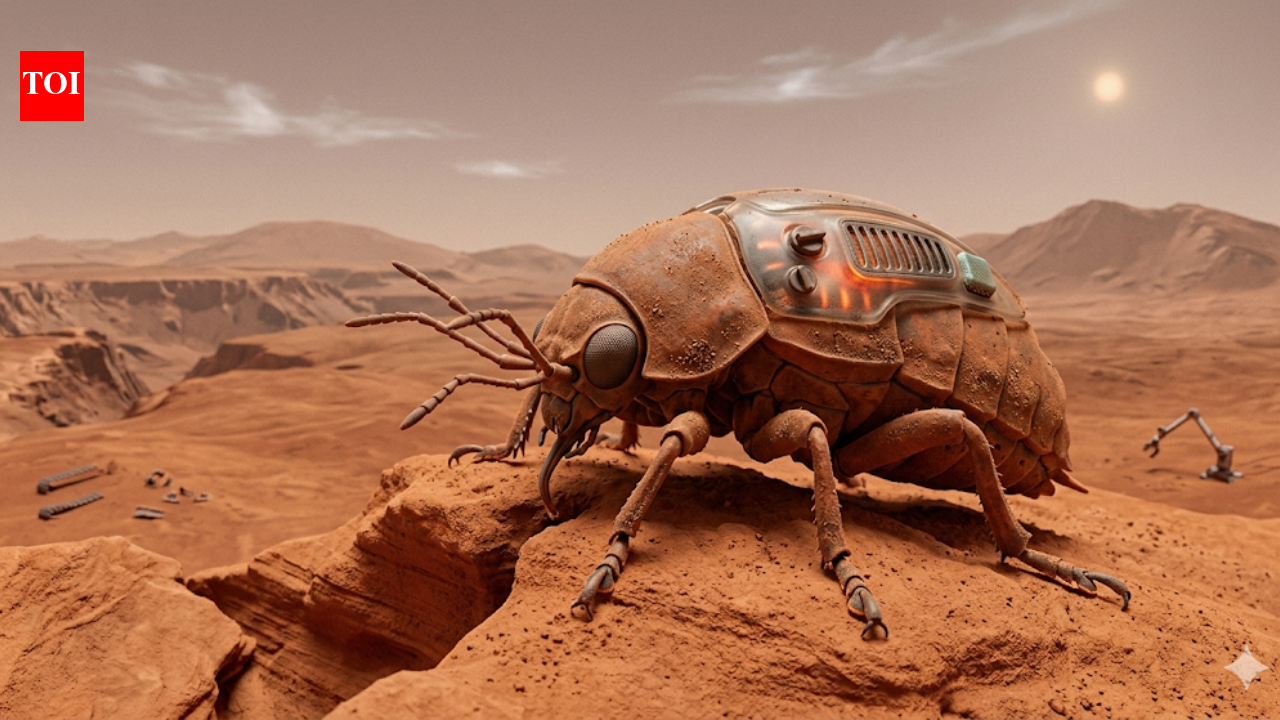
NASA rover images and the “insect on Mars” claim: What science really says
The Times of India • • science
Key Points:
- Recent claims have emerged suggesting the presence of insect-like and predator-like life forms on Mars based on images captured by NASA’s Curiosity rover, notably analyzed by entomologist William Romoser.
- Most scientists remain highly skeptical, attributing these sightings to pareidolia, a psychological phenomenon where the brain interprets random shapes and shadows as familiar living forms, rather than actual evidence of life.
- NASA’s research on Mars primarily focuses on finding signs of ancient microbial life, with discoveries such as organic materials and geological formations indicating past water activity, but no confirmed evidence of complex life forms like insects or reptiles.
- Experts emphasize the importance of relying on rigorous scientific evidence over speculative interpretations, underscoring that Mars remains a key target in the search for primitive life, but no definitive proof of current life has been found.
- While the idea of life on Mars captivates the imagination, the scientific community continues to approach such claims with caution, maintaining that the planet’s mysteries require careful and evidence-based exploration.


