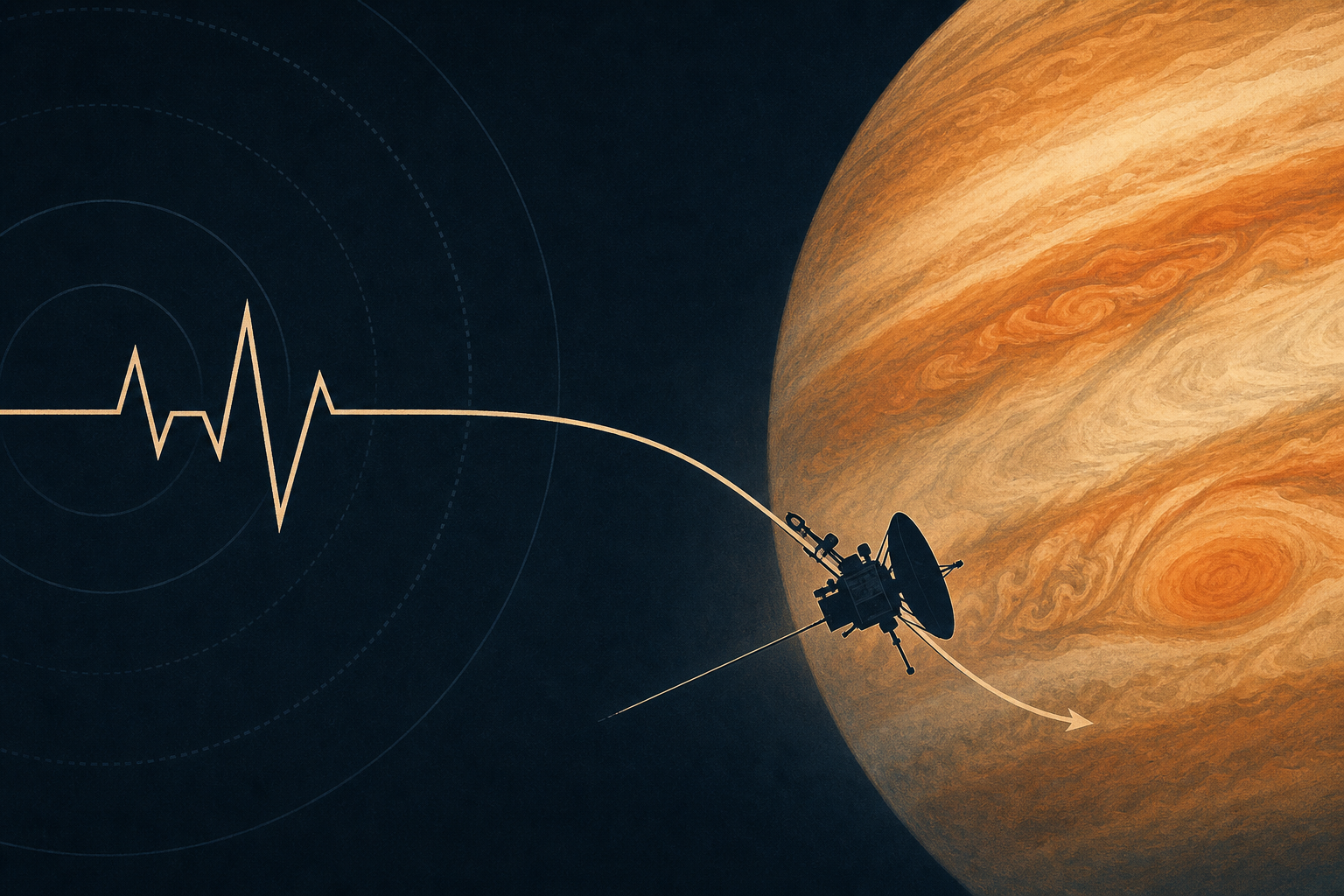
AI Generated Image
NASA spent 14 years keeping the Galileo spacecraft alive through a jammed antenna and brutal radiation, then in 2003 deliberately flew it into Jupiter to be destroyed — not because it had failed, but
19FortyFive • • science
Key Points:
- After 14 years in space, NASA deliberately directed the Galileo spacecraft into Jupiter in 2003 to prevent contaminating Europa, a moon found to have a subsurface saltwater ocean potentially habitable for life.
- Galileo overcame major challenges, including a jammed high-gain antenna and intense radiation, yet delivered groundbreaking science such as the first direct sampling of a gas giant’s atmosphere and discovery of magnetic fields on moons.
- The discovery of Europa’s ocean made the spacecraft a contamination risk, as Galileo carried Earth microbes and could become uncontrollable once its fuel ran out, potentially crashing into Europa and compromising future life-detection missions.
- Following planetary protection protocols, NASA chose to destroy Galileo by plunging it into Jupiter’s hostile atmosphere, ensuring no biological contamination of Europa or other moons.
- Galileo’s mission set a precedent for future outer solar system exploration, influencing the end-of-mission plans for spacecraft like Cassini and guiding the design of upcoming missions such as Europa Clipper and ESA’s JUICE to minimize contamination risks.


