AI Image
New clues emerge for moon’s ancient magnetic field
CNN • • science
Key Points:
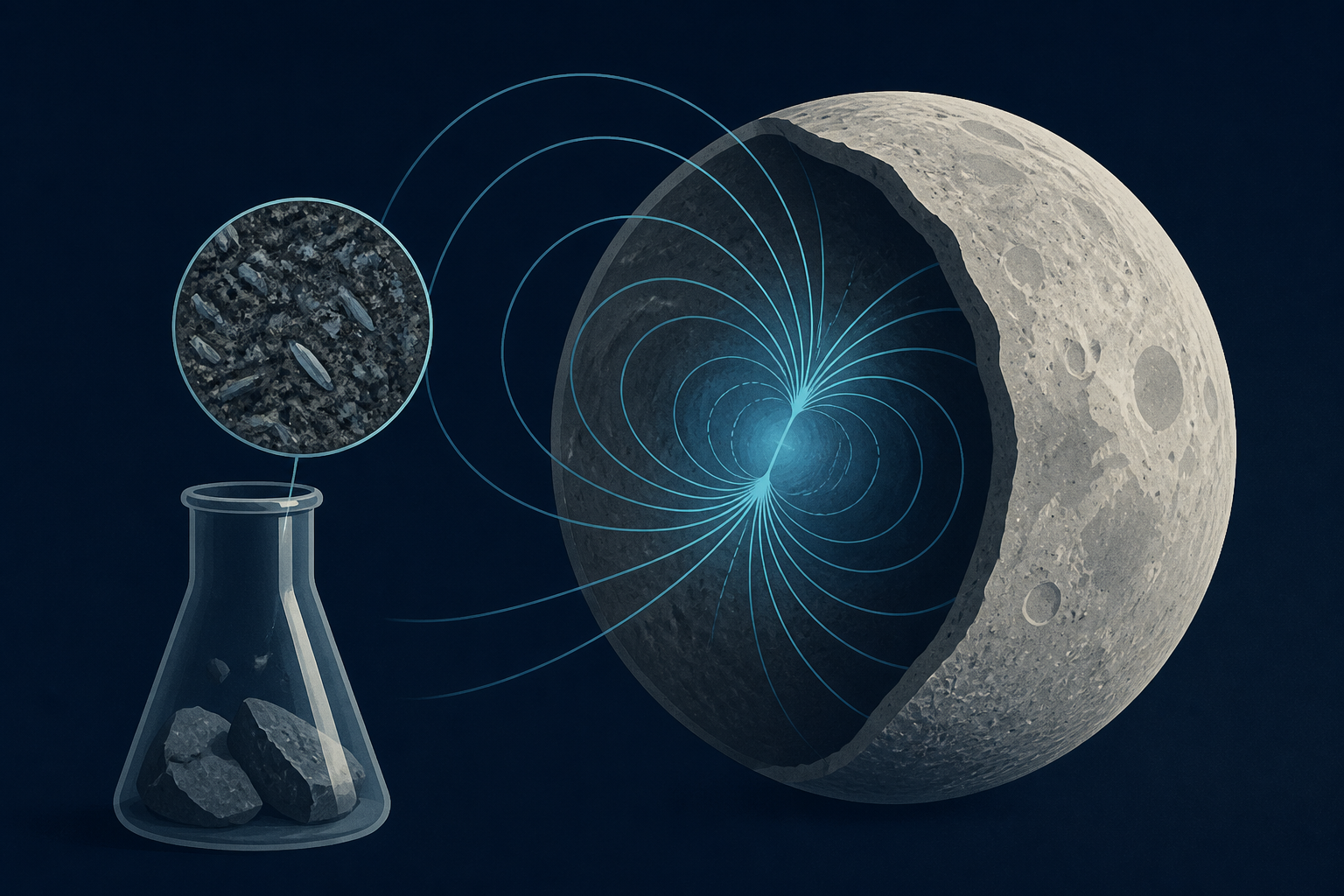
- Researchers discovered a large, dense, and strongly magnetized rock formation buried on the far side of the moon, suggesting the presence of an ancient lunar magnetic field about 4.2 billion years ago, likely generated by a core-powered dynamo similar to Earth's.
- The study, published in Science Advances, used combined magnetic and gravity data from lunar orbiters rather than Apollo rock samples, addressing issues of sample disturbance and providing a clearer picture of the moon's magnetic history.
- Findings support the existence of a strong early lunar dynamo, shifting the scientific debate from questioning its existence to understanding its mechanisms and duration, with implications for studying other celestial bodies' magnetic fields.
- The research also noted a correlation between lunar swirls—bright surface patches—and magnetic anomalies, which may shield the surface from solar wind, offering potential guidance for future lunar exploration and habitat protection.
- Experts emphasize the need for continued lunar missions like NASA's Artemis and China's Chang’e to gather more data and resolve open questions about the moon's geological and magnetic evolution.


