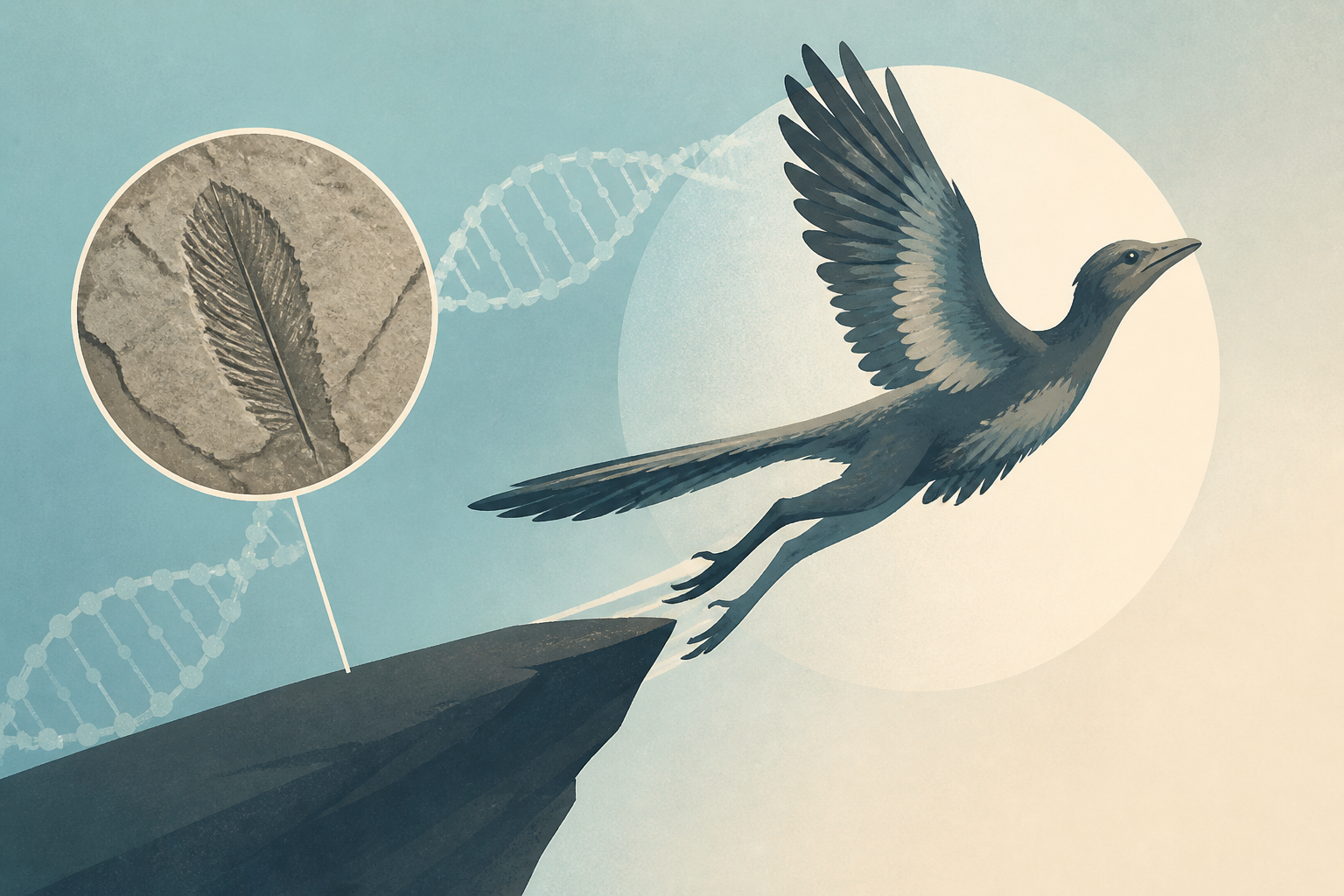
AI Generated Image
New evidence helps solve how earliest birds took flight
Phys.org • • science
Key Points:
- A study by the University of Southampton reveals that Archaeopteryx, the first bird to inhabit Earth, used two or three powerful leaps with its strong hind legs combined with wing flapping to achieve flight, rather than a single leap like modern birds.
- Archaeopteryx had limited shoulder mobility and lacked a breastbone, which prevented it from reaching flight speed quickly with just wing power, making leg-generated force crucial for takeoff.
- Researchers used computer modeling and observations of living birds to estimate that Archaeopteryx could reach sustainable flight speed of 7 meters per second through multiple bipedal leaps, sometimes interspersed with wing flaps.
- The findings suggest that early birds relied heavily on their legs during takeoff, with legs providing up to 90% of the force needed to leave the ground before wings took over flight.
- Modern birds still exhibit this multiple-hop takeoff technique in some situations, such as when conserving energy, indicating a retained evolutionary trait from their ancient ancestors.


