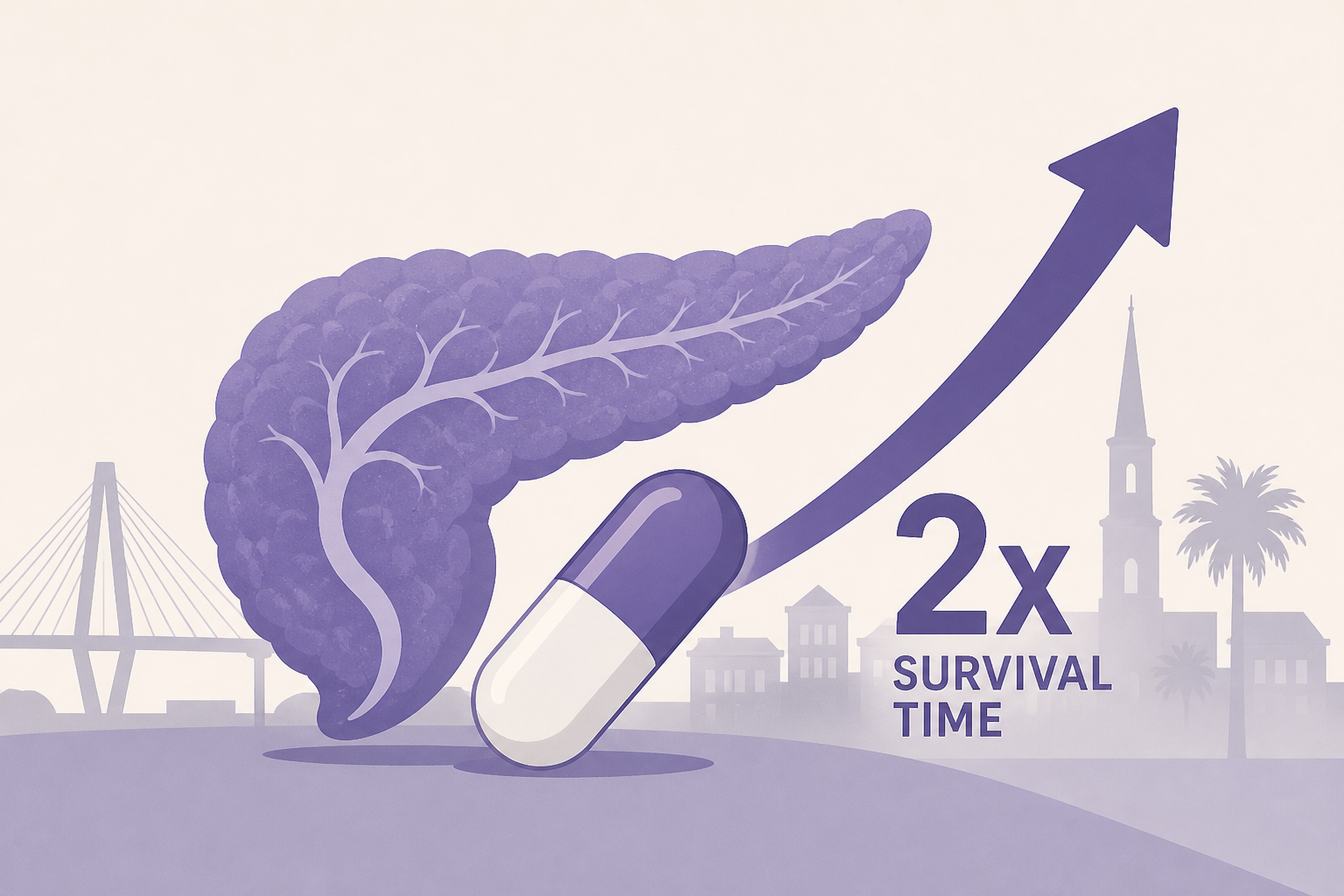
AI Generated Image
New pancreatic cancer drug that doubled survival time now reaching Charleston patients
Yahoo • • health
Key Points:
- A new experimental drug, daraxonrasib, has shown promising results in a Phase 3 clinical trial by nearly doubling the median survival of pancreatic cancer patients from 6.6 to 13.2 months, generating significant excitement among oncologists.
- Daraxonrasib targets the KRAS gene mutation, which drives over 90% of pancreatic cancers and has previously resisted targeted therapies, marking a major breakthrough in treatment options for this aggressive cancer.
- Pancreatic cancer remains highly lethal with a five-year survival rate of only 13%, largely due to late detection and the aggressive nature of the KRAS mutation; daraxonrasib offers hope for improving outcomes and potentially increasing eligibility for surgery.
- The drug is currently available through an expanded access program while awaiting FDA approval, with patients like Terri Truere being among the first to receive it, despite notable side effects such as severe mouth sores and rash.
- Oncologists remain optimistic that daraxonrasib could transform pancreatic cancer treatment and pave the way for future, more effective generations of targeted therapies.


