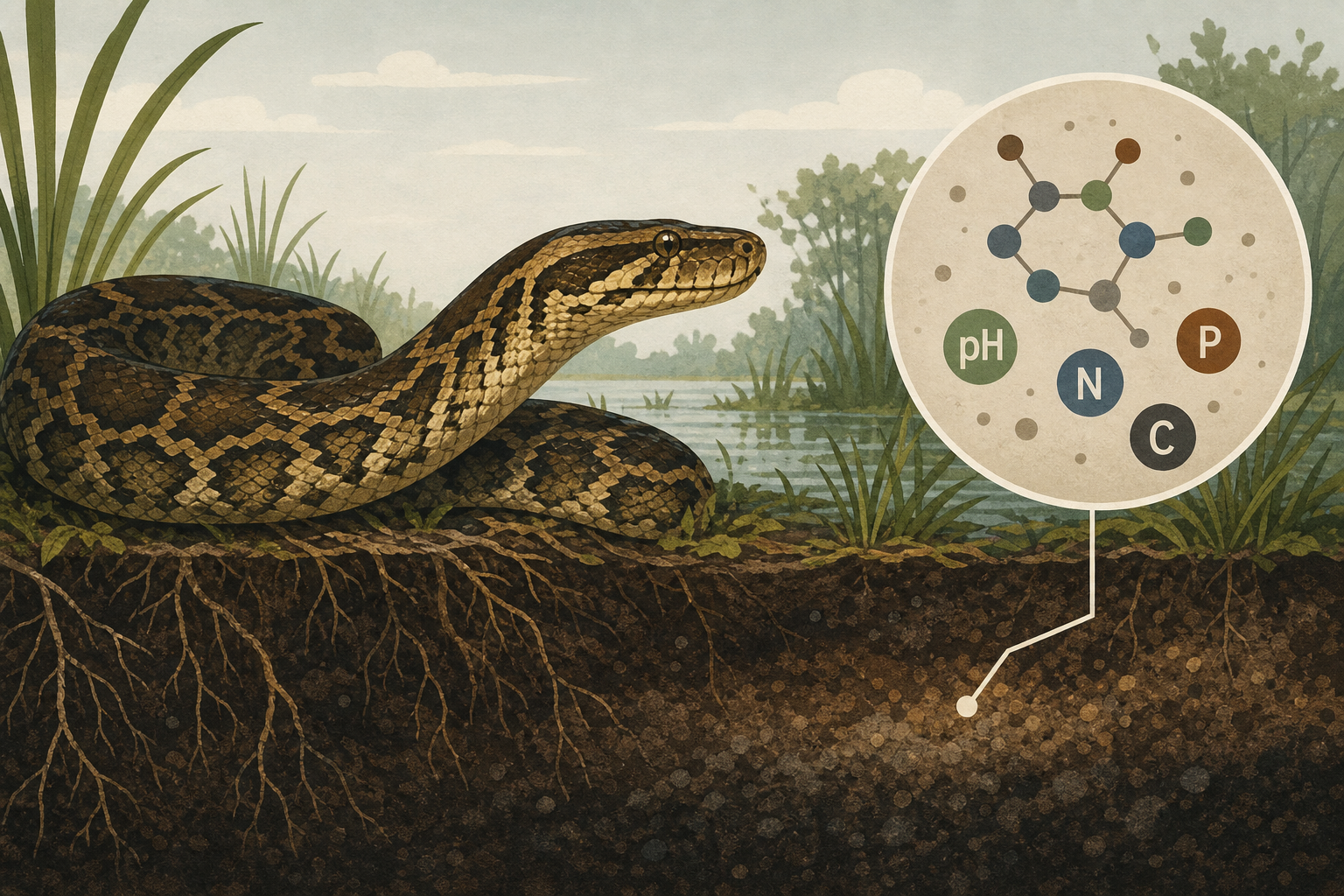
AI Generated Image
New study finds Burmese pythons are now changing Everglades soil chemistry
Yahoo • • science
Key Points:
- New research reveals that invasive Burmese pythons in the Florida Everglades may be altering landscapes by transporting seeds from consumed mammals and birds, potentially affecting plant distribution.
- Scientists found 25 types of seeds, including native plants like cabbage palm and creeping cucumber, in python digestive samples, suggesting these snakes act as unintentional "secondary seed dispersers."
- Germination tests showed nearly 40% of cabbage palm seeds survived passage through python guts and successfully sprouted, indicating pythons could facilitate the spread of both native and invasive plants.
- The decline of native seed-dispersing mammals due to python predation shifts seed dispersal roles to these invasive snakes, causing significant ecological disruption in sensitive habitats.
- The findings highlight that invasive species like Burmese pythons can reshape ecosystems in complex, less obvious ways beyond their direct predation impacts.


![Apple releases iOS 26.6 beta 2 for iPhone, here’s what to expect [U]](https://media-cdn.cashwalklabs.io/https%3A%2F%2Fs3.us-west-2.amazonaws.com%2Fimages.cashwalklabs.io%2F0_admin%2Fnews-ai-images%2F019ed1d3-3248-75fa-8981-d1d7b9ca82b6.webp?format=webp&w=120&h=80)


