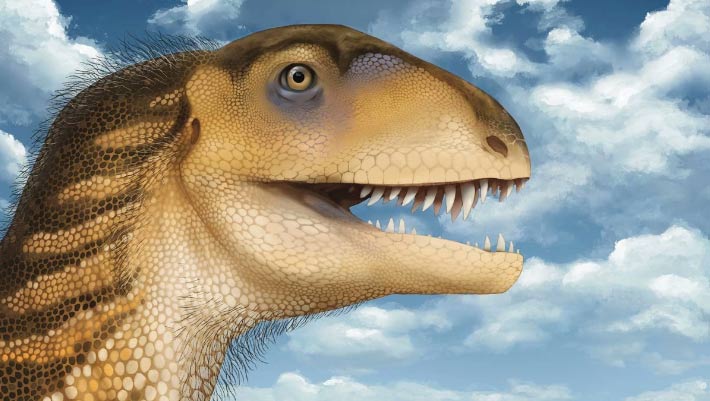
New Triassic Dinosaur Species Identified in New Mexico
Sci.News • • science
Key Points:
- A new genus and species of carnivorous herrerasaurian dinosaur, Ptychotherates bucculentus, has been described from a well-preserved skull found in northern New Mexico, dating back about 201 million years to the latest Triassic period.
- The skull features unique characteristics such as massive cheekbones, a wide braincase, and a short, deep snout, indicating ongoing evolutionary changes in early dinosaurs and expanding knowledge of herrerasaurian diversity.
- Ptychotherates bucculentus belongs to the Morphoraptora clade, closely related to other Triassic dinosaurs like Tawa hallae and Chindesaurus bryansmalli, and challenges previous beliefs that early carnivorous dinosaur lineages had disappeared by the latest Triassic.
- The discovery suggests some herrerasaurian groups persisted longer than expected, particularly in low-latitude regions of ancient Pangea, and may have gone extinct during the end-Triassic mass extinction, indicating a more complex impact of this event on dinosaur evolution.
- This finding highlights the American Southwest as a possible refuge where herrerasaurians survived the longest, and the research is detailed in a recent paper published in the journal Papers in Palaeontology.


