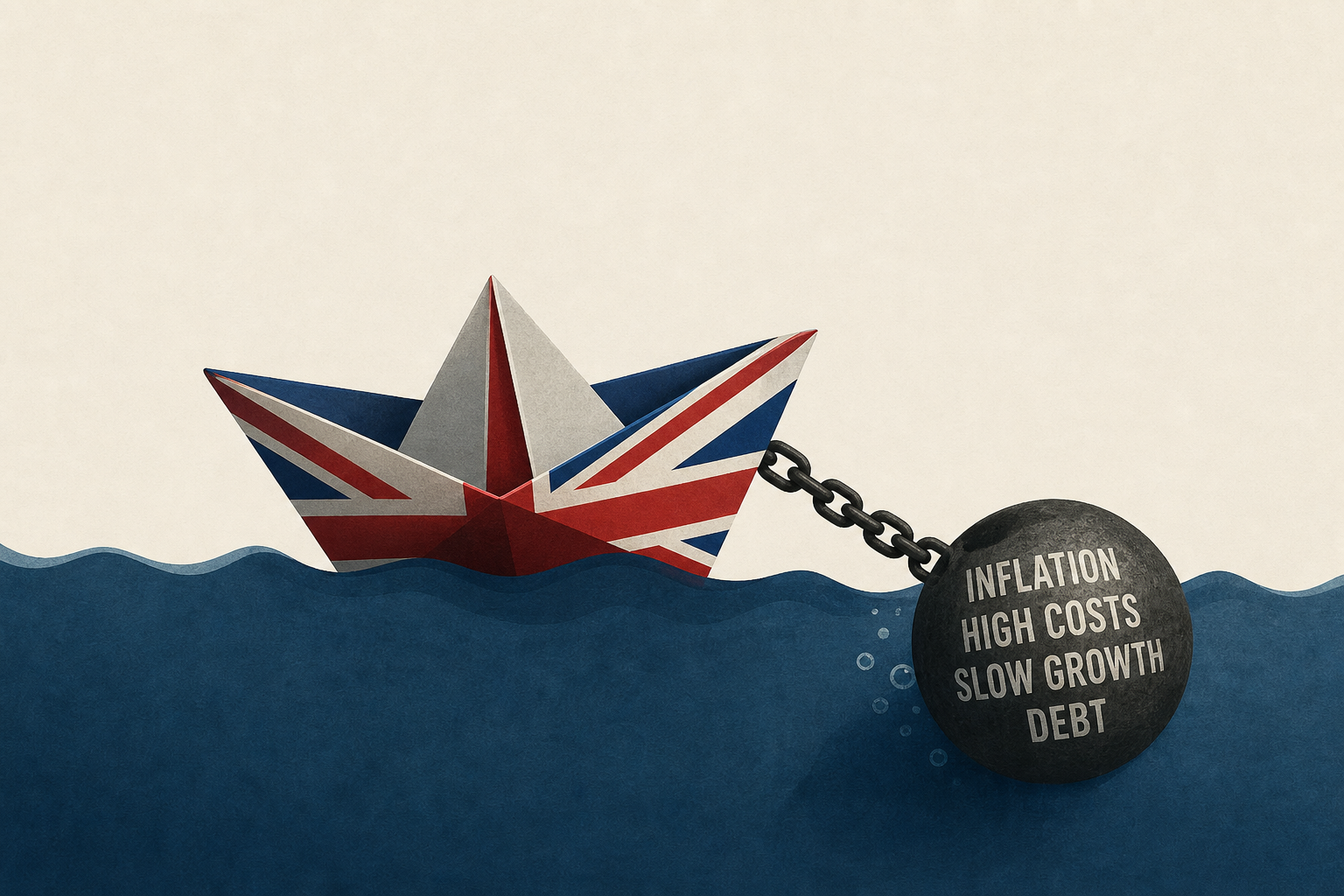
AI Generated Image
New UK prime minister faces the same economic issues that sank his predecessor
AP News • • world
Key Points:
- U.K. Prime Minister Andy Burnham faces significant political and financial challenges as he aims to revive the sluggish economy while addressing high living costs and reducing public debt, which has reached levels not seen since the 1960s.
- Burnham appointed John Healey as Treasury chief to ensure fiscal responsibility, and the government announced a six-month suspension of the home electricity tax to ease cost-of-living pressures, funded by canceling digital ID plans to reassure investors.
- The government must balance ambitious social spending with structural constraints, including high debt exceeding 95% of GDP, rising debt interest payments, and a commitment to increase defense spending to 3.5% of GDP by 2035.
- Economic growth is critical to Burnham’s plans, as faster growth would increase tax revenues without raising rates, helping fund public services like the NHS; however, past leaders have struggled with similar challenges, and Burnham has yet to provide detailed economic strategies.
- Burnham’s vision includes reindustrializing the economy by investing outside London, expanding public housing, and supporting small and medium-sized businesses, while pledging not to raise taxes on working people or alter the state pension “triple lock,” despite calls for bold reforms.


