AI Image
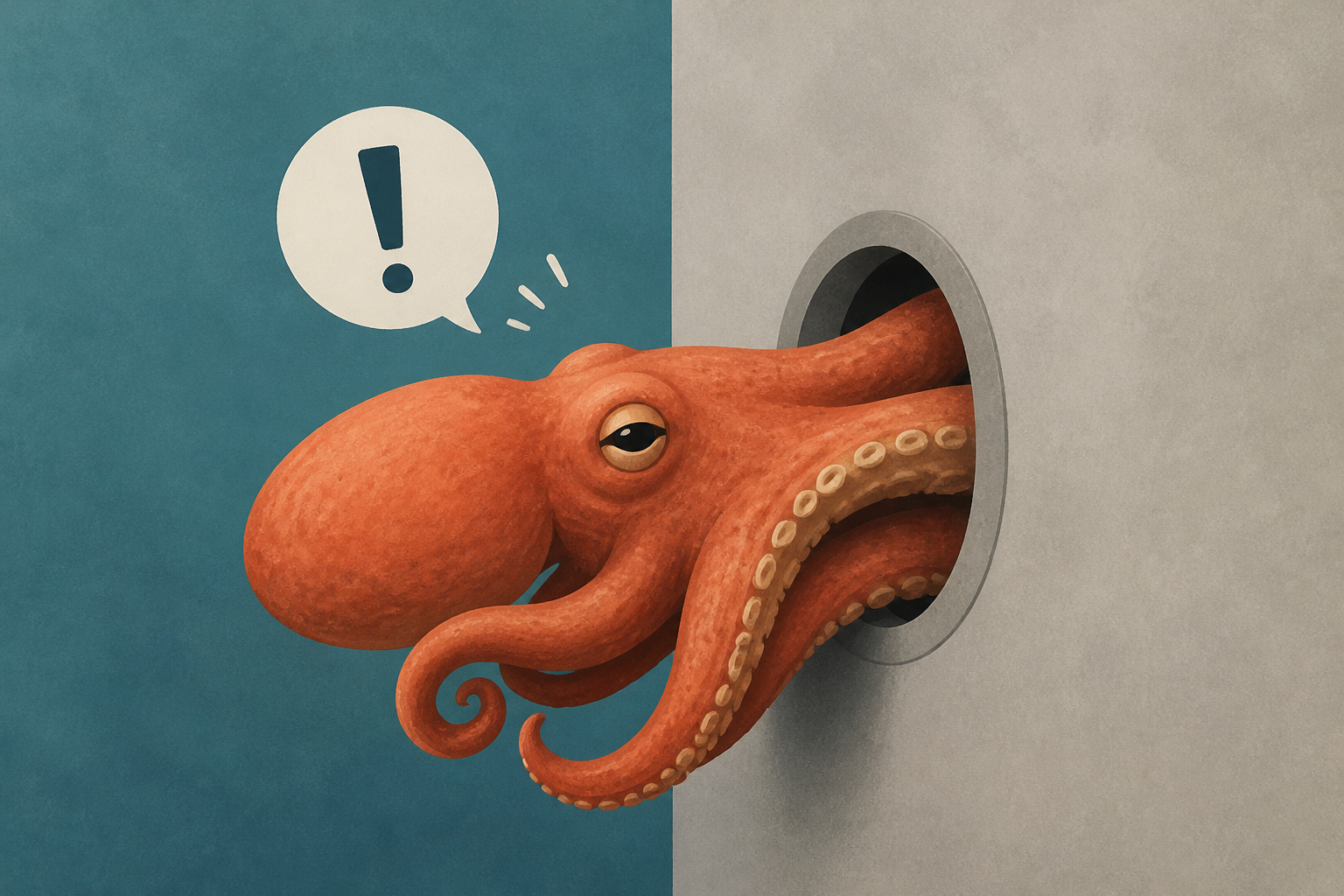
Octopuses Can Squeeze Their Bodies Through Tiny Holes, And Scientists Are in Awe
ScienceAlert • • world
Key Points:
- Octopuses can squeeze through narrow gaps by contorting their flexible bodies, with their hard beak being the primary size limitation; this ability fascinates robotics engineers seeking bio-inspired designs.
- Researchers from Italy, Austria, and Singapore studied common octopuses navigating holes of varying sizes, identifying distinct motor primitives—basic movement building blocks—that the octopuses use to adapt their squeezing strategies.
- For larger openings, octopuses use a three-step sequence involving probing, shifting arms, and squeezing through, while smaller openings require a more complex four-step process that carefully separates arm and mantle movements.
- The study highlights the octopus's delicate maneuvering of its mantle, which houses vital organs and the brain, allowing passage through holes smaller than the distance between their eyes by deforming their bodies precisely.
- Insights from these octopus behaviors could inspire the design of more adaptable soft robots for search and rescue missions, potentially improving sensor and manipulator integration beyond current snake-like robotic models.


