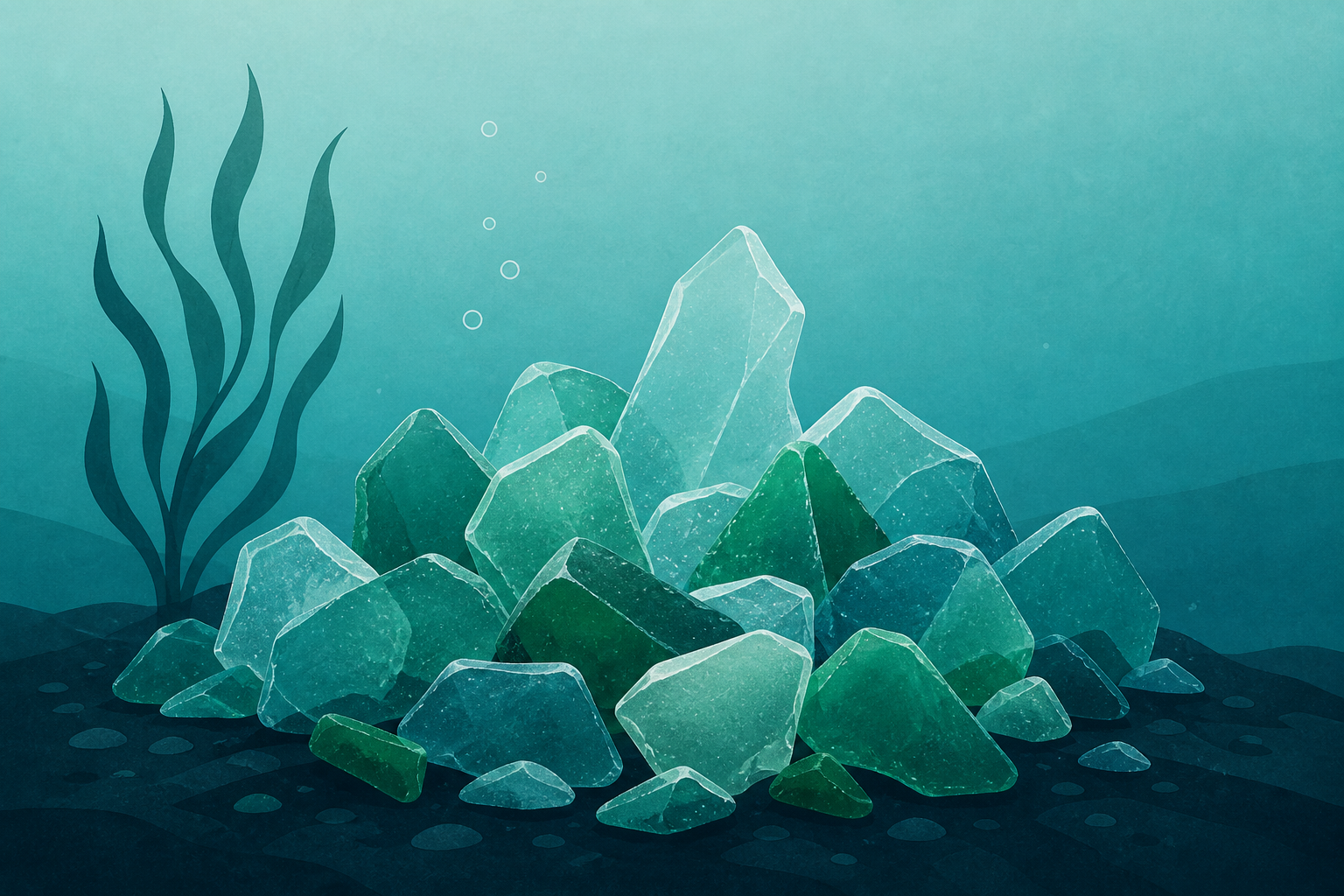
AI Image
Off the coast of Canada, you won't see coral reefs - you'll see reefs made of actual glass
Yahoo Creators • • science
Key Points:
- Glass sponge reefs, or "glass reefs," are deep-sea structures off British Columbia made by animals with silica-based skeletons, resembling window glass, and were thought extinct for 40 million years until their rediscovery in the 1980s.
- These reefs grow slowly over generations of glass sponges, with the largest known reef in Hecate Strait spanning an area the size of Manhattan and standing about 80 feet tall after 9,000 years of growth.
- Glass sponge reefs require very specific conditions: cold water temperatures (43-48°F), nutrient-rich environments, and high dissolved silica levels, mostly found in the Pacific Northwest.
- The reefs are extremely fragile and threatened by bottom-trawling fishing, sediment disturbance, and the impacts of warming and acidifying oceans, prompting Canada to establish marine protected areas since 2017.
- Howe Sound near Vancouver offers a rare opportunity for recreational scuba divers to see these reefs in relatively shallow waters, and additional resources like online story maps and documentaries are available for those unable to dive.


