AI Image
Older adults with low vitamin D sleep 23 minutes less, study finds
Fox News • • health
Key Points:
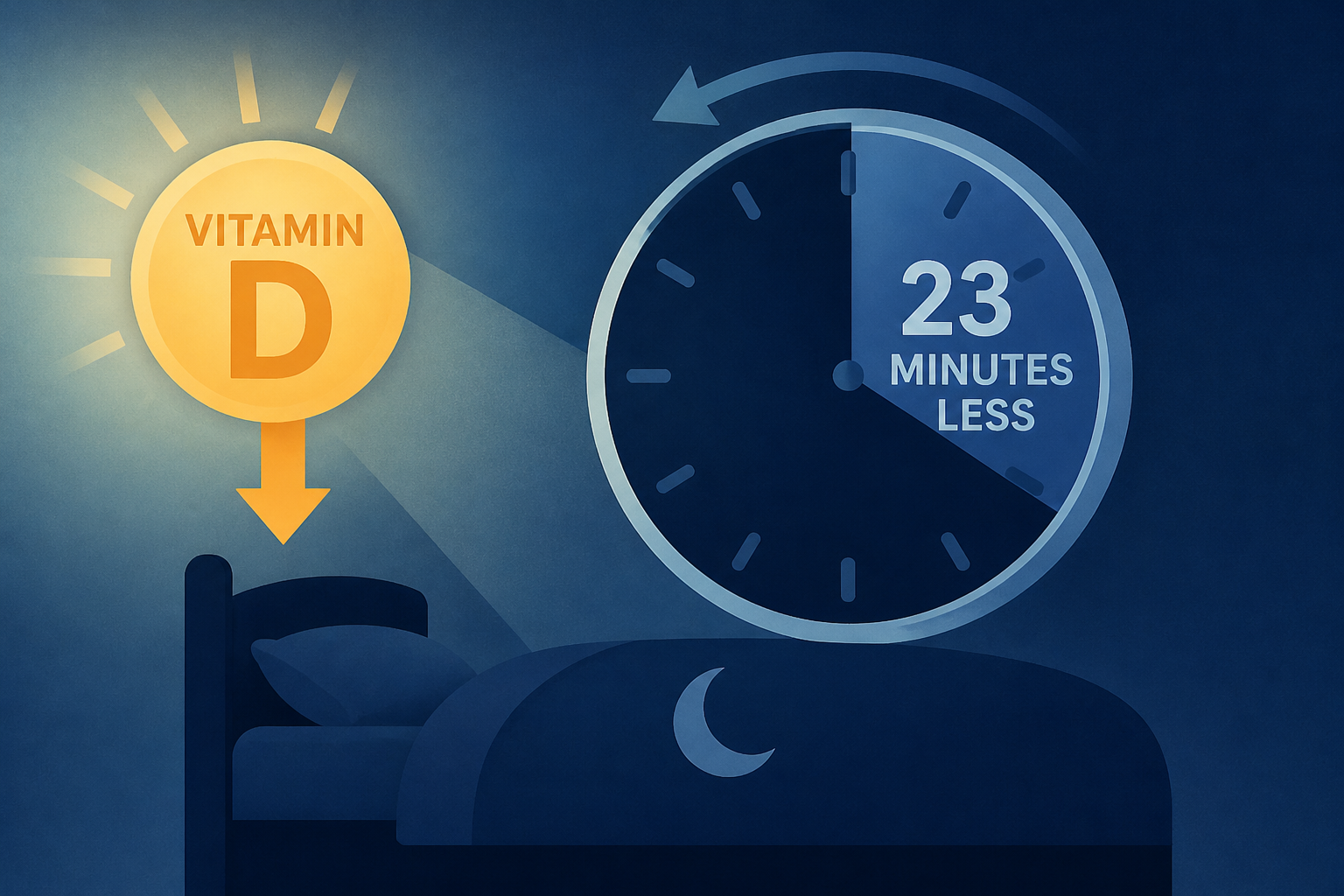
- A study led by Johns Hopkins Bloomberg School of Public Health and the National Institute on Aging found that middle-aged and older adults with low vitamin D levels slept about 23 minutes less per night than those with normal levels, using data from wearable sleep sensors.
- The research, involving 460 adults aged 40 and older, showed that participants with the highest vitamin D levels slept nearly 20 minutes longer each night and experienced less nighttime wakefulness, with the strongest link observed among Black participants.
- Unlike previous studies relying on self-reported sleep quality, this study used blood tests and actigraphs to objectively measure vitamin D levels and sleep patterns, though it could not establish causation or the impact of vitamin D sources.
- The study's limitations include its observational design, inability to track long-term changes in vitamin D or sleep, and a participant group limited to cognitively healthy adults over 40, which may affect generalizability.
- Researchers suggest further investigation into whether increasing vitamin D levels can improve sleep health, noting that poor sleep and vitamin D deficiency are common in older adults and linked to various health risks.


