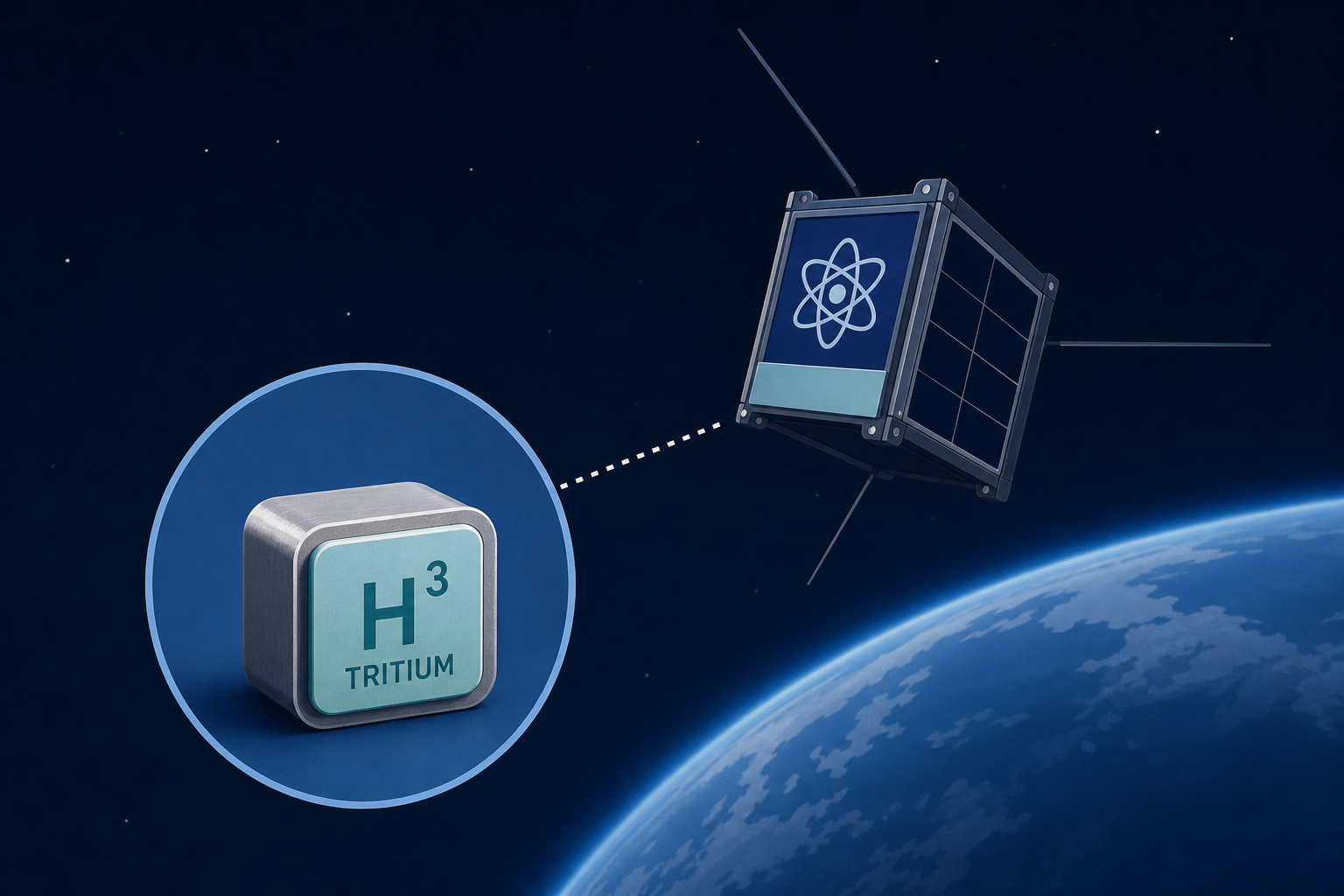
AI Generated Image
On July 7, a small Miami company called City Labs put a tritium-powered battery the size of a pencil eraser into orbit aboard a SpaceX Falcon 9 — its softball-sized BOHR CubeSat becoming the first com
Space Daily • • science
Key Points:
- The BOHR satellite, built by Miami’s City Labs, became the first commercially built spacecraft to carry a nuclear power source after launching aboard a SpaceX Falcon 9 and receiving FAA approval under a new regulatory process.
- BOHR uses a tritium-powered betavoltaic battery that produces very low power (nanowatts to microwatts), sufficient for low-power sensors but far from powering larger spacecraft or lunar habitats.
- The mission's primary significance lies in establishing a regulatory pathway for commercial nuclear payloads, simplifying approval processes that previously required high-level interagency reviews.
- While current betavoltaic technology cannot power large-scale missions, it shows promise for long-duration, low-power applications like sensors in shadowed lunar craters, with potential military and civilian uses.
- City Labs plans to release performance data soon, with the broader industry watching to see if this launch leads to routine commercial nuclear payload approvals, potentially marking the start of a new era in space power sources.


